

Foam Rolling Hub · Buying
Foam Rollers in Ireland: A Buyer’s Overview
What Irish athletes should know before buying a foam roller: types, delivery, returns and where it fits in training.
How Grounded earns trust
Evidence explained. Limits made clear.
Editorial approach. We link original research, separate findings from practical interpretation and state when evidence is limited.
Athlete safety. Our content is general education, not diagnosis or medical advice. Pain and injury need qualified assessment.
Quick answer
The short version
- Choose firmness by body weight and experience, not by what looks toughest
- A 30–45 cm roller suits most kit bags and home use
- Check delivery, returns and whether the foam deforms over time
Foam rollers have moved from physio clinics into kit bags at every level of Irish sport, from underage GAA to Hyrox gyms. Most people buying one in Ireland want the same things: a roller that holds its shape, arrives quickly and is actually used after the first week.
This page covers the practical side of buying in Ireland. For a head-to-head on which roller suits you, read our guide to choosing the best foam roller; for technique, start with how to use a foam roller.
Why foam rolling has become standard in Irish sport
Irish athletes often train in cold, wet conditions and juggle club, college and county schedules. A short, repeatable routine that improves how a muscle feels before training is valuable in that context, and a roller is cheap, portable and needs no appointment.
Research summarised in our Research Library suggests foam rolling can produce short-term gains in range of motion and a modest reduction in perceived soreness. It is a support tool, not a treatment, and it works best inside a routine built on sleep, food and sensible load.
What to check before you buy
A good roller is simple. These are the details that separate one that lasts from one that ends up in the shed.
- Density: high-density EVA or EPP holds its shape; soft open-cell foam flattens quickly.
- Surface: smooth for broad, even pressure; textured for a firmer, more focused feel.
- Length: around 33 cm travels well; 45–90 cm is easier for the back and for beginners.
- Core: hollow-core rollers are firmer and lighter; solid foam is more forgiving.
- Cleaning: closed-cell foam can be wiped down after muddy sessions.
Delivery and returns in Ireland
Grounded ships across Ireland with DPD, fully tracked. Unused items can be returned within 30 days under our returns policy. Always confirm delivery times and returns terms before buying from any retailer, particularly marketplace sellers based outside the EU where customs charges may apply.
Who uses foam rollers in Ireland
GAA and soccer players use them on calves, quads and glutes around repeated sprinting. Rugby players often focus on hips and upper back. Runners tend to work calves and quads during higher-mileage blocks, and gym-goers use them as part of a warm-up. Each group has its own guide in the Foam Rolling Hub.
Choosing the right foam roller: firmness, size and surface
Most buying regrets come from choosing a roller that is too hard or too small. Match the roller to your body weight, experience and where you will use it.
A simple 8-minute foam roller routine
You do not need a long session. Roll slowly, breathe normally and keep pressure at a level where you could hold a conversation.
Calves — 1 minute per leg
Sit with the roller under one calf, cross the other leg on top for more pressure, and roll slowly from ankle to just below the knee. Turn the foot in and out to reach both sides.
Quads — 1 minute per leg
Face down on your forearms with the roller under the thighs. Roll from just above the knee to the hip, pausing briefly on areas that feel tight.
Glutes — 1 minute per side
Sit on the roller, cross one ankle over the opposite knee and lean towards the crossed side. Small movements work better than long sweeps.
Upper back — 1 minute
Lie with the roller across the shoulder blades, hands supporting the head, hips on the floor or lifted. Avoid rolling the lower back directly.
When to use a foam roller
Before training, a few minutes of light rolling followed by a dynamic warm-up is the most common use. Research suggests it can give a short-term increase in range of motion without the drop in power sometimes seen with long static stretching.
After training or the day after a hard match, slower and gentler rolling may reduce how sore muscles feel. Think of this as a comfort and routine tool rather than something that speeds up tissue repair.
Common foam rolling mistakes
These are the issues coaches and physios see most often.
- Rolling too fast — slow passes feel better and give the muscle time to relax.
- Pressing hard on painful spots for long periods.
- Rolling directly on joints, bone or the lower spine.
- Using a roller to push through an injury that needs assessment.
- Buying the hardest roller available and then avoiding it because it hurts.
What the research shows
A 2019 meta-analysis in our Research Library found foam rolling produced small improvements in sprint performance and flexibility and small reductions in perceived muscle pain, with effects generally short-lived. A 2024 systematic review on muscle soreness reached a similar, cautious conclusion.
In plain terms: a foam roller is a useful, low-cost tool for warming up and feeling better between sessions. It does not replace sleep, food, strength work or professional care.
Foam rollers for Irish sport
Gaelic football, hurling, soccer and rugby all involve repeated sprinting and changes of direction on surfaces that are often heavy and wet. Calves, quads, adductors and glutes tend to take the most load, and short pre-training routines are where a roller earns its place.
Looking after your roller
Wipe closed-cell foam with a damp cloth after muddy sessions, let it dry and store it away from radiators and direct sun, which can harden or warp foam over time. Grounded ships across Ireland with tracked DPD delivery, and unused items can be returned within 30 days in original packaging.
Expert tips for better foam rolling
Small technique changes make rolling more comfortable and more useful.
- Roll for 30–60 seconds per area rather than several minutes; longer sessions show little extra benefit.
- Move slowly — around one centimetre per second on tight areas.
- Pause and breathe out on a tender spot, then move on rather than grinding.
- Follow pre-training rolling with dynamic movement such as leg swings and strides.
- Keep the roller where you train, so the routine happens by default.
Research referenced
Journal of Bodywork and Movement Therapies · 2024
Preventive effect of foam rolling on muscle soreness after exercise: A systematic review and meta-analysis
Foam rolling after training is a reasonable, low-risk tool to modestly reduce next-day and 2-3 day post-exercise soreness. It is not a cure for soreness and effect sizes are small-to-moderate.
Frontiers in Physiology · 2019
A Meta-Analysis of the Effects of Foam Rolling on Performance and Recovery
Foam rolling can be used as part of a warm-up (does not reduce power/speed, may modestly help) and as a recovery tool post-session; benefits are real but small in magnitude.
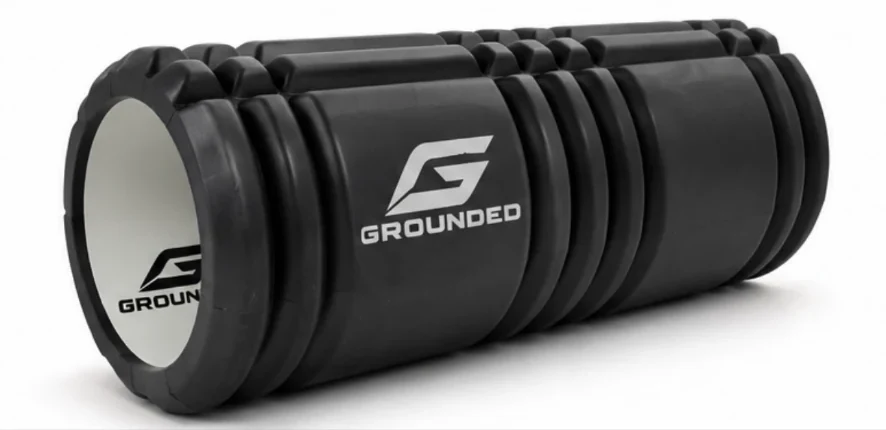
Grounded Foam Roller
High-density, textured and kit-bag sized for regular training.
View the Foam Roller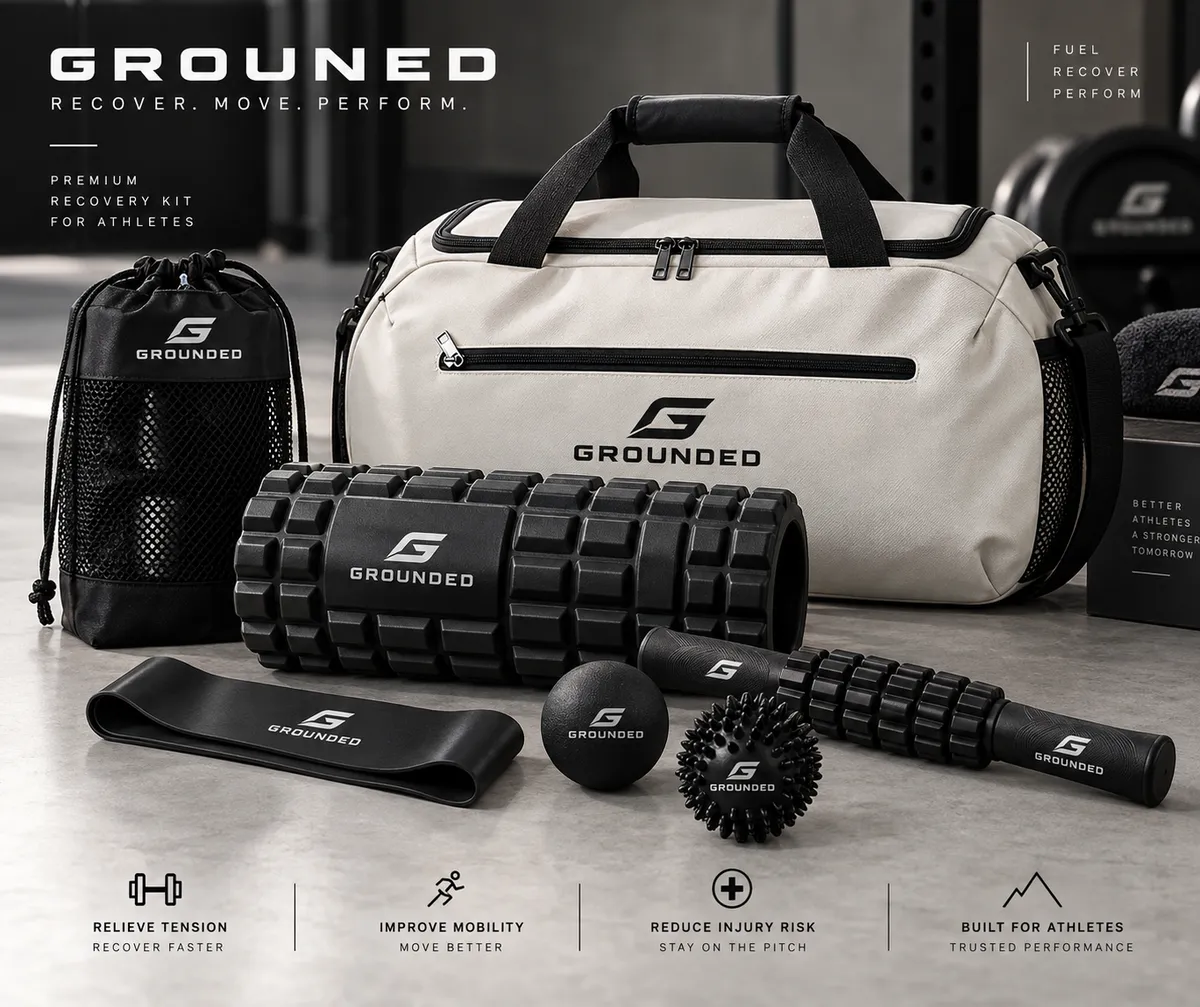
Grounded Recovery Kit
Foam roller, massage ball, mini bands and long band in one carry bag.
View the Recovery KitQuestions
Where can I buy a foam roller in Ireland?
Sports retailers, pharmacies and online stores all stock them. Grounded sells a high-density foam roller with tracked DPD delivery across Ireland.
How much should a foam roller cost?
Prices vary widely. Pay for dense foam that keeps its shape; very cheap soft rollers often compress within weeks.
What size foam roller is best for home use?
A 30–45 cm roller covers legs, glutes and upper back and fits in a kit bag. Longer rollers are easier for spinal work.
How often should I use a foam roller?
Most people do best with short sessions of 5–10 minutes on training days. Daily use is fine if it feels comfortable.
Should foam rolling hurt?
It can feel uncomfortable, but it should not be sharp or make you hold your breath. Ease the pressure if it does.
Is a foam roller or massage ball better?
A roller covers large muscles quickly; a ball targets smaller areas like feet and glutes. Many athletes use both.
Can I foam roll every day?
Yes, with sensible pressure. If an area is still tender after a day, give it a break and roll around it rather than on it.
General education only, not medical advice. For pain, injury or a medical condition, see a physiotherapist or doctor.
Related reading across Grounded
Explore the Grounded knowledge base