

Foam Rolling Hub · Sport
Foam Rolling for GAA Players
Pre-training, post-match and between-game routines for Gaelic games.
How Grounded earns trust
Evidence explained. Limits made clear.
Editorial approach. We link original research, separate findings from practical interpretation and state when evidence is limited.
Athlete safety. Our content is general education, not diagnosis or medical advice. Pain and injury need qualified assessment.
Quick answer
The short version
- Pre-training: 3 minutes on calves, quads, glutes
- Post-match: gentle rolling after food and fluid
- Rolling supports, but does not replace, strength and load management
Gaelic football, hurling and camogie combine repeated sprinting, kicking or striking, and physical contests. Studies of Gaelic football injuries show the hamstring, knee and ankle among the most commonly injured areas. A short rolling routine fits well into the preparation and recovery around this demand.
Pre-training (3–4 minutes)
- Calves 30 s each
- Quads 30 s each
- Glutes 30 s each
- Then the team dynamic warm-up
Post-match
Prioritise fluid, a proper meal and sleep. A gentle 5–8 minute roll that evening or the next morning can ease stiffness.
Between matches
During busy championship weeks, light rolling plus walking on the day after a game fits with reduced training load. Hurlers may add upper back and lats work for striking.
Research referenced
Frontiers in Physiology · 2019
A Meta-Analysis of the Effects of Foam Rolling on Performance and Recovery
Foam rolling can be used as part of a warm-up (does not reduce power/speed, may modestly help) and as a recovery tool post-session; benefits are real but small in magnitude.
Journal of Science and Medicine in Sport · 2021
Epidemiology and moderators of injury in Gaelic football: A systematic review and meta-analysis
For GAA-specific recovery/prevention programming, hamstring and other lower-limb muscle injuries should be the top priority, and match-day preparation (warm-up, hamstring strength work) deserves more attention than training-day load alone.
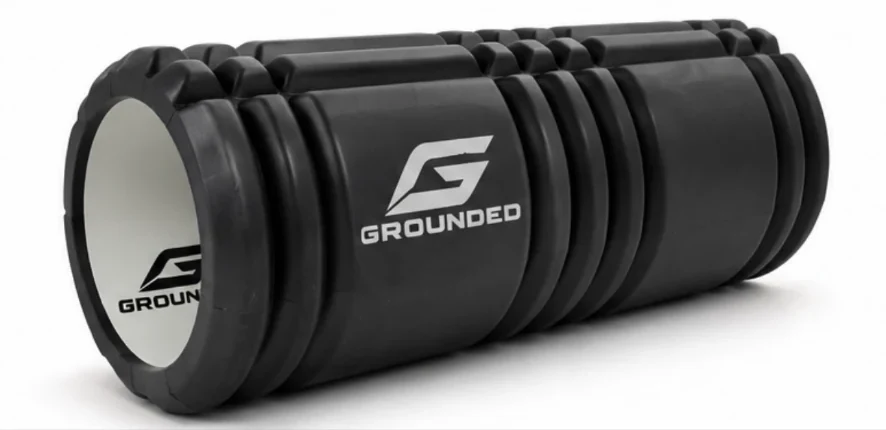
Grounded Foam Roller
High-density, textured and kit-bag sized for regular training.
View the Foam Roller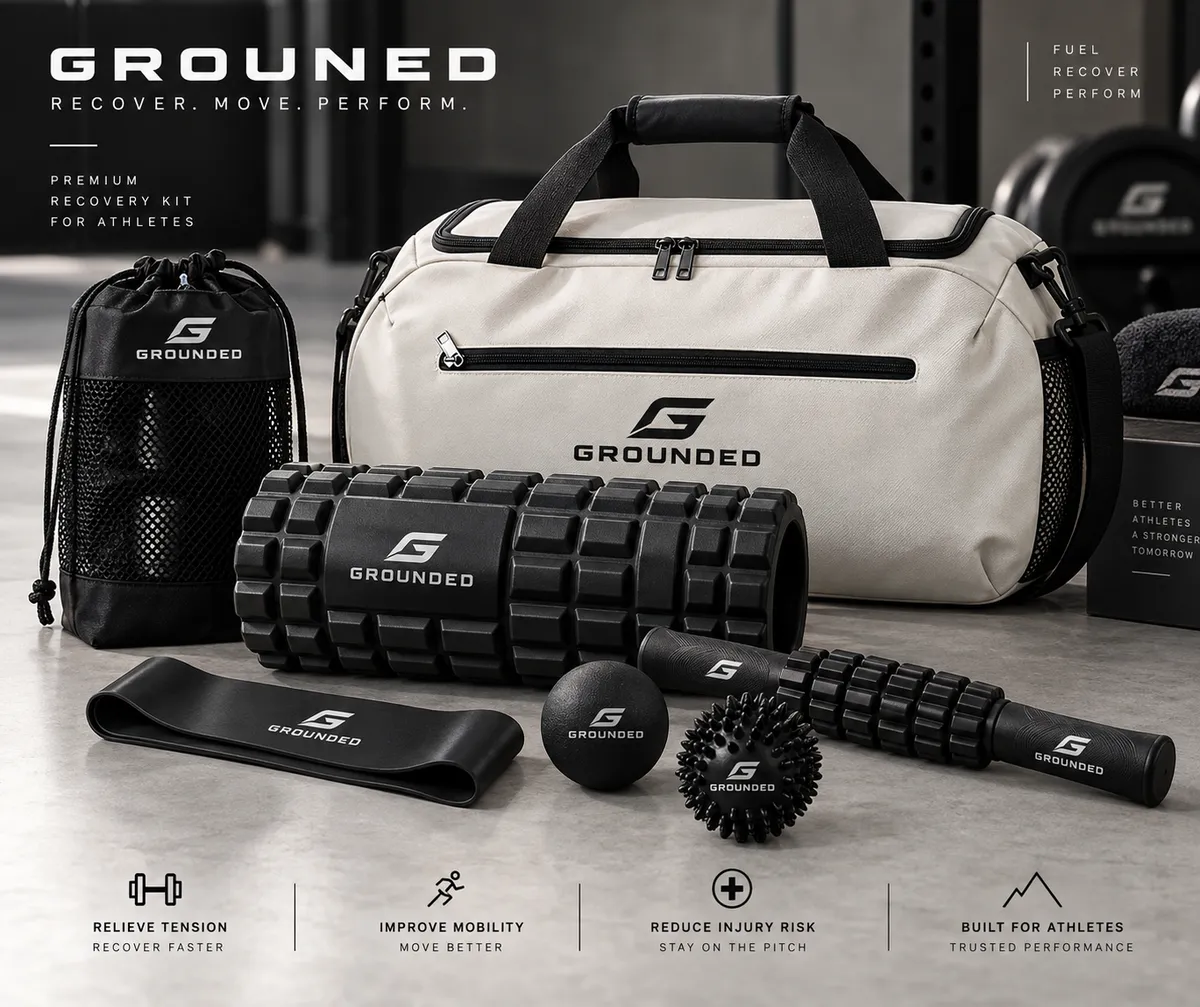
Grounded Recovery Kit
Foam roller, massage ball, mini bands and long band in one carry bag.
View the Recovery KitQuestions
Should GAA players foam roll before matches?
A brief roll followed by the dynamic warm-up is reasonable.
What do GAA players roll most?
Calves, quads, hamstrings and glutes; hurlers add upper back.
General education only, not medical advice. For pain, injury or a medical condition, see a physiotherapist or doctor.
Related reading across Grounded
Explore the Grounded knowledge base