

Foam Rolling Hub · Sport
Foam Rolling for Runners
A routine built around mileage blocks, long runs and common runner niggles.
How Grounded earns trust
Evidence explained. Limits made clear.
Editorial approach. We link original research, separate findings from practical interpretation and state when evidence is limited.
Athlete safety. Our content is general education, not diagnosis or medical advice. Pain and injury need qualified assessment.
Quick answer
The short version
- Calves, quads, glutes and feet are priorities
- Roll after long runs and on easy days
- Shin or knee pain that worsens needs load changes, not more rolling
Runners accumulate thousands of repetitive steps. Calves and quads often feel it most, especially during marathon blocks and after hilly or downhill runs.
After long runs
- Calves 60 s each
- Quads 60 s each
- Glutes 45 s each
- Feet with a massage ball
During training blocks
Short rolling sessions on easy days keep the habit going. Keep it light before key sessions.
Niggles that need more
Shin pain that is sharp and localised, outer knee pain that stops runs, or heel pain first thing in the morning are signs to reduce load and get assessed.
Research referenced
Journal of Bodywork and Movement Therapies · 2024
Preventive effect of foam rolling on muscle soreness after exercise: A systematic review and meta-analysis
Foam rolling after training is a reasonable, low-risk tool to modestly reduce next-day and 2-3 day post-exercise soreness. It is not a cure for soreness and effect sizes are small-to-moderate.
Frontiers in Physiology · 2019
A Meta-Analysis of the Effects of Foam Rolling on Performance and Recovery
Foam rolling can be used as part of a warm-up (does not reduce power/speed, may modestly help) and as a recovery tool post-session; benefits are real but small in magnitude.
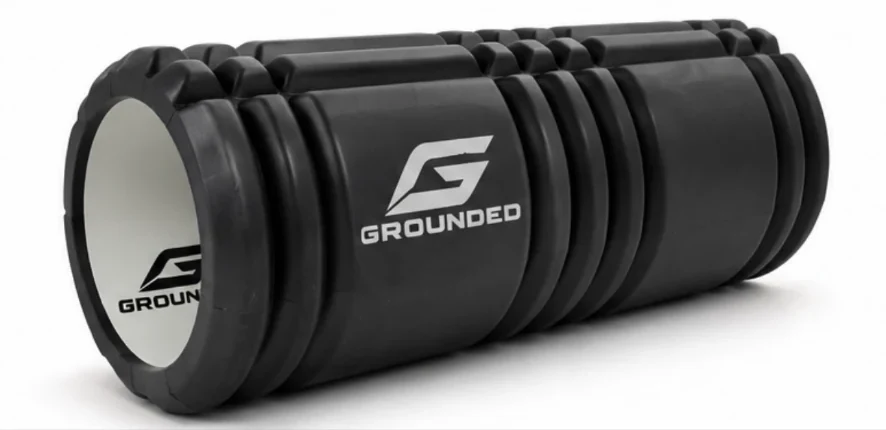
Grounded Foam Roller
High-density, textured and kit-bag sized for regular training.
View the Foam Roller
Grounded Recovery Kit
Foam roller, massage ball, mini bands and long band in one carry bag.
View the Recovery KitQuestions
Should runners foam roll before running?
A short roll followed by drills is fine; it is not essential.
Can foam rolling help shin splints?
Rolling the calf may feel helpful, but load management is the key factor.
General education only, not medical advice. For pain, injury or a medical condition, see a physiotherapist or doctor.
Related reading across Grounded
Explore the Grounded knowledge base