

Foam Rolling Hub · Evidence
Does Foam Rolling Work? What the Evidence Says
What systematic reviews show, where the evidence is thin and what that means in practice.
How Grounded earns trust
Evidence explained. Limits made clear.
Editorial approach. We link original research, separate findings from practical interpretation and state when evidence is limited.
Athlete safety. Our content is general education, not diagnosis or medical advice. Pain and injury need qualified assessment.
Quick answer
The short version
- Flexibility: small, short-term improvements
- Soreness: modest reduction in perceived soreness
- Performance: negligible effect either way
Short answer: yes, for some outcomes, modestly and temporarily. Foam rolling reliably produces small short-term flexibility gains and can reduce perceived soreness. It does not appear to meaningfully improve strength or speed.
What the research shows
A 2019 meta-analysis of foam rolling on performance and recovery found pre-exercise rolling produced a small improvement in sprint performance and flexibility, while post-exercise rolling slightly reduced perceived pain. Effects on strength and jumping were negligible.
A 2024 systematic review on preventing muscle soreness reached a similar conclusion: rolling can modestly reduce soreness after exercise, though study quality varies.
Limits of the evidence
- Many studies are small with short follow-up
- Protocols differ widely (time, pressure, roller type)
- Participants often cannot be blinded, so expectation effects are likely
- Few studies look at long-term injury outcomes
What this means for you
Use foam rolling for what it does well: a quick pre-training range-of-motion boost and a comfortable post-session routine. Do not rely on it to fix pain, prevent injury alone or replace sleep and nutrition. If an area is persistently painful, see a physiotherapist.
Research referenced
Journal of Bodywork and Movement Therapies · 2024
Preventive effect of foam rolling on muscle soreness after exercise: A systematic review and meta-analysis
Foam rolling after training is a reasonable, low-risk tool to modestly reduce next-day and 2-3 day post-exercise soreness. It is not a cure for soreness and effect sizes are small-to-moderate.
Frontiers in Physiology · 2019
A Meta-Analysis of the Effects of Foam Rolling on Performance and Recovery
Foam rolling can be used as part of a warm-up (does not reduce power/speed, may modestly help) and as a recovery tool post-session; benefits are real but small in magnitude.
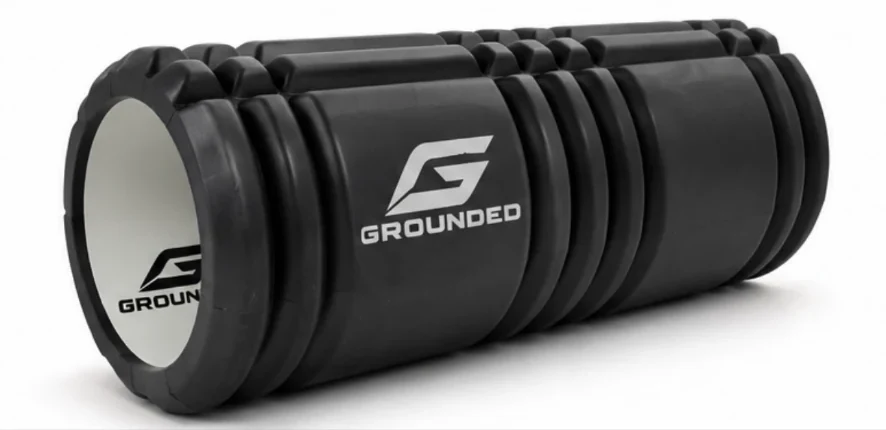
Grounded Foam Roller
High-density, textured and kit-bag sized for regular training.
View the Foam Roller
Grounded Recovery Kit
Foam roller, massage ball, mini bands and long band in one carry bag.
View the Recovery KitQuestions
Is foam rolling scientifically proven?
Short-term flexibility and soreness benefits are supported by meta-analyses; bigger claims are not.
Is foam rolling a placebo?
Expectation likely plays a role, but measurable range-of-motion changes are consistently reported.
General education only, not medical advice. For pain, injury or a medical condition, see a physiotherapist or doctor.
Related reading across Grounded
Explore the Grounded knowledge base