

Foam Rolling Hub · Fundamentals
Foam Roller FAQs
Quick answers to the questions we hear most, with links to the in-depth guides.
How Grounded earns trust
Evidence explained. Limits made clear.
Editorial approach. We link original research, separate findings from practical interpretation and state when evidence is limited.
Athlete safety. Our content is general education, not diagnosis or medical advice. Pain and injury need qualified assessment.
Quick answer
The short version
- Quick answers here
- Detailed guides linked below
- When in doubt, ask a physiotherapist
Short answers to the questions athletes ask most. Each links to a full guide in the Foam Rolling Hub.
Safety
Avoid rolling over recent injuries, bruises, varicose veins, open wounds or areas with nerve symptoms. People with conditions such as osteoporosis, blood clotting disorders or during pregnancy should check with a clinician first.
Care
Wipe closed-cell rollers with warm soapy water, dry fully and store away from direct heat.
Research referenced
Journal of Bodywork and Movement Therapies · 2024
Preventive effect of foam rolling on muscle soreness after exercise: A systematic review and meta-analysis
Foam rolling after training is a reasonable, low-risk tool to modestly reduce next-day and 2-3 day post-exercise soreness. It is not a cure for soreness and effect sizes are small-to-moderate.
Frontiers in Physiology · 2019
A Meta-Analysis of the Effects of Foam Rolling on Performance and Recovery
Foam rolling can be used as part of a warm-up (does not reduce power/speed, may modestly help) and as a recovery tool post-session; benefits are real but small in magnitude.
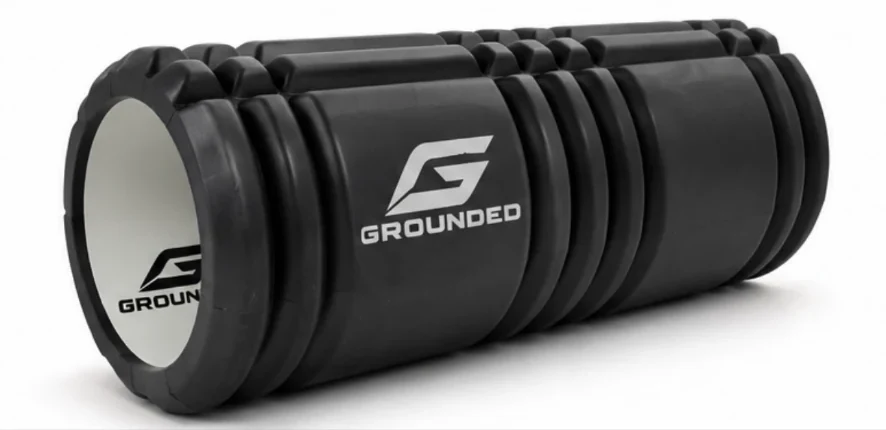
Grounded Foam Roller
High-density, textured and kit-bag sized for regular training.
View the Foam Roller
Grounded Recovery Kit
Foam roller, massage ball, mini bands and long band in one carry bag.
View the Recovery KitQuestions
How long should I foam roll?
30–90 seconds per muscle; 5–10 minutes per session.
How often should I foam roll?
Daily is fine for most healthy athletes; consistency matters more than duration.
Is foam rolling safe for teenagers?
Generally yes with gentle pressure and supervision for younger athletes.
Should I roll before or after training?
Both work: before for range of motion, after for soreness.
Which firmness should I buy?
The firmest you can relax on. See our high density vs soft guide.
Does foam rolling reduce cellulite?
There is no good evidence that it does.
How do I clean a foam roller?
Wipe with warm soapy water and let it dry.
General education only, not medical advice. For pain, injury or a medical condition, see a physiotherapist or doctor.
Related reading across Grounded
Explore the Grounded knowledge base