
Recovery Tools Every Athlete Needs
The short list of recovery tools that genuinely earn a place in your kit bag.
What you'll learn
- The essential recovery tools
- What each tool is for
- What the evidence says
- What you can skip
The problem
The recovery market is crowded with gadgets that promise a lot. Most athletes do not need a garage full of equipment. They need a few well-made tools they will actually use, supported by good habits.
Start with the free tools
The most powerful recovery tools cost nothing. Sleep: research shows extending sleep can improve sprint speed and skill accuracy. Food: enough energy and protein supports adaptation to training. Hydration: rehydrating after sessions. Load management: balancing hard and easy days. No product replaces these.
1. A foam roller
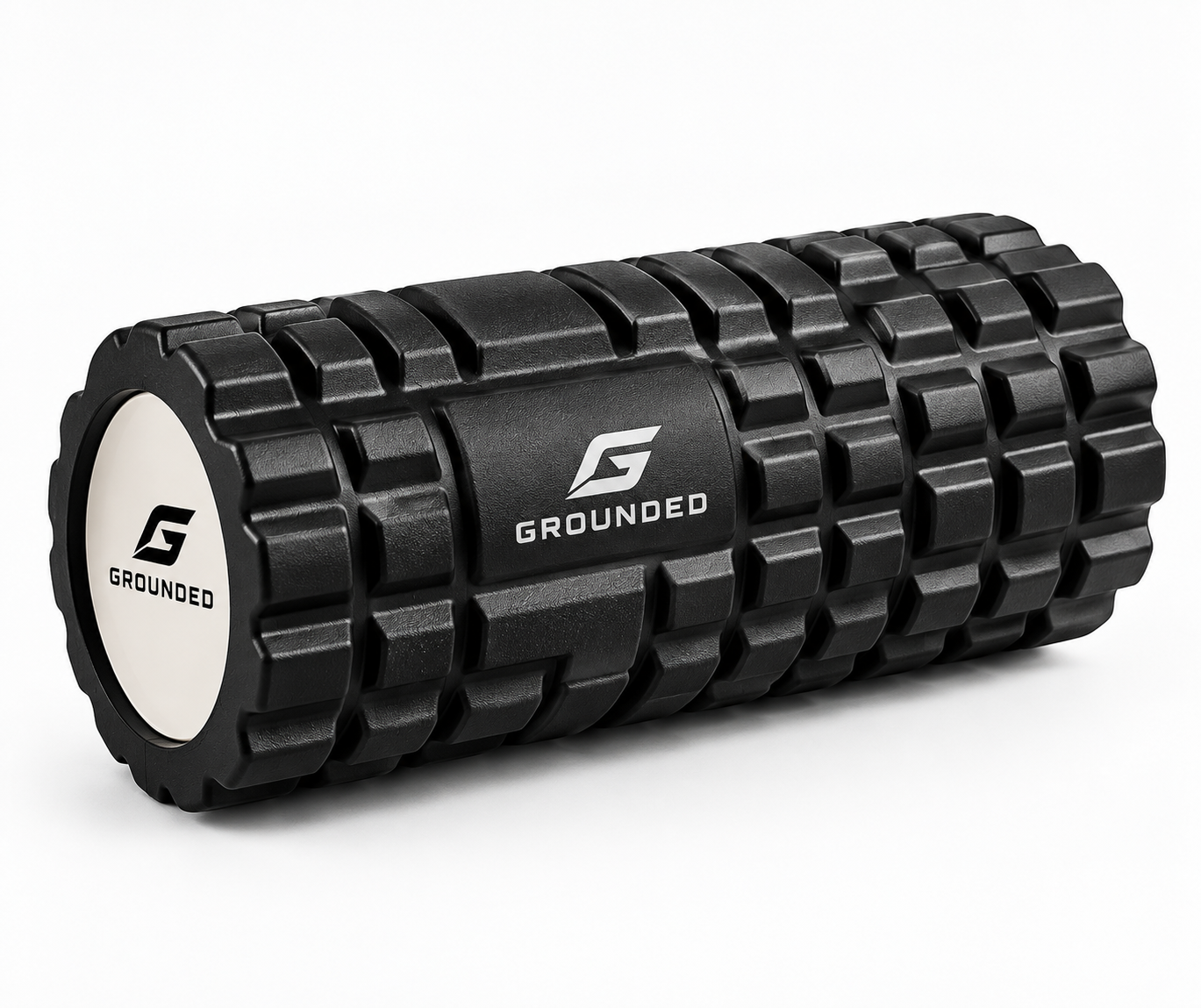
The most versatile recovery tool. Research suggests foam rolling produces short-term improvements in range of motion and modest reductions in perceived soreness, without reducing performance when used before training. Choose a firm, durable roller that fits your kit bag.
2. A massage ball
Reaches what a roller cannot: feet, deep glutes, chest and around the shoulder blades. Small enough to carry everywhere, which makes it one of the easiest habits to keep.
3. Mini resistance bands
Essential for activation. Glute bridges, lateral walks and monster walks prepare the hips and glutes for running and changing direction. Structured warm-ups including strength and activation, such as FIFA 11+, have been shown to reduce injury rates in football.
4. A long resistance band
Useful for shoulder mobility, assisted stretching and upper-body warm-ups. Particularly valuable for rugby, gym and Hyrox athletes.
5. A water bottle and electrolytes
Staying hydrated through training and replacing fluid afterwards matters, especially after long or sweaty sessions. Electrolyte drinks can help replace sodium lost in sweat.
6. Grip socks
Not a recovery tool in the strict sense, but many field-sport athletes find they improve comfort and reduce foot movement inside the boot over long sessions.
7. A kit bag that keeps it together
The best tool is the one you use. Keeping your recovery tools together in one bag that goes to every session removes the biggest barrier to consistency.
What you can probably skip
Many expensive gadgets have limited evidence or offer small benefits over simpler tools. Some, like compression boots or percussion massagers, may help some athletes feel better, but they are not essential. Build the basics first.
Why quality matters
Cheap rollers flatten, cheap bands snap and cheap balls crack. When equipment fails, the habit usually stops. Investing in durable, well-designed tools pays off across a long season.
Building a routine around your tools
Before training: five minutes of band activation, glute bridges, lateral walks and monster walks, then your normal warm-up. After training: five minutes on the roller and ball for the areas that worked hardest. Rest days: a relaxed ten-minute rolling and mobility routine and a walk.
Tools for specific sports
GAA and football: roller for hamstrings and calves, ball for glutes, mini bands for activation, grip socks. Rugby: roller for upper back and quads, long band for shoulders. Running: ball for feet, roller for calves. Hyrox and gym: long band for shoulders, roller for lats and upper back.
Tools for clubs and coaches
A shared set of rollers and bands in the dressing room, a structured warm-up and a short cool-down can build a recovery culture across a squad. Coaches do not need to be experts; a consistent simple routine delivers most of the value.
Storing and caring for your tools
Wipe rollers and balls clean after use. Keep bands out of direct sunlight and away from sharp edges, and check them regularly for nicks or tears. Replace bands at the first sign of damage.
Common mistakes when buying recovery tools
Buying the most aggressive roller available. Buying bands without checking resistance levels. Buying lots of gadgets but using none. And buying cheap tools that break within weeks. Choose fewer, better tools and use them consistently.
A final word on consistency
No tool works if it stays in a cupboard. The athletes who benefit most from recovery tools are those who build them into a routine they repeat week after week. Keep it simple, keep it short and keep it going.
What the research says
Evidence in context
Research supported
A Meta-Analysis of the Effects of Foam Rolling on Performance and Recovery
Foam rolling can be used as part of a warm-up (does not reduce power/speed, may modestly help) and as a recovery tool post-session; benefits are real but small in magnitude.
+111 min
The Effects of Sleep Extension on the Athletic Performance of Collegiate Basketball Players
Prioritizing sleep duration (aiming for ~9-10 hours in bed) can meaningfully improve sport-specific speed, shooting accuracy and mood in athletes who are otherwise under-slept.
Research supported
Effect of specific exercise-based football injury prevention programmes on the overall injury rate in football: a systematic review and meta-analysis of the FIFA 11 and 11+ programmes
Across multiple independent RCTs and settings, structured neuromuscular warm-up programmes consistently lower injury incidence in football, reinforcing the FIFA 11+ single-trial finding above as a generalizable effect, not a one-off result.
Grounded summarises peer-reviewed sports science in simple language. Recovery tools support good training habits—they do not replace sleep, nutrition or structured training.
Grounded Recommendation
Keep the main thing the main thing.
Prioritise sleep, food and hydration. Then build a simple kit: a foam roller, a massage ball and resistance bands, kept together in one bag. Use them in a short, consistent routine rather than chasing the latest gadget.
Step-by-step routine
- 01Protect sleep, food and hydration first
- 02Warm up with mini bands for activation
- 03Roll large muscles after training
- 04Use the ball for feet and glutes
- 05Rehydrate after long sessions
- 06Keep everything in one kit bag
Equipment that can help
Recommended because it fits the routine—not as a replacement for the fundamentals.
Recovery
Foam Roller
A firm, textured roller for purposeful warm-ups, mobility work and post-training routines.
View Foam Roller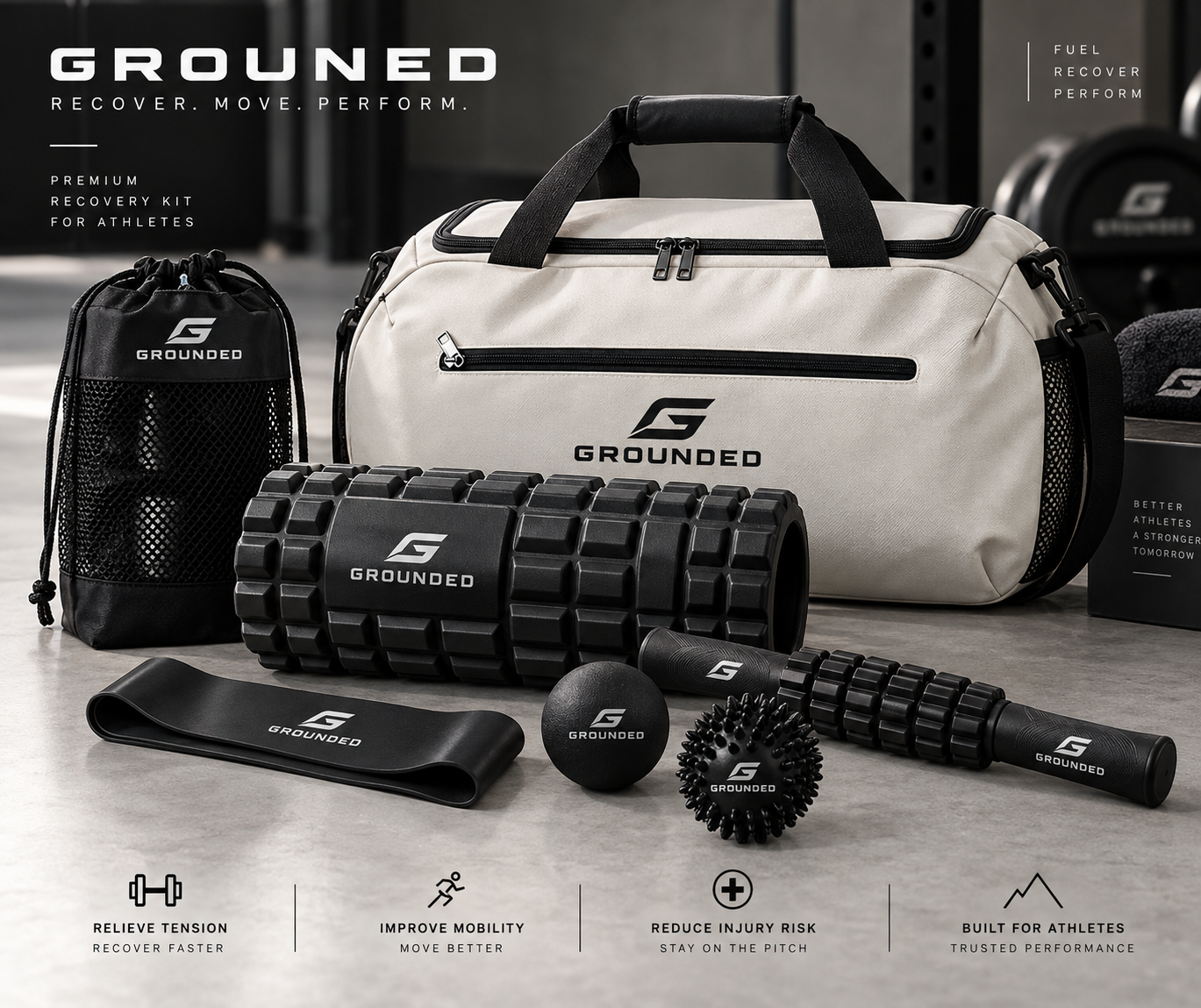
Recovery
Massage Ball
Compact, targeted pressure for feet, glutes, shoulders and hard-to-reach areas.
View Massage Ball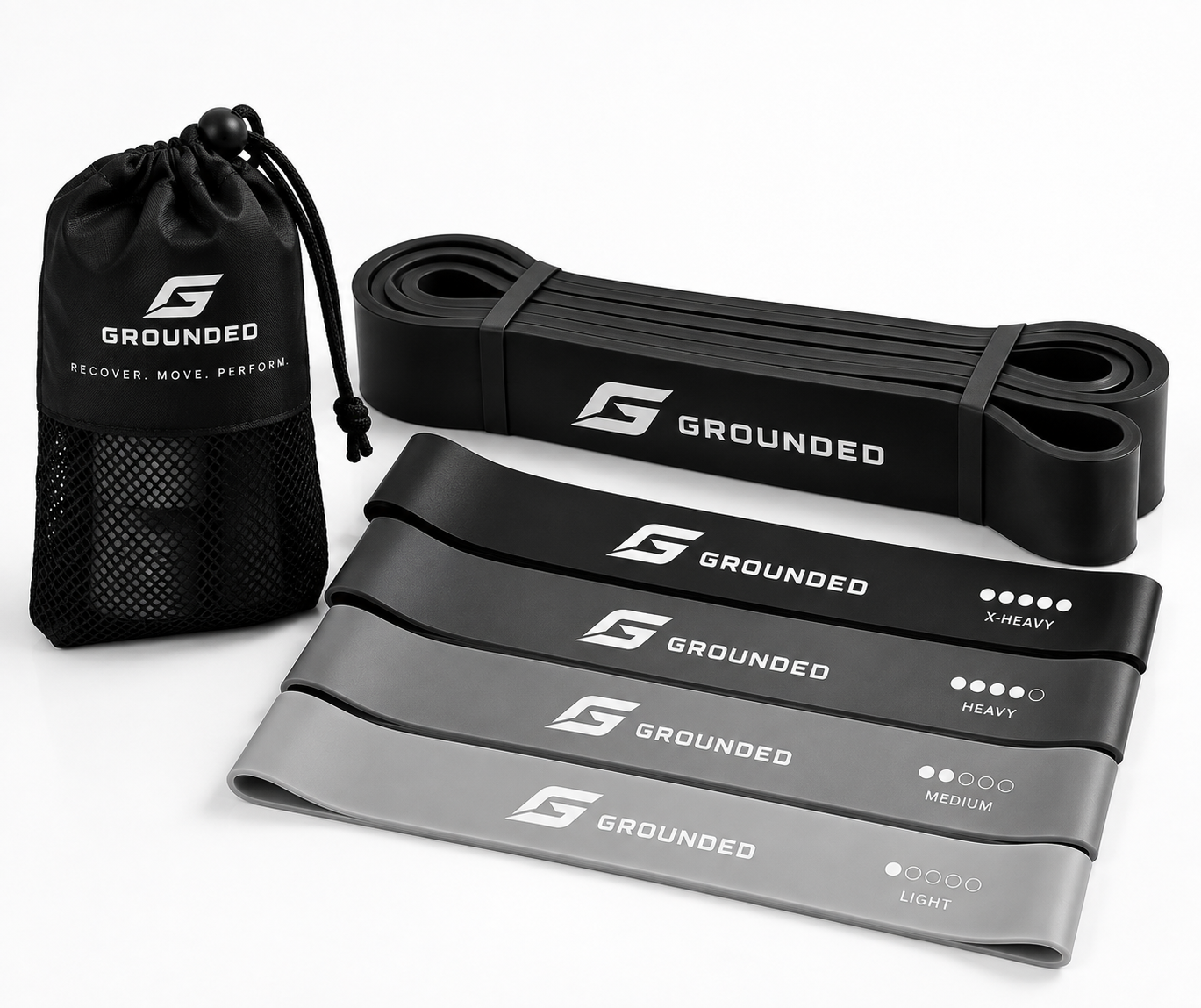
Mobility
Mini Bands
Four resistance levels for activation, mobility and controlled strength work.
View Mini BandsBest Seller
Recovery Kit
A complete system for mobility, activation and recovery, packed in a premium Grounded kit bag.
View Recovery KitImage coming soon
Hydration
Electrolytes
An electrolyte blend to support rehydration after long or sweaty sessions.
View ElectrolytesFrequently asked questions
What is the most important recovery tool?
Sleep. Among equipment, a foam roller is the most versatile.
Do I need a massage gun?
Not necessarily. A roller and massage ball cover most needs for most athletes.
Can recovery tools replace sleep and nutrition?
No. Recovery tools support good habits; they do not replace sleep, nutrition or structured training.
When should I avoid foam rolling?
Avoid rolling over acute injuries, bruises, swelling, varicose veins or bones and joints. If you have a medical condition, check with a professional first.
Continue learning
Related articles
How to Recover Faster After a GAA Match
A practical 48-hour plan for Gaelic footballers and hurlers, from the final whistle to the next training session.
Football Recovery Routine: A Complete Guide for Players
How footballers can recover between fixtures, from the cool-down to the next session.
Rugby Recovery Guide: Recovering From Contact and Collision
Managing the soreness of collision sport, with a practical routine for the days after a match.
Recovery notes