

Sports Recovery Hub · Fundamentals
Sports Recovery in Ireland: The Complete Guide
What sports recovery really means, and how Irish athletes can build it into a busy week.
How Grounded earns trust
Evidence explained. Limits made clear.
Editorial approach. We link original research, separate findings from practical interpretation and state when evidence is limited.
Athlete safety. Our content is general education, not diagnosis or medical advice. Pain and injury need qualified assessment.
Quick answer
The short version
- Recovery is where training turns into progress
- Sleep, food and fluids do most of the work
- Tools help when they make a routine easier to follow
Sports recovery is everything that happens between sessions that lets the body adapt to training. Irish athletes often train in the evening after work or school, play for more than one team and compete through wet, cold winters — so recovery has to be simple and repeatable.
Recovery is not optional. It is a system, and it works best when the basics come first and tools support them.
The five pillars of recovery
Grounded organises recovery around five pillars. Get these right before spending money on anything else.
- Sleep: 7–9 hours with consistent timing
- Nutrition: carbohydrate to refuel, protein to repair
- Hydration: replace fluid and sodium lost in sweat
- Load: plan hard and easy days, especially across multiple teams
- Movement: light activity, mobility and simple tools
A simple week for a club athlete
Most amateur athletes train two or three evenings and play at the weekend. A practical structure:
- Match day: refuel within a couple of hours, rehydrate, sleep
- Day after: walk, cycle or swim easily; 10 minutes of foam rolling and mobility
- Mid-week: hardest training day, well away from the match
- Day before: short, sharp session and an early night
Where recovery tools fit
Sleep and nutrition are the foundation. Among recovery methods, a 2018 meta-analysis found massage most effective for reducing muscle soreness and perceived fatigue, with active recovery, compression garments and water immersion also helping. Foam rolling can reduce perceived soreness for a short time. None of them replaces the basics.
Irish conditions
Cold, wet pitches and late-evening sessions make warm clothing after training, a quick hot meal and getting to bed on time more valuable than any gadget.
The five pillars of sports recovery
Recovery is a system, not a single product. Grounded organises it into five pillars, in order of impact.
1. Sleep
The foundation for physical repair, hormone regulation and decision-making. A basketball study in our library found extending sleep improved sprint times and shooting accuracy.
2. Nutrition
Enough total energy, carbohydrate to refuel and protein spread across the day to support muscle repair.
3. Hydration
Replacing fluid and, after heavy sweating, sodium. Most sessions need only water.
4. Load management
Balancing hard and easy days and the total across every team and activity.
5. Mobility and tools
Foam rollers, massage balls and bands make warm-ups and mobility easier to repeat. They support the other pillars rather than replace them.
Recovery methods compared by evidence
Popularity and evidence are not the same thing. This is a plain summary based on the reviews referenced across our guides.
A sample recovery week
An example for someone training three times a week plus a weekend game. The structure matters more than the details.
- Monday: active recovery — walk, swim or easy cycle; 10 minutes of rolling and mobility.
- Tuesday: main training; band warm-up before, proper meal after.
- Wednesday: rest or light mobility; prioritise an early night.
- Thursday: training; short roller warm-up.
- Friday: rest; normal meals and fluids.
- Saturday or Sunday: match; refuel and rehydrate afterwards, then sleep.
DOMS and muscle soreness
Delayed onset muscle soreness usually peaks 24–72 hours after unfamiliar or intense exercise, especially eccentric work such as downhill running or heavy braking. It is normal and eases on its own.
Gentle movement, rolling and good sleep may help it feel better. Sharp pain, swelling, or pain in one specific spot is different and should be assessed.
Recovery and injury prevention
Good recovery lowers fatigue, and fatigued athletes move less well. But the strongest injury-prevention evidence in field sport supports structured warm-up programmes such as FIFA 11+ and targeted strength work, both referenced in our Research Library.
Common recovery mistakes
Most athletes do not need more recovery products. They need fewer gaps in the basics.
- Buying gadgets while sleeping six hours a night.
- Under-eating on heavy training days.
- Stacking hard sessions back to back without easy days.
- Using recovery tools to mask pain.
- Copying professional routines without professional schedules or support.
Sports recovery equipment in Ireland
A foam roller, massage ball and resistance bands cover most needs. Electrolytes help in long or hot sessions; grip socks are a comfort item for players in boots. Grounded ships across Ireland with tracked DPD delivery, and unused items can be returned within 30 days in original packaging.
Recovery for different athletes
The pillars are the same for everyone, but the emphasis changes.
Field sport players
GAA, soccer and rugby players face repeated sprints and contact. Prioritise sleep and food after matches, and use short roller and band routines before training.
Runners
Mileage builds gradually, so recovery is about consistency: easy days genuinely easy, calf and quad mobility, and fuelling long runs properly.
Gym and strength athletes
Protein across the day, sensible weekly volume and sleep matter most. Avoid routine cold-water immersion straight after strength sessions if muscle and strength gains are the goal.
Younger athletes
Teenagers playing several sports are at particular risk of overload. Total weekly load, sleep and regular meals deserve more attention than any recovery product.
Research referenced
Journal of Bodywork and Movement Therapies · 2024
Preventive effect of foam rolling on muscle soreness after exercise: A systematic review and meta-analysis
Foam rolling after training is a reasonable, low-risk tool to modestly reduce next-day and 2-3 day post-exercise soreness. It is not a cure for soreness and effect sizes are small-to-moderate.
Frontiers in Physiology · 2019
A Meta-Analysis of the Effects of Foam Rolling on Performance and Recovery
Foam rolling can be used as part of a warm-up (does not reduce power/speed, may modestly help) and as a recovery tool post-session; benefits are real but small in magnitude.
Sleep · 2011
The Effects of Sleep Extension on the Athletic Performance of Collegiate Basketball Players
Prioritizing sleep duration (aiming for ~9-10 hours in bed) can meaningfully improve sport-specific speed, shooting accuracy and mood in athletes who are otherwise under-slept.
British Journal of Sports Medicine · 2018
A systematic review, meta-analysis and meta-regression of the effect of protein supplementation on resistance training-induced gains in muscle mass and strength in healthy adults
During a structured strength program, hitting roughly 1.6 g/kg/day total protein (spread across meals) supports meaningfully greater strength and lean mass gains than training alone; intakes beyond this show diminishing average benefit.
British Journal of Sports Medicine · 2017
Effect of specific exercise-based football injury prevention programmes on the overall injury rate in football: a systematic review and meta-analysis of the FIFA 11 and 11+ programmes
Across multiple independent RCTs and settings, structured neuromuscular warm-up programmes consistently lower injury incidence in football, reinforcing the FIFA 11+ single-trial finding above as a generalizable effect, not a one-off result.
External references
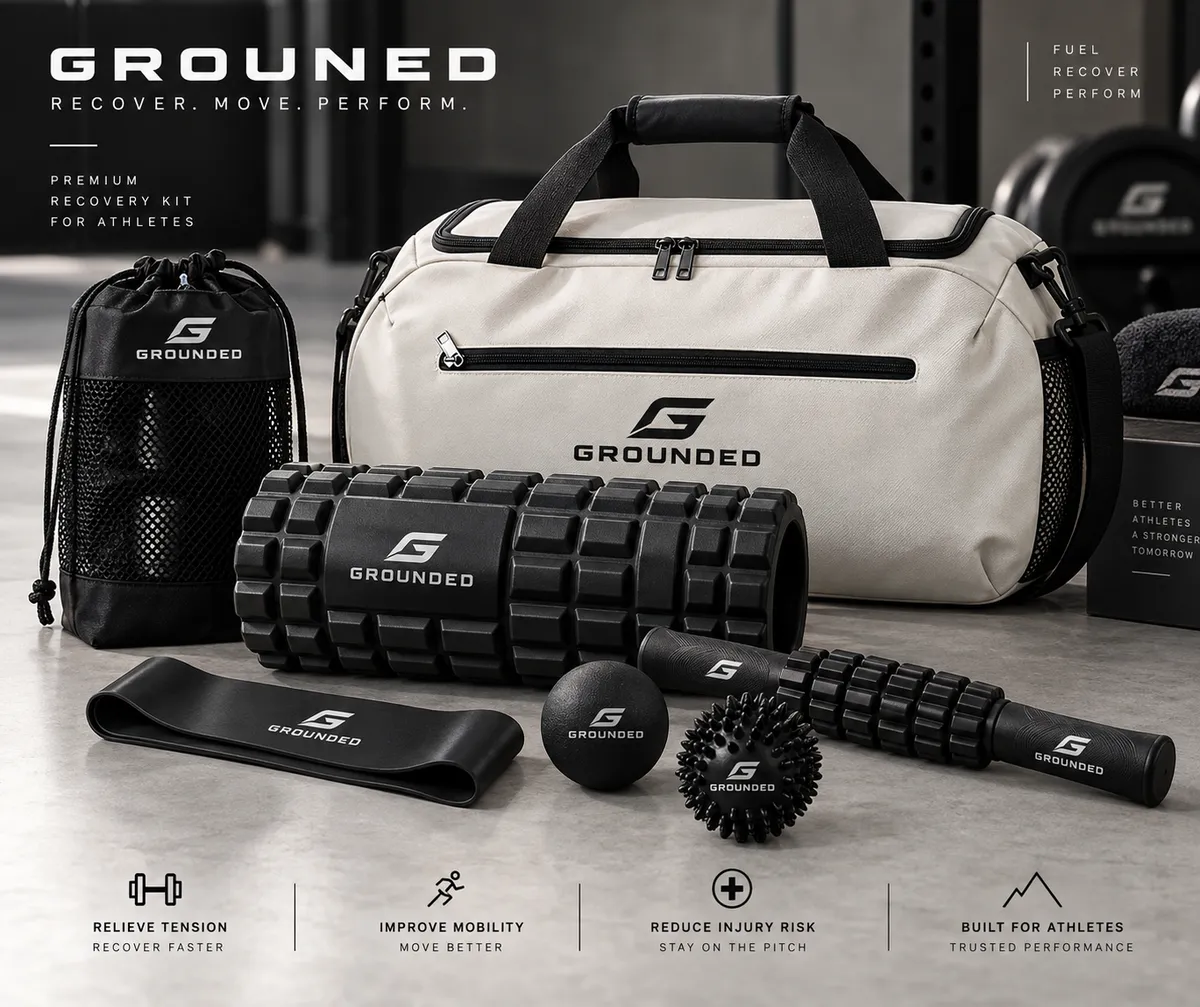
Grounded Recovery Kit
Foam roller, massage ball, mini bands and long band in one carry bag.
View the Recovery Kit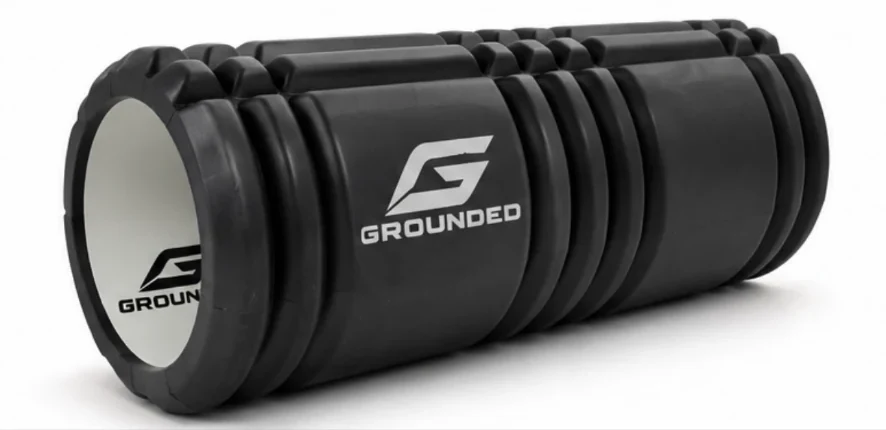
Grounded Foam Roller
High-density, textured and kit-bag sized.
View the Foam RollerQuestions
What is sports recovery?
The process of restoring energy, repairing tissue and reducing fatigue between training sessions and matches.
What is the most important part of recovery?
Sleep. Nutrition and hydration come next.
Do I need recovery equipment?
Not to recover, but a foam roller and bands make mobility routines easier to stick to.
What is the fastest way to recover after sport?
There is no shortcut. Refuel with carbohydrate and protein, rehydrate, and sleep well. Light movement the next day usually helps.
How many rest days do athletes need?
Most people training regularly benefit from at least one or two easier or rest days per week, more during heavy match periods.
Do recovery tools actually work?
Foam rollers and massage show small, short-term benefits for soreness and flexibility. They work best alongside sleep, food and sensible training load.
When should I see a physio instead?
If pain is sharp, localised, getting worse, or still there after a week, or if it changes how you walk or run.
General education only, not medical advice. For pain, injury or a medical condition, see a physiotherapist or doctor.
Related reading across Grounded
Explore the Grounded knowledge base