

Electrolytes & Hydration Hub · Fundamentals
Sports Hydration Guide
Daily needs, sweat rate testing and how hydration affects performance.
How Grounded earns trust
Evidence explained. Limits made clear.
Editorial approach. We link original research, separate findings from practical interpretation and state when evidence is limited.
Athlete safety. Our content is general education, not diagnosis or medical advice. Pain and injury need qualified assessment.
Quick answer
The short version
- Pale-yellow urine is a simple daily check
- Losing more than about 2% body mass in sweat may impair performance
- A sweat test tells you your personal needs
Hydration isn’t just about match day. Starting each session well hydrated, and replacing losses afterwards, supports how you train and recover.
Daily hydration
Drink regularly through the day and with meals. Pale-yellow urine is a practical target.
Measuring sweat rate
- Weigh yourself (minimal clothing) before a 1-hour session
- Note what you drink
- Weigh again after, towelled dry
- Loss in kg + fluid drunk in litres ≈ hourly sweat rate
Why it matters
Research suggests losing over roughly 2% of body mass can impair endurance performance and decision-making, particularly in heat.
External references
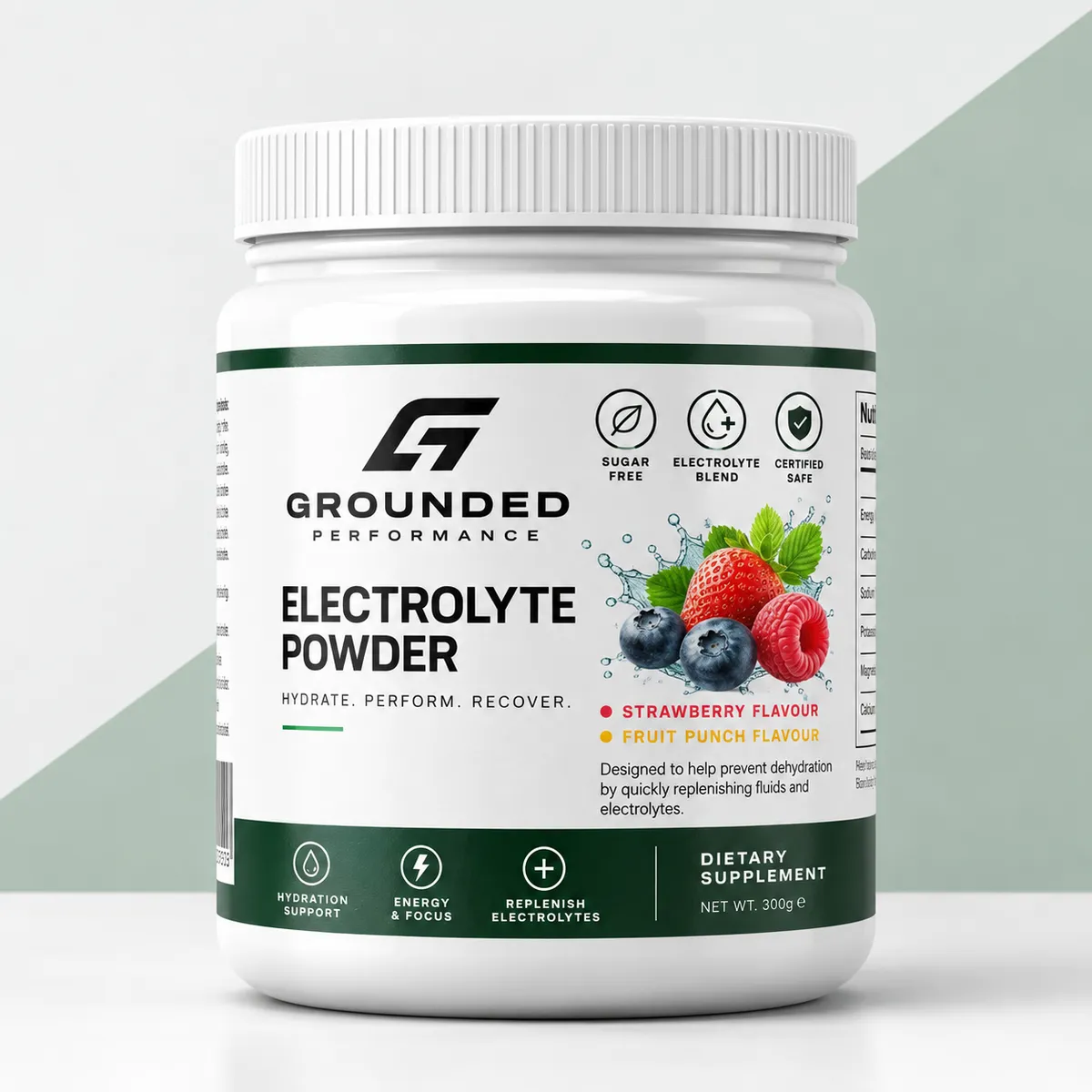
Grounded Electrolytes
Launching soon. Join the waiting list to hear first.
Join the waiting list
Grounded Recovery Kit
Foam roller, massage ball, mini bands and long band in one carry bag.
View the Recovery KitQuestions
How much water should an athlete drink a day?
It varies with size, climate and training. Use thirst and urine colour as guides.
How do I know my sweat rate?
Weigh before and after a session and add fluid drunk.
General education only, not medical advice. People with heart, kidney or blood pressure conditions should seek medical advice before changing sodium or fluid intake.
Related reading across Grounded
Explore the Grounded knowledge base