

Recovery Kits Hub · Buying
Recovery Kits in Ireland
What a recovery kit is, who it suits and how to use one across a week.
How Grounded earns trust
Evidence explained. Limits made clear.
Editorial approach. We link original research, separate findings from practical interpretation and state when evidence is limited.
Athlete safety. Our content is general education, not diagnosis or medical advice. Pain and injury need qualified assessment.
Quick answer
The short version
- One bag for warm-up, mobility and recovery
- Suits players training several times a week
- Tools support a routine built on sleep, food and load management
- A kit is only useful if it makes a 10-minute routine easy to repeat
A recovery kit brings the tools for warm-up, mobility and post-training recovery into one bag, so the routine happens wherever you train.
Recovery kits are still a new category in Ireland. This page explains what they are; the buying guide helps you compare.
What is a recovery kit?
The Grounded Recovery Kit includes a high-density foam roller, a massage ball, mini resistance bands and a long resistance band in a carry bag.
Why recovery matters
Training creates the stimulus; adaptation happens during recovery. Sleep, nutrition and hydration are the foundations. Tools make short mobility and activation routines easy to repeat.
Delivery in Ireland
Grounded ships across Ireland with tracked DPD delivery and 30-day returns on unused items.
Who a recovery kit is really for
A recovery kit makes the most sense for people who train three or more times a week and keep meaning to do mobility work but rarely get around to it. The value is not in any single tool. It is in having everything in one bag, so warm-ups happen in the dressing room and short mobility sessions happen at home without a hunt for equipment.
If you already own a good foam roller and a set of bands and use them consistently, you may not need a kit. If you own nothing, or own odds and ends that live in different places, a kit is usually the simpler and cheaper route to a routine you will actually keep.
Club and county players
GAA, soccer and rugby players juggle training, matches and often more than one team. A kit that lives in the gear bag means calves, hips and glutes get attention before every session, not just when there is a physio on site.
Runners and gym-goers
Runners in higher-mileage blocks and people lifting several days a week benefit from short, repeatable lower-body routines. Bands cover activation; the roller and ball cover the tissue work most people skip.
Parents, coaches and clubs
Many kits are bought for teenagers starting to train more seriously. A kit is a practical way to build good habits early — paired with sensible load and plenty of sleep, not as a substitute for either.
Kit vs buying tools one at a time
Both routes work. The right choice depends on what you already own and how likely you are to build a routine without a nudge.
A practical week with a recovery kit
This is an example for someone training three evenings a week plus a weekend match. Adjust it to your schedule; the principle is short and frequent rather than long and occasional.
- Training days: 6–8 minutes before the session — mini band glute activation, light rolling on calves and quads, ball on the feet if they feel tight.
- After training: a few minutes of easy rolling if it feels good, then food, fluid and sleep do the heavy lifting.
- Day after a match: a gentle walk or cycle, then 10 minutes of relaxed rolling and long-band mobility for hips and hamstrings.
- Rest day: nothing structured needed. A short mobility session is fine if you enjoy it.
What to check before buying a recovery kit in Ireland
Recovery kits vary a lot in quality. A few questions sort the useful ones from the novelty bundles.
- Is the foam roller dense enough to hold its shape after months of use?
- Is the massage ball firm enough for glutes and feet but not so hard it is unusable?
- Do the bands come in more than one resistance so you can progress?
- Does it include a bag you would actually carry to training?
- Are delivery, returns and the seller’s location clear before you pay?
Common mistakes with recovery kits
Most kits fail for behavioural reasons, not because of the equipment.
- Leaving the kit at home instead of in the gear bag.
- Rolling hard and painfully in the belief that more discomfort means more benefit.
- Treating the kit as a fix for a niggle that needs a physio.
- Using it instead of sleep, a proper meal or a rest day, rather than alongside them.
What the research supports — and what it does not
Meta-analyses in our Research Library suggest foam rolling can produce small, short-term improvements in flexibility and perceived soreness, with little negative effect on performance. That supports using a roller as part of a warm-up or cool-down.
There is less direct research on recovery kits as a bundle, and no good evidence that any tool speeds up tissue repair on its own. The honest case for a kit is consistency: it removes friction from habits that are already reasonable. Sleep, nutrition, hydration and sensible training load remain the foundations.
Expert tips for getting value from a recovery kit
Physios and strength coaches tend to give the same advice: attach the kit to something you already do. If you always arrive at training ten minutes early, that is your window. If you watch television most evenings, keep the roller beside the couch rather than in a cupboard.
Start smaller than you think. Two or three movements done every session beat a twenty-minute routine you abandon after a fortnight. Once the habit is in place, add a band exercise or a second muscle group.
Match the tool to the job
Use the roller for big muscles such as quads, calves and upper back; the ball for feet, glutes and the side of the hip; mini bands to wake up the glutes before sprinting; and the long band for hip, hamstring and shoulder mobility.
Keep pressure comfortable
Aim for a level of discomfort you could rate around 5 out of 10. Above that, muscles tend to guard rather than relax, and the session becomes something you avoid.
Track it for a month
A tick on a calendar after each session is enough. After four weeks, most people can tell whether the routine is helping them feel looser before training and less stiff the day after matches.
Recovery kit or physio — knowing the difference
A recovery kit is for general maintenance in healthy athletes. It is not a treatment plan. Stop and get assessed if you notice pain that is sharp or catching, swelling, pain that wakes you at night, numbness or tingling, or a niggle that keeps returning in the same spot. Using tools to push through those signs usually lengthens the time out.
Research referenced

Grounded Recovery Kit
Foam roller, massage ball, mini bands and long band in one carry bag.
View the Recovery Kit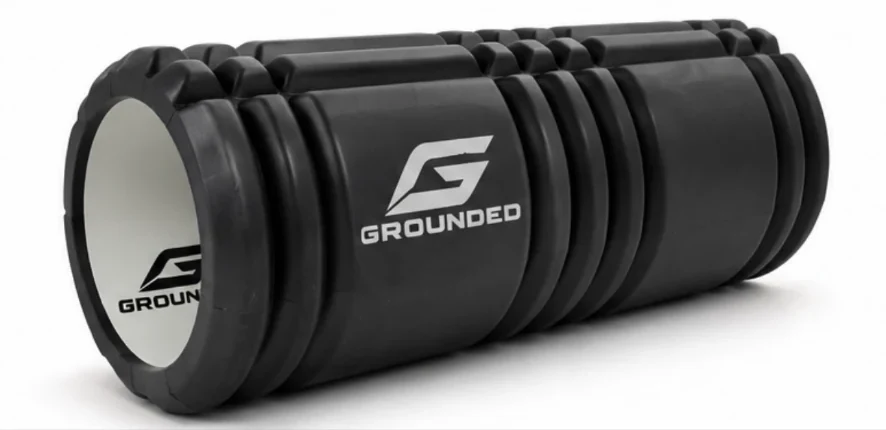
Grounded Foam Roller
High-density, textured and kit-bag sized.
View the Foam RollerQuestions
What is in a recovery kit?
Typically a foam roller, massage ball and resistance bands. See what should be in a recovery kit.
Who needs a recovery kit?
Athletes training several times a week who want a consistent routine.
Is a recovery kit worth it?
For people training several times a week without a routine, usually yes — mainly because it makes short warm-ups and mobility sessions easy to repeat. If you already own and use good tools, you may not need one.
Can a recovery kit prevent injuries?
No tool can promise that. Structured warm-ups and strength work have the strongest injury-prevention evidence; a kit can make those warm-ups easier to do consistently.
Is a recovery kit a good gift for a teenager who plays sport?
It can be, provided it is paired with sensible training load and good sleep. Show them a simple 5–10 minute routine so the kit gets used.
How long does a recovery kit last?
Dense rollers and balls last years with normal use. Bands are the item most likely to wear and may need replacing first.
General education only, not medical advice. For pain, injury or a medical condition, see a physiotherapist or doctor.
Related reading across Grounded
Explore the Grounded knowledge base