

Sports Recovery Hub · Fundamentals
Muscle Recovery: How Muscles Repair After Exercise
The science of muscle repair in plain language, and what you can do to support it.
How Grounded earns trust
Evidence explained. Limits made clear.
Editorial approach. We link original research, separate findings from practical interpretation and state when evidence is limited.
Athlete safety. Our content is general education, not diagnosis or medical advice. Pain and injury need qualified assessment.
Quick answer
The short version
- Glycogen refuels with carbohydrate
- Muscle repairs with protein and sleep
- Light movement helps you feel less stiff
Hard training causes small disruptions in muscle fibres and depletes stored energy (glycogen). Muscle recovery is the process of refuelling, repairing and adapting so you come back stronger.
Most of that happens while you sleep and eat — not while you use recovery tools.
How long does muscle recovery take?
After a moderate session, most people feel recovered within 24 hours. After a hard match, heavy lifting or unfamiliar exercise, 48–72 hours is common. Soreness and performance don’t always recover at the same rate.
What supports muscle recovery
- Protein spread through the day, including a serving after training
- Carbohydrate to refill glycogen, especially with two sessions close together
- Sleep: the main window for repair
- Easy movement the next day
- Foam rolling or massage if it helps you feel looser
What slows it down
- Short sleep
- Under-eating, especially low carbohydrate
- Alcohol after matches
- Stacking hard sessions without easy days
Research referenced
Journal of Bodywork and Movement Therapies · 2024
Preventive effect of foam rolling on muscle soreness after exercise: A systematic review and meta-analysis
Foam rolling after training is a reasonable, low-risk tool to modestly reduce next-day and 2-3 day post-exercise soreness. It is not a cure for soreness and effect sizes are small-to-moderate.
Frontiers in Physiology · 2019
A Meta-Analysis of the Effects of Foam Rolling on Performance and Recovery
Foam rolling can be used as part of a warm-up (does not reduce power/speed, may modestly help) and as a recovery tool post-session; benefits are real but small in magnitude.
External references

Grounded Recovery Kit
Foam roller, massage ball, mini bands and long band in one carry bag.
View the Recovery Kit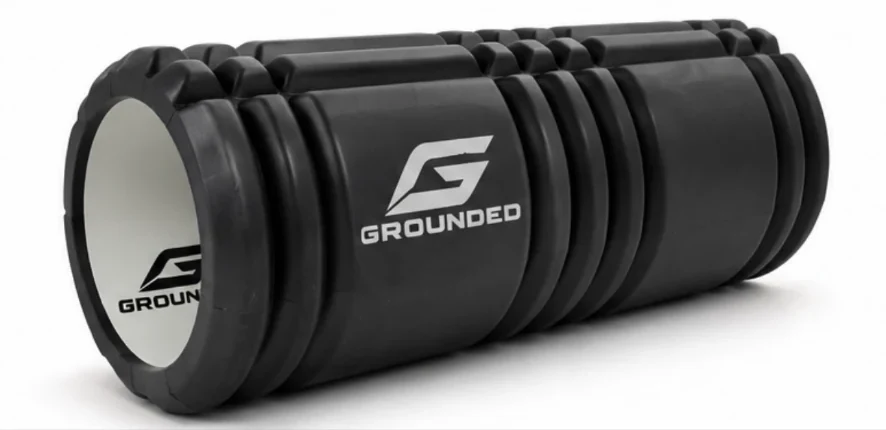
Grounded Foam Roller
High-density, textured and kit-bag sized.
View the Foam RollerQuestions
How can I speed up muscle recovery?
Sleep well, eat enough protein and carbohydrate, stay hydrated and move lightly the next day.
Should I train sore muscles?
Light training is fine. Save hard efforts until soreness has mostly eased.
Does foam rolling help muscle recovery?
It can reduce perceived soreness in the short term. It does not directly speed tissue repair.
General education only, not medical advice. For pain, injury or a medical condition, see a physiotherapist or doctor.
Related reading across Grounded
Explore the Grounded knowledge base