

Plan the training week · Strength, classes & consistency
Gym Recovery
Gym recovery starts with the programme. Strength sessions, group classes and sport all contribute to the same weekly workload. Use this hub to plan demanding days and choose deeper guides on soreness, nutrition and tools—not to chase soreness as proof of progress.
By the Grounded Editorial Team · Editorial standardsQuick answer
Build recovery into the programme before adding tools: progress unfamiliar exercises gradually, place demanding sessions sensibly, eat enough and protect sleep. Use mobility to assess comfortable movement, not to prove you can lift through pain. More soreness does not mean a better workout.
Warm up for the lift or class ahead
Begin with easy whole-body movement and practise the patterns in your session. Before squats, presses or hinges, use progressively heavier warm-up sets with technique you can control. A band is an optional way to rehearse some movements, not a requirement to activate every muscle before lifting.
For circuit classes, prepare the specific movements and allow yourself a lower-intensity opening round where appropriate. Do not use the warm-up to exhaust yourself. If the first sets reveal pain, adapt or stop rather than hoping a roller will make the movement safe.
Plan around sessions, not around soreness
A new exercise, greater range or more sets can leave you sore even when the load seems modest. Introduce changes gradually. When lifting and group classes overlap, count both in the week: a hard leg class is not automatically a recovery day from squats.
Normal muscle soreness is often delayed, but it is not the goal of training. You can make progress without feeling sore after every session. If soreness prevents controlled technique or normal movement, reduce the demand and reassess. Sharp pain, joint swelling or significant weakness does not belong in an ordinary DOMS routine.
Feed the programme and hydrate to the session
Include protein-containing foods across the day and enough overall food to support your training. A balanced meal after the gym is usually more useful than worrying about a narrow supplement window. Carbohydrate can be especially helpful when you combine strength work with demanding classes, sport or running.
Water is often sufficient for a short gym session. Electrolytes become more relevant with long sessions, a hot room or substantial sweat loss; they are not automatically necessary because you lifted heavily. Check labels and avoid assuming an electrolyte product also supplies carbohydrate. Medical conditions affecting fluid, sodium or protein needs warrant individual advice.
Use mobility to support controlled technique
Select a small number of comfortable movements relevant to your session, such as ankle rocks for squats or controlled shoulder movement for pressing. If optional rolling makes a movement feel easier, follow it with active practice and recheck technique. You do not need a long full-body routine after every workout.
A roller suits broad muscle areas; a ball allows smaller, controlled pressure against a wall. Avoid joints, the spine and injured tissue. Bands can provide resistance for planned strength work, but inspect them and secure any anchor before loading. Do not force range to reach a textbook position that your current symptoms cannot tolerate.
Choose the next session with the whole week in mind
If you train legs on Monday, take part in a hard class on Tuesday and play a match on Wednesday, the schedule may be the problem—not a missing recovery tool. Map demanding days before selecting accessories. An easier day can mean rest, walking or a lower-demand session rather than another workout disguised as recovery.
Protect bedtime and review repeated fatigue, declining performance or soreness that persists beyond what is usual for you. A small daily log can help you discuss adjustments with a coach. Progress comes from a programme you can sustain; recovery supports the programme rather than becoming another competition.
An adaptable starting point
Your practical plan
Adjust this example to your workload, symptoms and professional advice. It is not a medical clearance timetable.
| When | Priority | What to check |
|---|---|---|
| Before training | Practise the planned lifts with progressive warm-up sets. | Movement remains controlled and comfortable. |
| After training | Return to meals, fluids and a realistic sleep plan. | Tools stay optional. |
| Between sessions | Count classes, sport and running in the same workload. | Do not stack hard leg days accidentally. |
| When changing exercises | Introduce new volume and range gradually. | Soreness is feedback, not the target. |
Common mistakes
- Using DOMS as a score for workout quality.
- Adding unfamiliar high-volume exercises before a demanding sports week.
- Treating a hard class as recovery from strength training.
- Using rolling to mask pain before heavy sets.
When to seek help
Sharp pain, a swollen joint or unexplained weakness needs assessment. Severe muscle pain with dark urine or marked illness after exercise requires urgent medical attention, not a home recovery routine.
Habits first. Tools second.
Equipment that fits the routine
Choose a tool only when it has a useful place in your week. Product pages include launch status and notification options; no equipment replaces sleep, food or appropriate assessment.
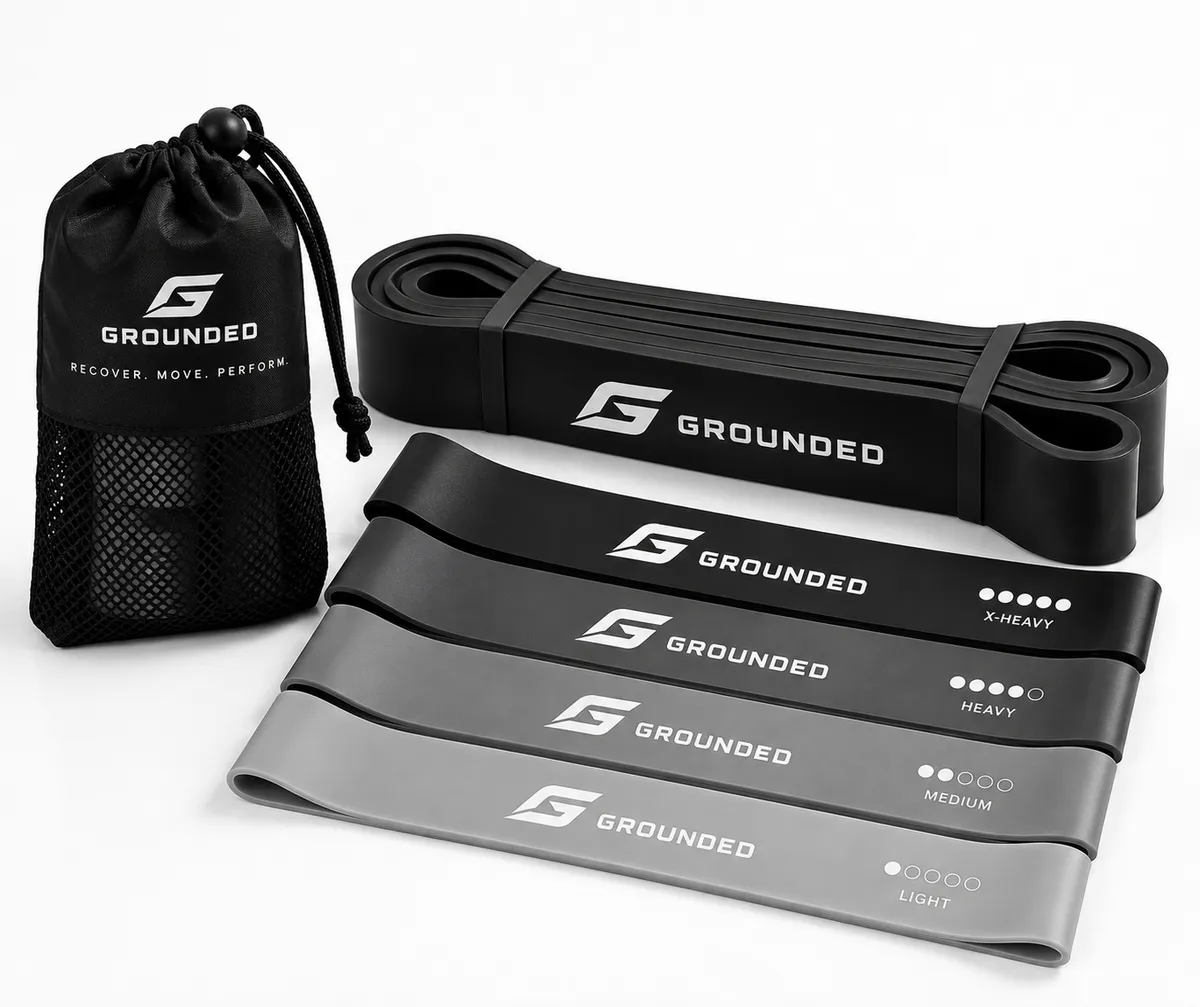
Grounded Resistance Bands
Controlled warm-up or strength exercises with safe anchors.
Explore Resistance Bands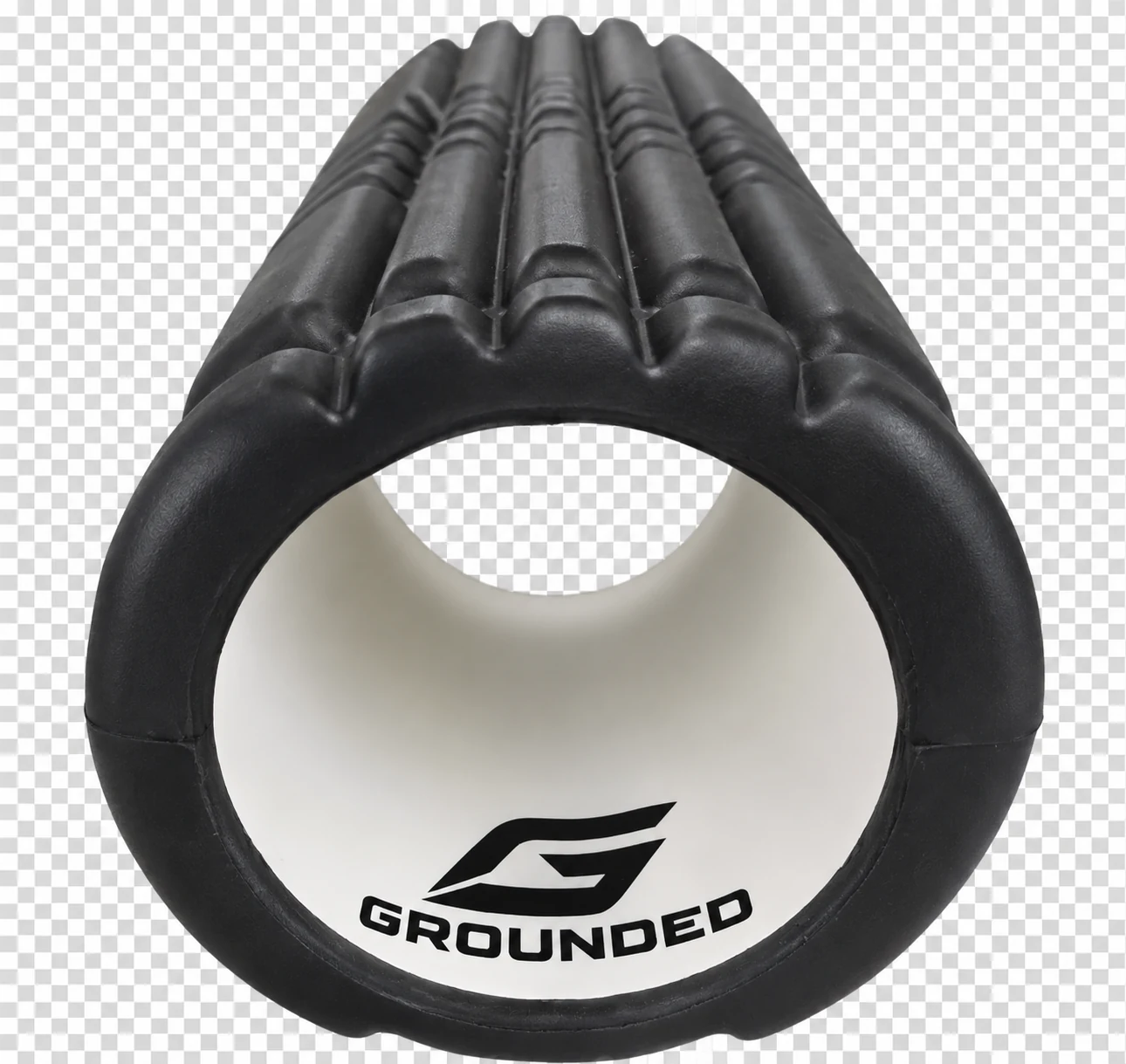

Grounded Recovery Kit
A portable setup when you already use several tools regularly.
Explore the Recovery KitOriginal sources, not product claims
Evidence and its limits
The sources below support specific principles, not every exercise in this practical example. Findings from one sport do not automatically apply to another. Grounded has a commercial interest in the products linked here; these are not independent product reviews.
2018 · British Journal of Sports Medicine
A systematic review, meta-analysis and meta-regression of the effect of protein supplementation on resistance training-induced gains in muscle mass and strength in healthy adults
Protein supplementation alongside resistance training produced modest additional gains in healthy adults over weeks of training. It does not establish that every lifter needs supplements or that protein immediately removes soreness.
2024 · Journal of Bodywork and Movement Therapies
Preventive effect of foam rolling on muscle soreness after exercise: A systematic review and meta-analysis
Rolling may reduce perceived post-exercise soreness, with varying protocols and subjective outcomes. A less-sore muscle is not automatically ready for maximal loading.
Exercise and fluid replacement
The ACSM position stand (2007) recommends individualising fluid replacement because sweat rates and losses vary. Electrolyte and carbohydrate drinks can be useful in certain circumstances; this is not a prescription for every session or proof of a particular product’s effectiveness.
Read the original ACSM position stand (opens in a new tab)Go deeper into your routine
Gym Recovery questions
Can I train legs when I still have DOMS?
Mild soreness may be compatible with a lower-demand session if movement is normal. Reduce or change training when technique is affected. Sharp pain, swelling or unusual weakness needs assessment.
Is a hard fitness class a recovery day from lifting?
Not necessarily. Count its running, jumping and resistance work in your total load. Choose a genuinely easier day when your programme needs one.
Do I need electrolytes after weight training?
Not automatically. Water and normal meals are often enough after a short session. Longer, hotter or very sweaty sessions may justify electrolytes; individual needs and medical conditions matter.
Will foam rolling make me ready for another heavy session?
It may reduce perceived soreness, but that does not establish readiness for heavy lifting. Consider movement quality, fatigue, symptoms and the planned training load.
Your sport. Your routine.
Recovery by sport
GAA Recovery
The club-week plan · Gaelic football, hurling & camogie
Football Recovery
Association football · Match minutes, boots & fixture congestion
Rugby Recovery
Collision sport · Separate ordinary soreness from injury
Running Recovery
Easy miles, long runs & race-week decisions
Golf Recovery
Walking, rotation & repeated rounds
Gym Recovery
Plan the training week · Strength, classes & consistency
How Grounded earns trust
Evidence explained. Limits made clear.
Editorial approach. We link original research, separate findings from practical interpretation and state when evidence is limited.
Athlete safety. Our content is general education, not diagnosis or medical advice. Pain and injury need qualified assessment.