

Walking, rotation & repeated rounds
Golf Recovery
Golf recovery includes the miles walked, repeated swings and time spent travelling or practising. A practical routine supports comfortable movement through the round without promising a longer drive or treating back pain as something to roll away.
By the Grounded Editorial Team · Editorial standardsQuick answer
Prepare for both the walk and the swing: warm up before the first tee, build practice swings gradually, carry food and water and finish with comfortable hip and upper-back movement. Repeated rounds need sleep and sensible practice volume; forcing the lower back with a roller is not a solution.
Arrive ready for the first tee
Allow time for a short brisk walk and comfortable ankle, hip, shoulder and upper-back movement. Use small, controlled trunk turns without forcing the lower back. Progress from gentle practice swings to longer clubs and a few fuller swings rather than making the first drive your first demanding movement of the day.
A light resistance band can be used for controlled rows or shoulder movement if you already know the exercises. Keep resistance low enough to avoid fatigue. If you arrive late, a brief, deliberate warm-up is preferable to rushing straight into maximal swings, but it cannot make existing pain safe to play through.
Recover from the walk as well as the swing
Walking a round creates a different demand from hitting a few balls on the range. Change wet socks, check footwear comfort and eat a normal meal after a long day on the course. If you carry your clubs, consider how the bag fits and whether it creates avoidable shoulder or back discomfort; a trolley may be a practical alternative.
For repeated rounds, avoid adding a large range session just because golf feels less intense than running. Fatigue can build through walking, travel and poor sleep as well as swings. Keep practice deliberate and reduce extra volume if movement becomes uncomfortable. No tool can guarantee that you will be ready for another round the next morning.
Make food and water accessible through the round
Pack a bottle and a snack before teeing off. Use pauses between holes to drink according to thirst rather than waiting until the clubhouse. A sandwich, fruit or another familiar snack may be more practical than a supplement when several hours separate breakfast and lunch.
An electrolyte drink can be useful during long rounds in warm weather with substantial sweating. It is not required for every round and should not be presented as a way to improve swing accuracy. Do not force large quantities of fluid, and seek individual advice if medication or a medical condition affects fluid and salt intake.
Find comfortable rotation without forcing the spine
After a round, try gentle hip rotations and upper-back turns within a comfortable range. Include easy calf and ankle movement after a long walk. The aim is a useful range for your own swing and everyday movement, not copying another golfer’s flexibility or trying to eliminate every sensation of stiffness.
If you use a ball, begin against a wall around the glute or upper-back muscles so pressure is easy to control. Avoid direct pressure on the spine, ribs or painful areas. Do not roll the lower back to force more rotation. Persistent pain during the swing needs assessment and may also warrant a review with a qualified coach.
Treat practice and strength as part of the week
A week with several rounds, long drives and a high-volume range session is still a busy training week. Introduce extra practice gradually, and separate demanding strength work from important rounds when possible. Unfamiliar exercises may leave you sore; test them away from competition rather than the night before.
A controlled strength programme can be planned with an appropriate professional, while bands offer a portable option for some movements. These are practical suggestions, not evidence that a particular Grounded product improves golf performance. Direct golf-specific evidence is not being claimed from the general exercise studies linked below.
An adaptable starting point
Your practical plan
Adjust this example to your workload, symptoms and professional advice. It is not a medical clearance timetable.
| When | Priority | What to check |
|---|---|---|
| Before the first tee | Walk, move comfortably and build practice swings. | Do not force painful rotation. |
| During the round | Keep water and a familiar snack accessible. | Adapt to the weather and your needs. |
| After 18 holes | Change wet kit, eat and use gentle movement. | Check foot, shoulder and back symptoms. |
| Before another round | Protect sleep and reduce unnecessary range volume. | Persistent swing pain needs assessment. |
Common mistakes
- Making the first full swing the entire warm-up.
- Forcing lower-back rotation or rolling directly over the spine.
- Forgetting food and water through a long round.
- Assuming a recovery product improves driving distance or accuracy.
When to seek help
Persistent back pain, pain travelling into a limb, numbness or weakness needs clinical assessment. Avoid forceful spinal pressure; stop exercises that worsen symptoms.
Habits first. Tools second.
Equipment that fits the routine
Choose a tool only when it has a useful place in your week. Product pages include launch status and notification options; no equipment replaces sleep, food or appropriate assessment.
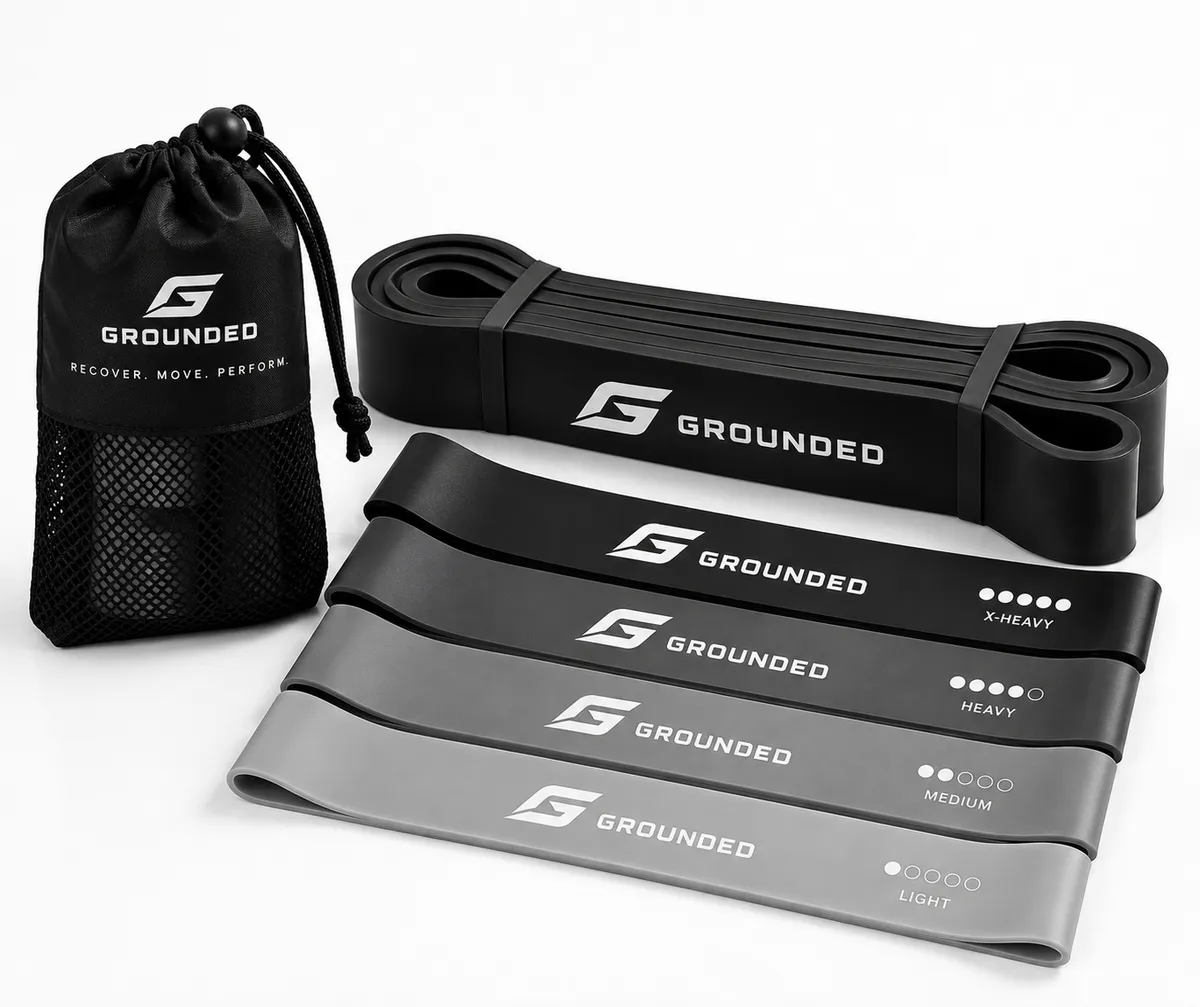
Grounded Resistance Bands
Light, familiar preparation exercises without tiring the shoulders.
Explore Resistance Bands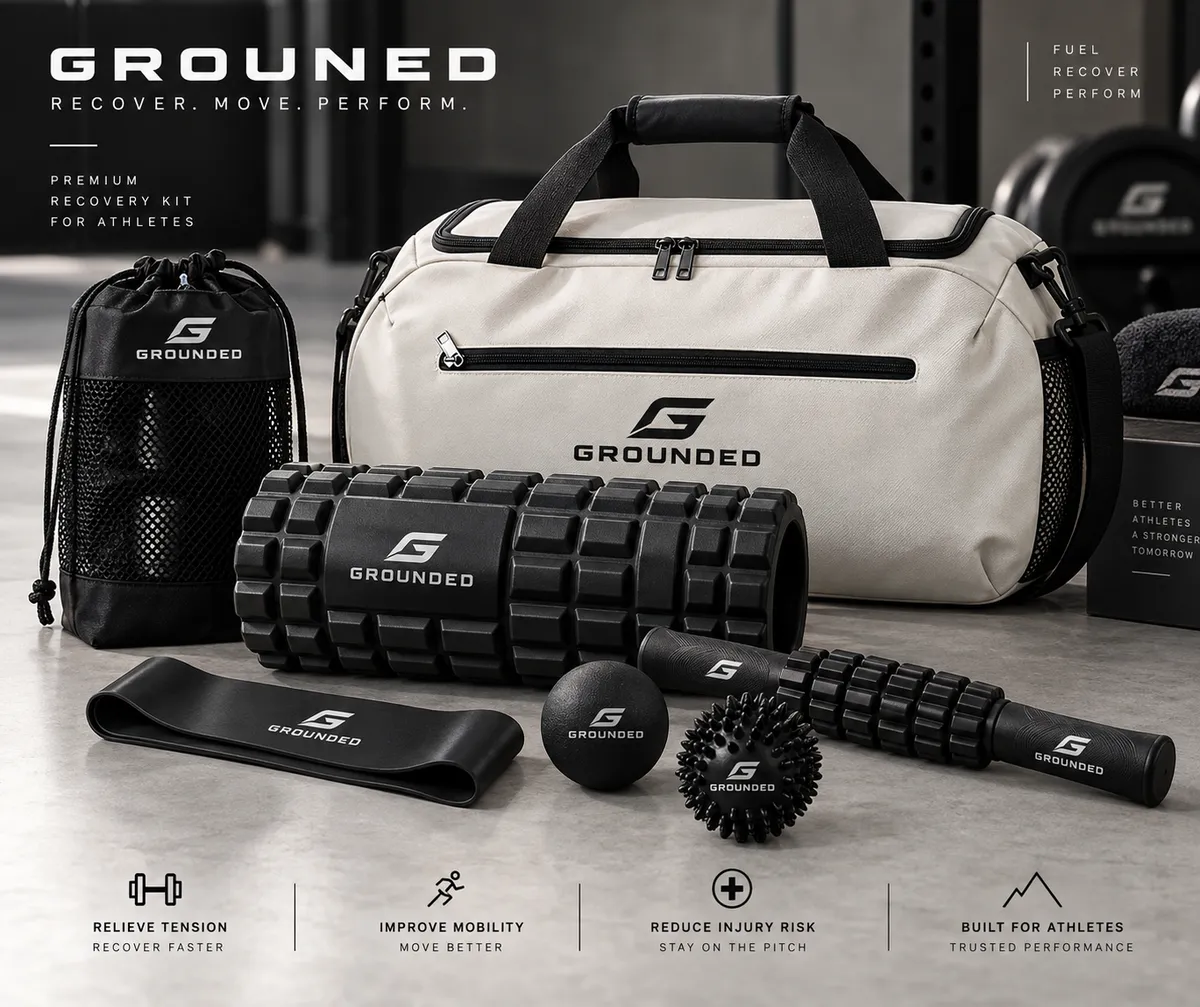
Grounded Massage Ball
Controlled wall-based pressure on uninjured glute or upper-back muscles.
Explore Massage Ball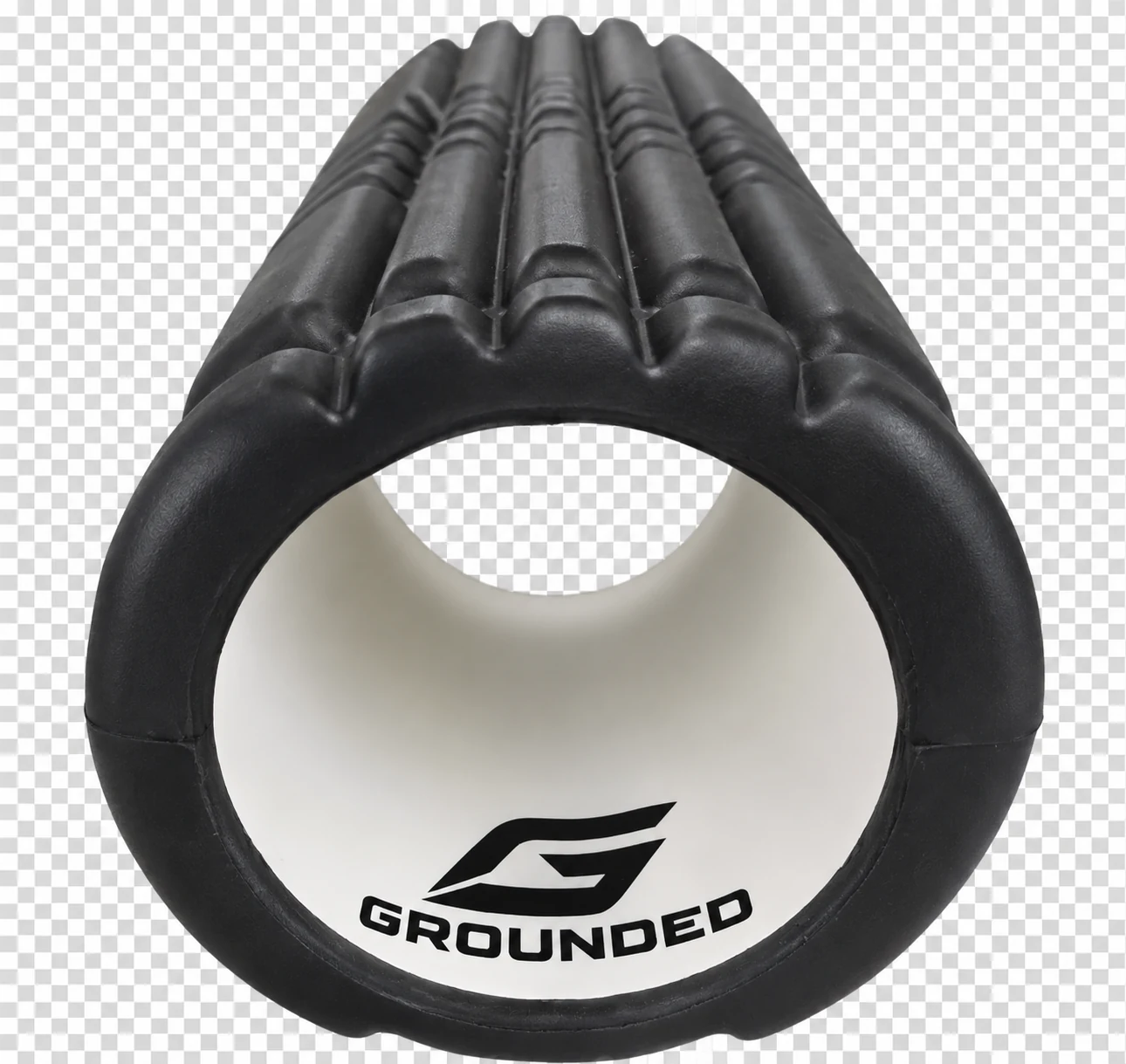
Grounded Foam Roller
Optional calf and thigh self-massage after walking; never direct spinal pressure.
Explore Foam RollerGrounded Recovery Kit
Keep the tools together for travel and repeated rounds.
Explore the Recovery KitOriginal sources, not product claims
Evidence and its limits
The sources below support specific principles, not every exercise in this practical example. Findings from one sport do not automatically apply to another. Grounded has a commercial interest in the products linked here; these are not independent product reviews.
2024 · Journal of Bodywork and Movement Therapies
Preventive effect of foam rolling on muscle soreness after exercise: A systematic review and meta-analysis
This is general exercise-soreness research, not a golf trial. It does not show that rolling increases swing speed, driving distance or treats golf-related back pain.
2018 · British Journal of Sports Medicine
A systematic review, meta-analysis and meta-regression of the effect of protein supplementation on resistance training-induced gains in muscle mass and strength in healthy adults
This review concerns protein alongside sustained resistance training in healthy adults. It supports nutrition in a strength programme, not a claim about golf scores or immediate recovery from a round.
Exercise and fluid replacement
The ACSM position stand (2007) recommends individualising fluid replacement because sweat rates and losses vary. Electrolyte and carbohydrate drinks can be useful in certain circumstances; this is not a prescription for every session or proof of a particular product’s effectiveness.
Read the original ACSM position stand (opens in a new tab)Go deeper into your routine
Golf Recovery questions
How should I warm up before a round of golf?
Begin with walking and comfortable hip, shoulder and upper-back movement. Build from gentle to fuller practice swings. Avoid forcing the lower back or starting with maximal swings while cold.
Should I foam roll my lower back after golf?
Avoid direct rolling over the lower back and spine. Use comfortable movement or controlled pressure on surrounding uninjured muscles. Persistent pain during or after swings needs assessment.
Are electrolytes useful during an 18-hole round?
They may be useful in warm conditions with substantial sweat loss. Water and ordinary food may be enough otherwise. Keep drinks accessible and do not force fluid intake.
How can I recover between consecutive golf rounds?
Plan meals, fluids and sleep; keep optional movement comfortable and reduce unnecessary range work. Adjust to walking load and symptoms rather than assuming another round is automatically safe.
Your sport. Your routine.
Recovery by sport
GAA Recovery
The club-week plan · Gaelic football, hurling & camogie
Football Recovery
Association football · Match minutes, boots & fixture congestion
Rugby Recovery
Collision sport · Separate ordinary soreness from injury
Running Recovery
Easy miles, long runs & race-week decisions
Golf Recovery
Walking, rotation & repeated rounds
Gym Recovery
Plan the training week · Strength, classes & consistency
How Grounded earns trust
Evidence explained. Limits made clear.
Editorial approach. We link original research, separate findings from practical interpretation and state when evidence is limited.
Athlete safety. Our content is general education, not diagnosis or medical advice. Pain and injury need qualified assessment.