
How Often Should Athletes Foam Roll?
Frequency, duration and timing, based on what the research actually says.
What you'll learn
- How often to foam roll
- How long per muscle
- Before vs after training
- Weekly plans for different athletes
The problem
Athletes hear conflicting advice: roll every day, roll only after training, roll for twenty minutes, roll for thirty seconds. The research gives a clearer and more practical picture.
What the research says
A 2019 meta-analysis of foam rolling studies found that rolling before exercise produced small improvements in sprint performance and flexibility, and rolling after exercise produced small reductions in perceived muscle soreness. A 2024 systematic review on soreness supported a modest benefit.
Importantly, the effects on range of motion are short-term, lasting from minutes to perhaps an hour. That tells us two things: rolling is best done close to when you need the benefit, and it works best when repeated regularly.
How long per muscle
Studies commonly use 30 to 120 seconds per muscle group. In practice, 30 to 60 seconds is enough for most athletes. Beyond that, the extra benefit appears small. A full routine of four or five areas takes around eight to ten minutes.
Before training
Short rolling as part of a warm-up can help you feel looser without reducing strength or power, unlike long static stretching. Keep it brief, 20 to 30 seconds per area, and follow it with dynamic movements and your normal warm-up. Rolling should not replace the warm-up itself.
After training
After a session, rolling can be part of a calm cool-down. Many athletes find it helps them feel less stiff the next day. Keep pressure comfortable, especially after hard sessions or matches.
On rest days
Rest days are a great time for a relaxed ten-minute rolling and mobility session, especially the day after a match. It combines well with a walk or easy bike.
Can you foam roll every day?
Yes, for most healthy athletes, short daily rolling is fine. Just avoid heavy, painful pressure on the same area every day, and avoid rolling over bruises or injuries.
Sample weekly plans
Club GAA or football player training twice a week plus a match: short rolling before each session, a ten-minute routine the morning after the match, and one rest-day session. Around four sessions a week.
Runner training four to five times a week: calves and quads after most runs, a longer routine once a week.
Gym or Hyrox athlete: rolling for upper back, hips and legs before strength sessions, and a recovery routine on easy days.
Consistency beats intensity
The athletes who get the most from foam rolling are not the ones who roll for longest or hardest. They are the ones who do a short routine consistently. Keeping your roller in your kit bag, rather than under the bed, is one of the easiest ways to make that happen.
Signs you are overdoing it
Bruising after rolling, areas that feel more sore the next day, or rolling for so long that it cuts into sleep or training time. If any of these happen, reduce pressure and duration. More is not better.
Foam rolling during the season vs the off-season
In season, keep rolling short and focused around training and matches, primarily to help you feel ready and ease soreness. In the off-season or pre-season, when training volume rises, a slightly longer weekly mobility session including rolling can be useful.
Combining rolling with other mobility work
Rolling works best alongside active mobility. After rolling the hips, do hip openers and deep squats. After rolling the calves, do ankle mobility drills against a wall. After rolling the upper back, do thoracic rotations. Rolling opens a short window; movement uses it.
Foam rolling for different ages
Younger athletes rarely need long rolling sessions; a structured warm-up is far more valuable. Older athletes often find regular short sessions help them feel less stiff. Adjust pressure for comfort at every age.
Evening rolling and sleep
A calm, gentle rolling session in the evening can be a good wind-down routine before bed. Keep pressure light and breathing slow, and avoid screens during the session.
A simple rule to remember
Short before training, calm after training, relaxed on rest days. Thirty to sixty seconds per area, three to five times a week. That covers what most athletes need.
What the research says
Evidence in context
Research supported
Preventive effect of foam rolling on muscle soreness after exercise: A systematic review and meta-analysis
Foam rolling after training is a reasonable, low-risk tool to modestly reduce next-day and 2-3 day post-exercise soreness. It is not a cure for soreness and effect sizes are small-to-moderate.
Research supported
A Meta-Analysis of the Effects of Foam Rolling on Performance and Recovery
Foam rolling can be used as part of a warm-up (does not reduce power/speed, may modestly help) and as a recovery tool post-session; benefits are real but small in magnitude.
Grounded summarises peer-reviewed sports science in simple language. Recovery tools support good training habits—they do not replace sleep, nutrition or structured training.
Grounded Recommendation
Keep the main thing the main thing.
For most athletes, 30 to 60 seconds per area, three to five times a week, is a sensible target. Roll briefly before training and use a calmer routine after training or on rest days. Keep it consistent rather than intense.
Step-by-step routine
- 01Before training: 20–30 seconds per area, then dynamic warm-up
- 02After training: 30–60 seconds per area, comfortable pressure
- 03Rest day: 10-minute relaxed routine plus a walk
- 04Target 3–5 sessions per week
- 05Avoid bruises and injuries
- 06Keep the roller in your kit bag
Equipment that can help
Recommended because it fits the routine—not as a replacement for the fundamentals.
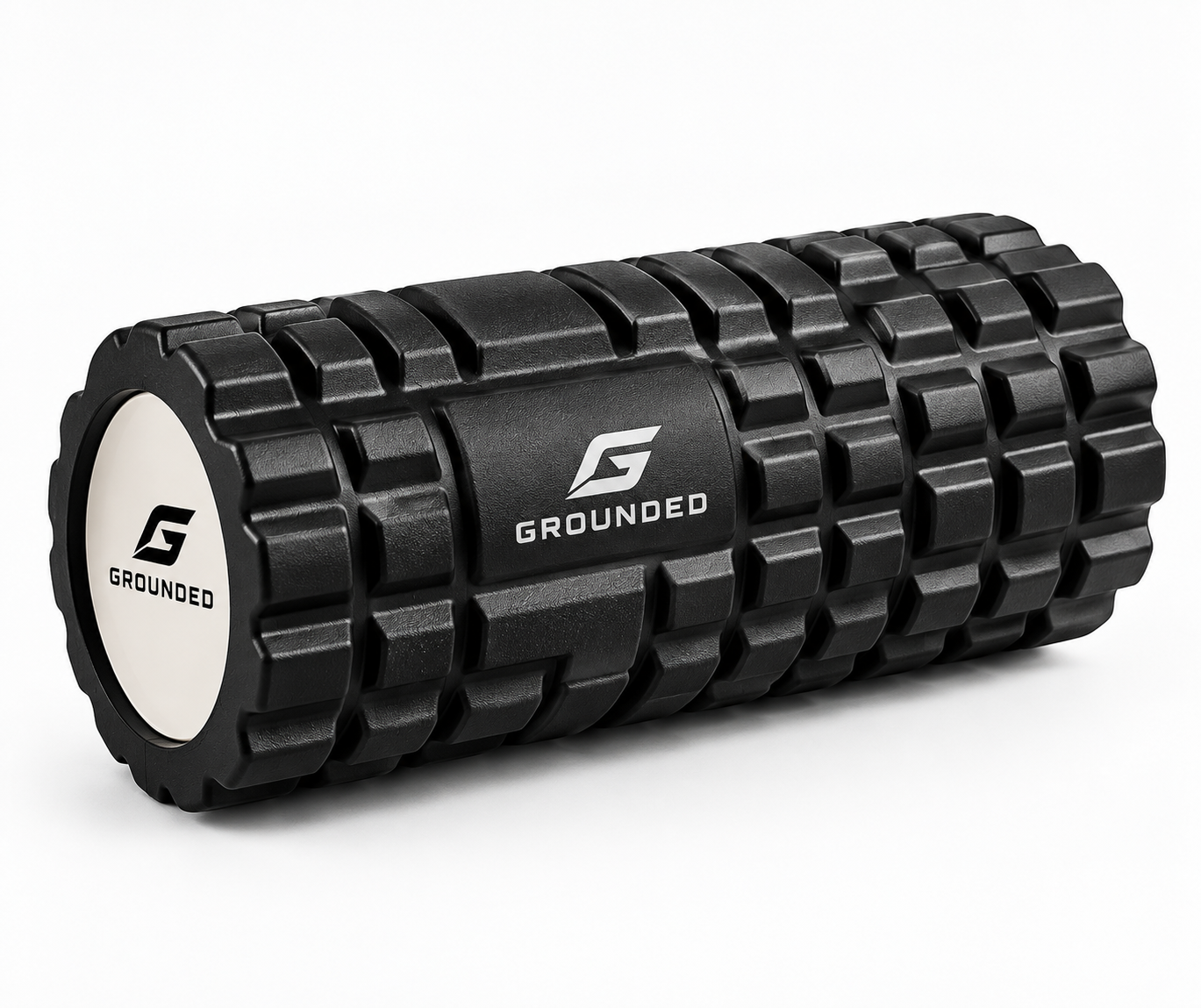
Recovery
Foam Roller
A firm, textured roller for purposeful warm-ups, mobility work and post-training routines.
View Foam Roller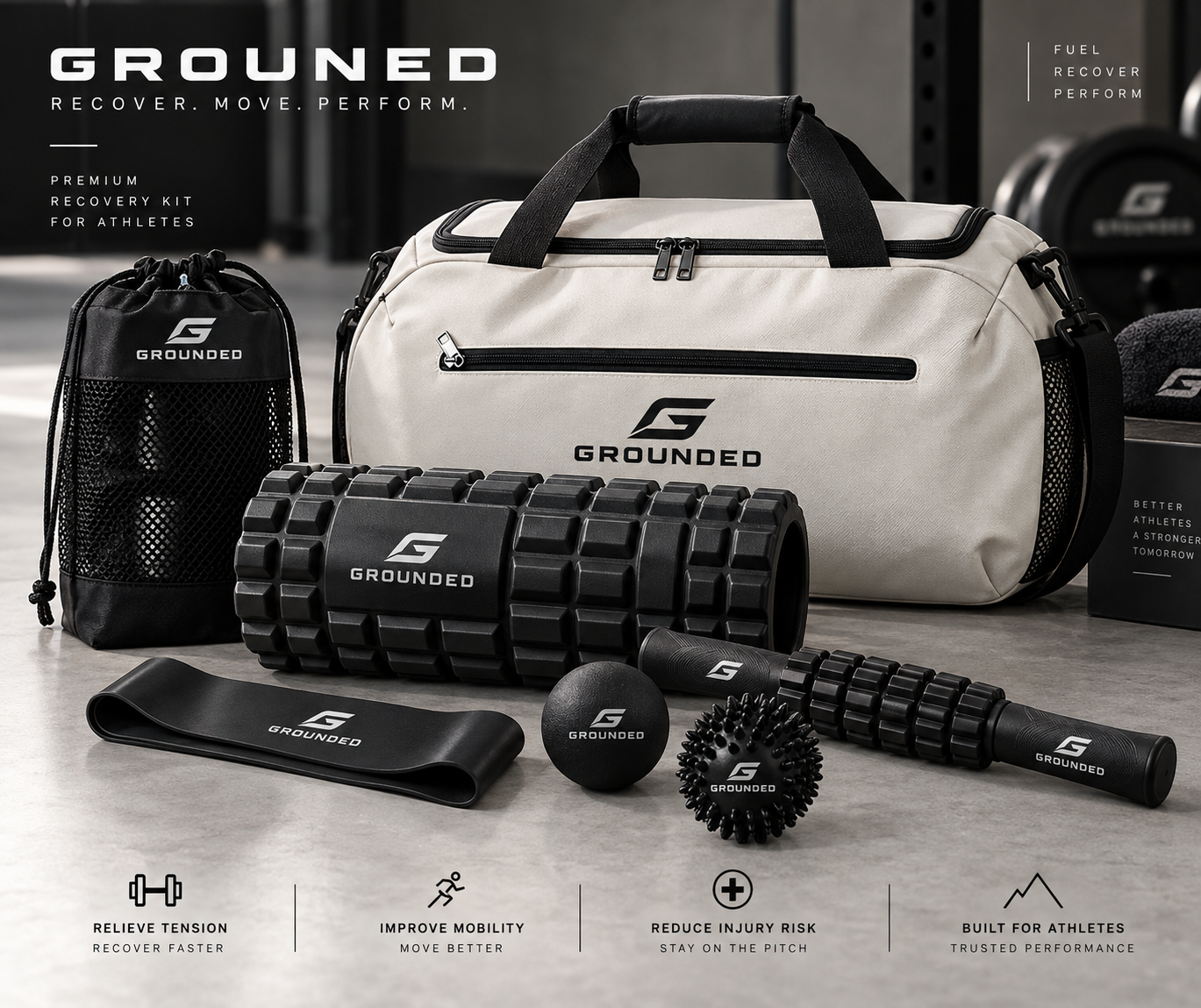
Best Seller
Recovery Kit
A complete system for mobility, activation and recovery, packed in a premium Grounded kit bag.
View Recovery KitFrequently asked questions
Is it OK to foam roll every day?
For most healthy athletes, yes, provided you keep pressure sensible and avoid injured areas.
How long should a foam rolling session last?
Around eight to ten minutes covering four or five areas.
Does foam rolling before training reduce strength?
Research suggests short rolling does not reduce performance, unlike long static stretching.
Can recovery tools replace sleep and nutrition?
No. Recovery tools support good habits; they do not replace sleep, nutrition or structured training.
When should I avoid foam rolling?
Avoid rolling over acute injuries, bruises, swelling, varicose veins or bones and joints. If you have a medical condition, check with a professional first.
Continue learning
Related articles
How to Recover Faster After a GAA Match
A practical 48-hour plan for Gaelic footballers and hurlers, from the final whistle to the next training session.
Football Recovery Routine: A Complete Guide for Players
How footballers can recover between fixtures, from the cool-down to the next session.
Rugby Recovery Guide: Recovering From Contact and Collision
Managing the soreness of collision sport, with a practical routine for the days after a match.
Recovery notes