
Rugby Recovery Guide: Recovering From Contact and Collision
Managing the soreness of collision sport, with a practical routine for the days after a match.
What you'll learn
- Why rugby soreness lasts longer
- Nutrition priorities for contact sport
- A recovery week structure
- Where rolling and bands help
The problem
Rugby adds repeated collisions, tackles, rucks and scrums to high-intensity running. Soreness from contact often peaks two days after a match. Players who do not plan recovery can find themselves arriving at midweek training still sore and underperforming.
Why rugby recovery is different
In most running sports, soreness comes mainly from muscle damage caused by accelerating and decelerating. Rugby adds direct impact. Every tackle, carry and ruck creates bruising and micro-damage, and the upper body takes a load that other sports do not.
That is why rugby players often feel worse on Monday than on Saturday evening. Planning for that pattern is the first step to recovering well.
Immediately after the match
Start with a light cool-down and a check-in with the medical team or coach about any knocks. Any suspected concussion must be managed with medical guidance and a graduated return-to-play protocol. Recovery tools have no role in concussion management.
Rehydrate and eat a proper meal within a couple of hours. Rugby players typically need substantial energy intake, so do not rely on the post-match finger food alone.
Nutrition for contact sport
Protein is a priority. A large meta-analysis found that protein supplementation supports strength and muscle gains alongside resistance training. For rugby players, spread protein across four or five meals and snacks each day in the days after a match.
Carbohydrate refuels the energy used during the game. Fruit and vegetables provide the vitamins and minerals involved in recovery and immune function over a long season.
Sleep and alcohol
Rugby has a strong social culture, and that is part of what makes the game special. But heavy drinking after a match impairs sleep, rehydration and muscle repair. If you want to recover well, keep it moderate, drink water alongside, and make sure you eat properly first.
Days one and two: active recovery
Gentle movement helps. A walk, an easy swim or a light spin on a bike increases blood flow and reduces stiffness. Complete bed rest usually makes soreness feel worse.
A short foam rolling routine for quads, glutes, hamstrings, calves and upper back, followed by mobility work for hips and shoulders, can ease perceived soreness and help you move more freely. Keep pressure comfortable, especially over bruised areas, and avoid rolling directly over any acute injury.
Days three to five: rebuild
As soreness eases, reintroduce training. Many clubs plan a lighter session early in the week and build intensity towards a main session. Resistance bands are useful for shoulder and hip activation before training: band pull-aparts, external rotations, glute bridges and lateral walks.
Upper-body recovery
Rugby players often neglect shoulders, chest and neck. A massage ball against a wall can target the upper back and around the shoulder blade. A long resistance band helps with gentle shoulder mobility. Keep movements controlled and pain-free.
Forwards and backs
Forwards typically take more collisions and scrummaging load, so upper-body and neck recovery and adequate protein matter even more. Backs tend to cover more high-speed running, so hamstring and calf care deserves extra attention. Tailor your routine to your position.
A sample recovery week after a Saturday match
Saturday evening: refuel, rehydrate and sleep. Sunday: a walk or easy swim, gentle rolling, and plenty of protein and vegetables across the day. Monday: light mobility and upper-body band work, or a gym session focused on unaffected areas. Tuesday: a controlled training session. Wednesday: rest or light gym. Thursday: the main team session. Friday: rest and preparation.
Adjust this to your club schedule, but keep the principle: the harder the match, the more gradual the return to intensity.
Neck and shoulder care
Scrummaging, tackling and rucking place heavy load through the neck and shoulders. Neck strengthening under qualified supervision is increasingly common in rugby, and gentle mobility can help players feel less stiff after matches. Never use a massage ball or roller on the front or side of the neck.
Common mistakes
Returning to heavy lifting too soon after a physical match. Under-eating, especially among younger players trying to build size. Heavy alcohol intake at post-match socials. And training through knocks without telling the coach. Honest communication is one of the most effective recovery tools in rugby.
Youth and schools rugby
Schools rugby in Ireland is intensely competitive, particularly during cup campaigns. Young players need adequate sleep, regular meals and rest days. Coaches and parents should watch for signs of accumulated fatigue, such as dropping performance, poor mood and persistent soreness.
Travel and away fixtures
Long bus journeys to away games can leave legs stiff. Walk around at stops, stay hydrated and bring food. On the way home, a short walk and some light mobility at the next stop helps more than sitting still for three hours.
What the research says
Evidence in context
Research supported
Preventive effect of foam rolling on muscle soreness after exercise: A systematic review and meta-analysis
Foam rolling after training is a reasonable, low-risk tool to modestly reduce next-day and 2-3 day post-exercise soreness. It is not a cure for soreness and effect sizes are small-to-moderate.
+111 min
The Effects of Sleep Extension on the Athletic Performance of Collegiate Basketball Players
Prioritizing sleep duration (aiming for ~9-10 hours in bed) can meaningfully improve sport-specific speed, shooting accuracy and mood in athletes who are otherwise under-slept.
1.6 g/kg
A systematic review, meta-analysis and meta-regression of the effect of protein supplementation on resistance training-induced gains in muscle mass and strength in healthy adults
During a structured strength program, hitting roughly 1.6 g/kg/day total protein (spread across meals) supports meaningfully greater strength and lean mass gains than training alone; intakes beyond this show diminishing average benefit.
Grounded summarises peer-reviewed sports science in simple language. Recovery tools support good training habits—they do not replace sleep, nutrition or structured training.
Grounded Recommendation
Keep the main thing the main thing.
Plan for soreness that peaks two days after a match. Prioritise protein, carbohydrate, fluids and sleep. Use gentle movement, rolling and band mobility to help you feel ready for training. Always manage suspected concussion with medical guidance.
Step-by-step routine
- 01Cool down and report any knocks to your coach or medic
- 02Rehydrate and eat a substantial meal within two hours
- 03Spread protein across the day for the next 48 hours
- 04Take a walk, swim or easy spin the next day
- 05Roll quads, glutes, calves and upper back gently
- 06Activate shoulders and hips with bands before training
Equipment that can help
Recommended because it fits the routine—not as a replacement for the fundamentals.
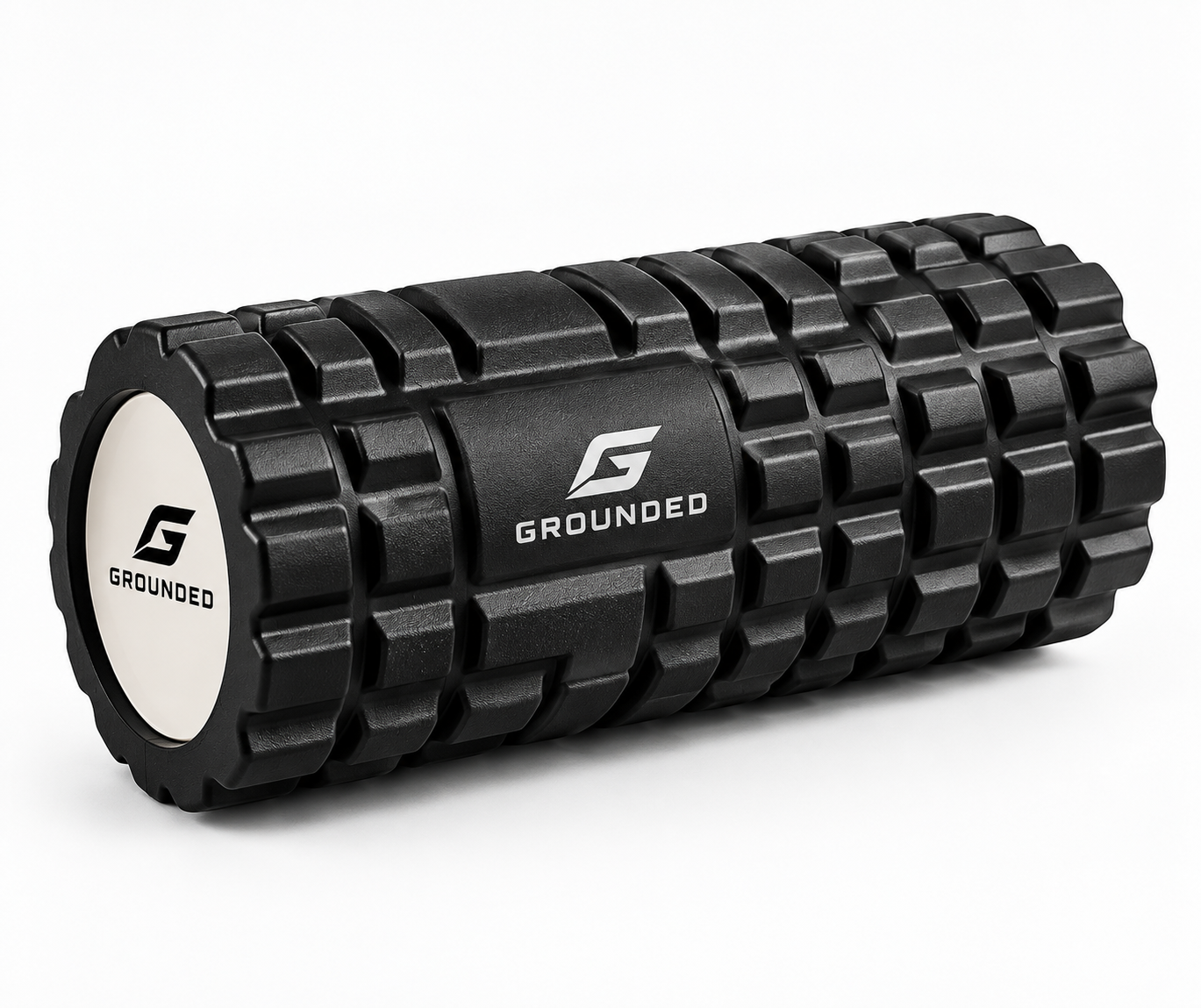
Recovery
Foam Roller
A firm, textured roller for purposeful warm-ups, mobility work and post-training routines.
View Foam Roller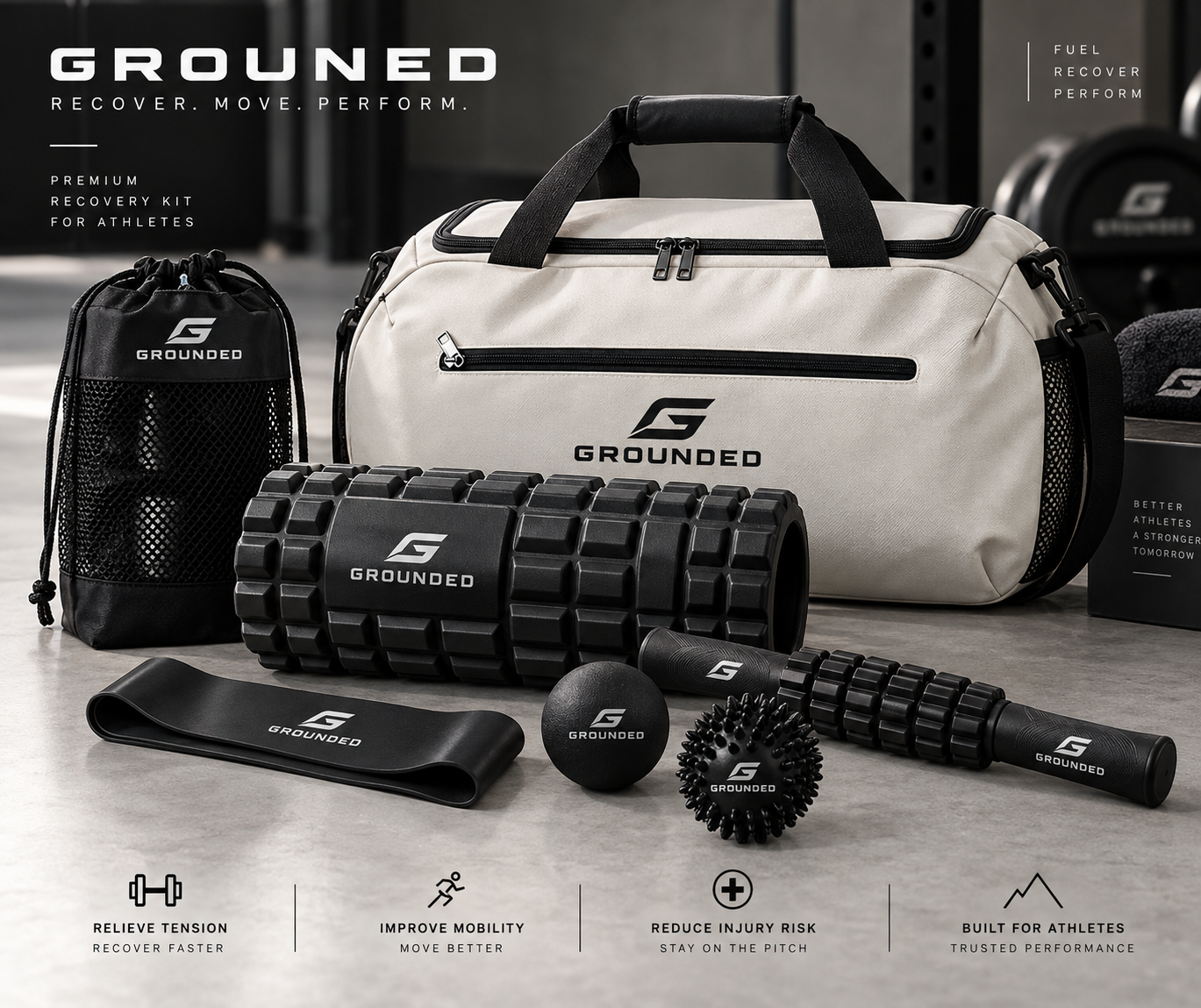
Recovery
Massage Ball
Compact, targeted pressure for feet, glutes, shoulders and hard-to-reach areas.
View Massage Ball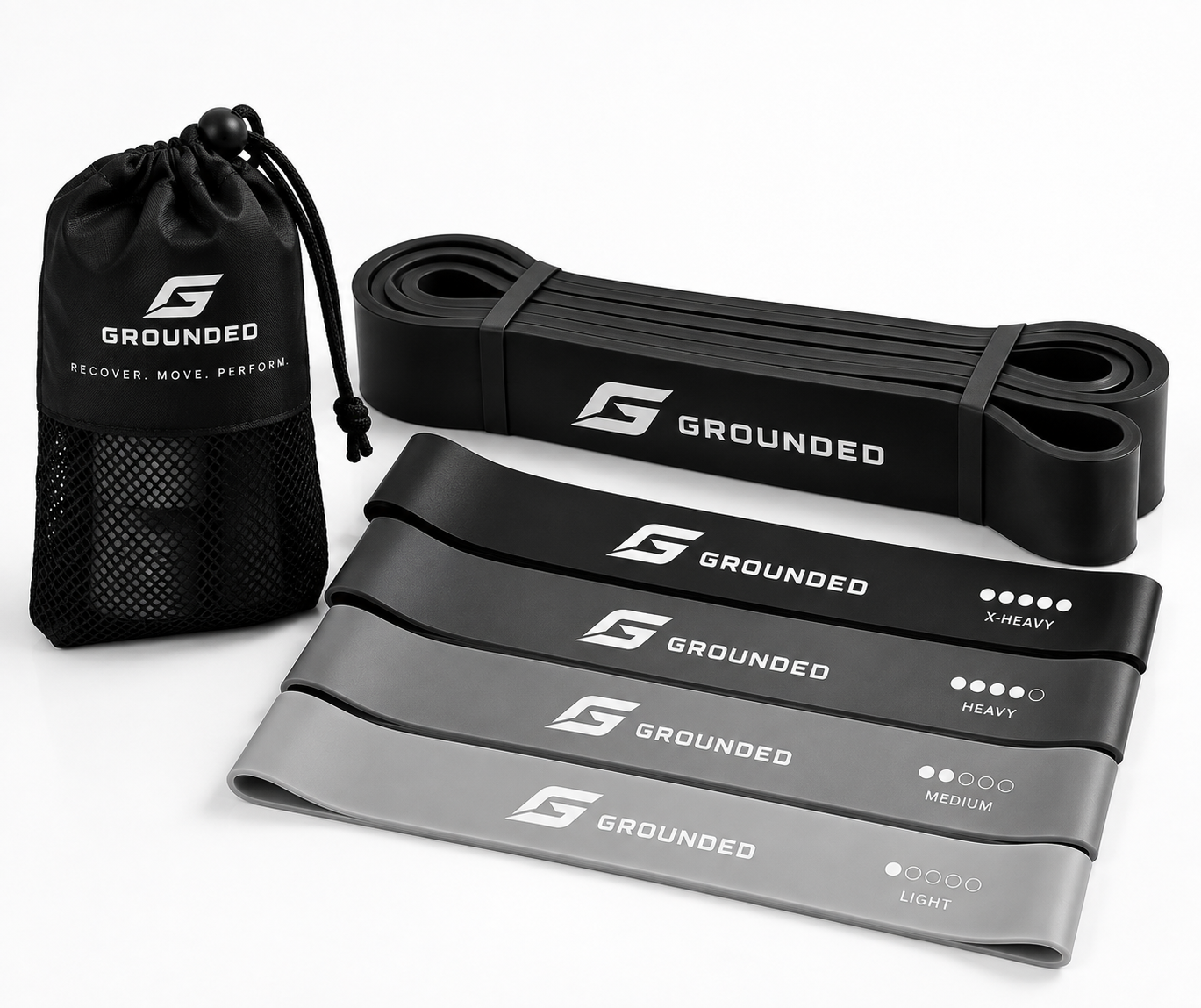
Mobility
Long Band
A versatile long loop for assisted mobility, strength work and progressive warm-ups.
View Long BandBest Seller
Recovery Kit
A complete system for mobility, activation and recovery, packed in a premium Grounded kit bag.
View Recovery KitFrequently asked questions
Why do I feel worse two days after a rugby match?
Delayed onset muscle soreness and bruising from contact typically peak 24 to 72 hours after the game.
Should rugby players foam roll bruised areas?
Avoid rolling directly over bruises or acute injuries. Work around them gently.
Can recovery tools replace sleep and nutrition?
No. Recovery tools support good habits; they do not replace sleep, nutrition or structured training.
When should I see a physiotherapist?
If pain is sharp, getting worse, affects how you walk or run, or has not settled after a few days, get it assessed by a chartered physiotherapist or doctor.
Continue learning
Related articles
How to Recover Faster After a GAA Match
A practical 48-hour plan for Gaelic footballers and hurlers, from the final whistle to the next training session.
Football Recovery Routine: A Complete Guide for Players
How footballers can recover between fixtures, from the cool-down to the next session.
Post-Match Recovery Checklist for Athletes
A simple checklist to follow after every match, so recovery becomes automatic.
Recovery notes