
Football Recovery Routine: A Complete Guide for Players
How footballers can recover between fixtures, from the cool-down to the next session.
What you'll learn
- A simple post-match cool-down
- What to eat and drink after football
- How to plan recovery during a busy fixture list
- The role of warm-ups like FIFA 11+
The problem
Football involves repeated sprints, jumps, tackles and changes of direction. Amateur players often play on Saturday or Sunday and train twice midweek, with little structure around recovery. Legs feel heavy, performance dips and small niggles become bigger problems.
What a match does to your body
Across a 90-minute game, players cover a lot of ground and perform many accelerations, decelerations and jumps. Decelerating is particularly demanding: it creates eccentric load on the quads and hamstrings, which is a major cause of the muscle soreness you feel for the following two days.
Energy stores in the muscles are depleted, fluid is lost through sweat, and the nervous system is fatigued. A good recovery routine addresses each of these in turn.
Step one: the cool-down
Finish with five to ten minutes of light jogging and walking, then some gentle, active mobility: leg swings, walking lunges and hip openers. This will not magically remove soreness, but it helps you transition from match intensity and gives you a moment to check in with how your body feels.
Step two: refuel and rehydrate
Drink water steadily after the match, adding an electrolyte drink if you sweated heavily. Within a couple of hours, eat a meal with plenty of carbohydrate to restore energy and a good portion of protein to support muscle repair.
Research on protein suggests that including enough protein across the day supports adaptation to training. For most players, the simplest approach is a protein source at every meal and a snack such as Greek yoghurt or milk before bed.
Step three: sleep
Sleep is where much of the recovery process happens. Studies on sleep extension in athletes have shown improvements in sprint speed and skill accuracy. After evening matches, give yourself time to wind down, keep screens away from bed, and avoid heavy drinking, which impairs both sleep and rehydration.
Step four: the day after
Keep the day after a match light. A walk, easy bike or swim helps many players feel less stiff. A ten-minute foam rolling session for the quads, hamstrings, calves, glutes and adductors can help ease perceived soreness and restore range of motion in the short term. Follow rolling with active movement so you use the range you have gained.
Recovering during a busy fixture list
When games come every three or four days, recovery becomes the priority. Shorten and lighten training between matches. Focus on sleep, eating enough and staying hydrated. Rotate squad minutes where possible, and communicate honestly with your coach about how you feel.
Warm-ups are part of recovery
The warm-up and recovery are two sides of the same coin. The FIFA 11+ programme, a structured warm-up including running, strength, balance and plyometric exercises, has been shown in a cluster randomised trial and a meta-analysis to reduce injury rates in football. A consistent warm-up means you start each session prepared, which makes it easier to recover afterwards.
Grip, boots and comfort
Many players wear grip socks under cut team socks. By reducing how much the foot slides inside the boot, they help many players feel more stable and comfortable, especially on wet pitches. It is a small detail, but comfort matters over a long season.
Knowing the difference between soreness and injury
General muscle soreness is normal and eases over two to three days. Sharp pain, pain that stops you sprinting, swelling or anything that is getting worse needs assessing by a physiotherapist or doctor. Recovery tools should never be used to play through an injury.
A weekly structure for amateur footballers
For a player training Tuesday and Thursday with a match on Saturday: Sunday is a recovery day with a walk and ten minutes of rolling. Monday is a rest day or light activity. Tuesday is the main training session with a full structured warm-up. Wednesday is a rest day or a short gym session focusing on strength, including Nordic curls and single-leg work. Thursday is a sharper, shorter session. Friday is rest, good food and an early night. Saturday is match day.
This structure gives you two days of easier activity after the match, a main training day when you are recovered, and a sharp session before the weekend.
Recovery for younger players
Teenage footballers often play for school, club and development squads, sometimes several matches a week. Recovery for young players is mostly about sleep, food and not overloading. Parents and coaches should keep an eye on total weekly load, and growth-related pain in the knees and heels should be assessed rather than trained through.
Recovery for older players
Players in their thirties and beyond often notice that soreness lasts longer. That is normal. Allow an extra easy day after matches, keep up strength training through the season, and be consistent with warm-ups. Calf and hamstring strength work is especially valuable for veteran players.
Common mistakes
Static stretching for long periods immediately before the game, which can slightly reduce power. Skipping the warm-up at training when running late. Not eating enough carbohydrate on match day. And ignoring small niggles until they become injuries. A consistent routine removes most of these problems.
Pitch surfaces and footwear
Many Irish players move between grass, 3G and 4G surfaces through the season. Artificial surfaces can feel harder on the legs, so some players notice more soreness afterwards. Wear boots suited to the surface and consider an extra easy day after a heavy session on a hard pitch.
What the research says
Evidence in context
1.6 g/kg
A systematic review, meta-analysis and meta-regression of the effect of protein supplementation on resistance training-induced gains in muscle mass and strength in healthy adults
During a structured strength program, hitting roughly 1.6 g/kg/day total protein (spread across meals) supports meaningfully greater strength and lean mass gains than training alone; intakes beyond this show diminishing average benefit.
41% lower
Efficacy of the FIFA 11+ Warm-Up Programme in Male Youth Football: A Cluster Randomised Controlled Trial
Replacing a generic warm-up with the structured FIFA 11+ program before training/matches is one of the best-evidenced, low-cost ways to cut injury rates in youth and adult footballers; consistent compliance matters for full benefit.
Research supported
Effect of specific exercise-based football injury prevention programmes on the overall injury rate in football: a systematic review and meta-analysis of the FIFA 11 and 11+ programmes
Across multiple independent RCTs and settings, structured neuromuscular warm-up programmes consistently lower injury incidence in football, reinforcing the FIFA 11+ single-trial finding above as a generalizable effect, not a one-off result.
Grounded summarises peer-reviewed sports science in simple language. Recovery tools support good training habits—they do not replace sleep, nutrition or structured training.
Grounded Recommendation
Keep the main thing the main thing.
Treat recovery as a routine: cool down, refuel with carbohydrate and protein, rehydrate and sleep well. Keep the next day light and use a short rolling routine if it helps you move better. Pair it with a consistent, structured warm-up like FIFA 11+.
Step-by-step routine
- 01Cool down with 5–10 minutes of light jogging and walking
- 02Rehydrate and eat carbohydrate plus protein within two hours
- 03Wind down and prioritise 8+ hours of sleep
- 04Walk, cycle or swim easily the next day
- 05Foam roll quads, hamstrings, calves and glutes for 30–60 seconds each
- 06Use a structured warm-up before every session
Equipment that can help
Recommended because it fits the routine—not as a replacement for the fundamentals.
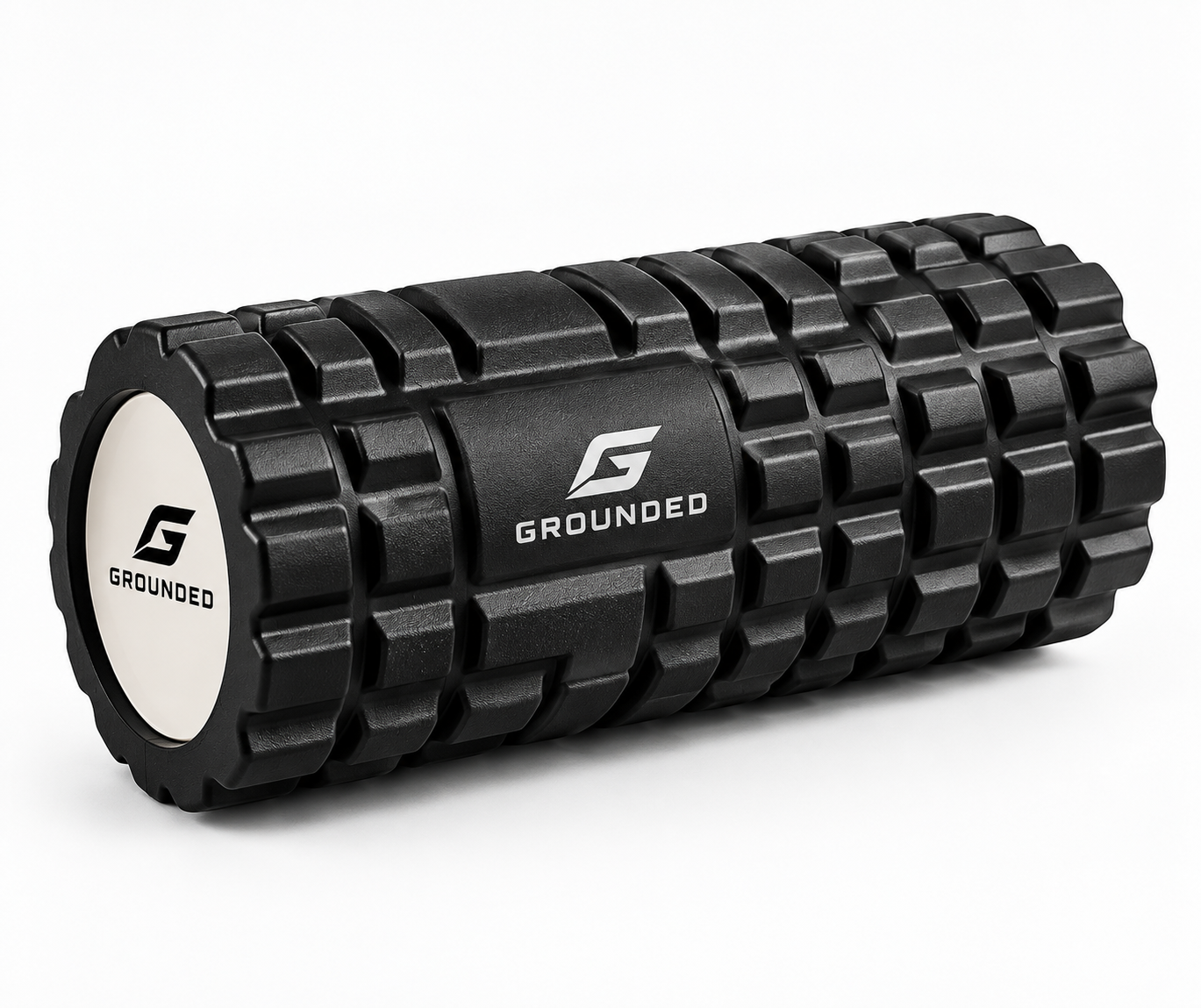
Recovery
Foam Roller
A firm, textured roller for purposeful warm-ups, mobility work and post-training routines.
View Foam Roller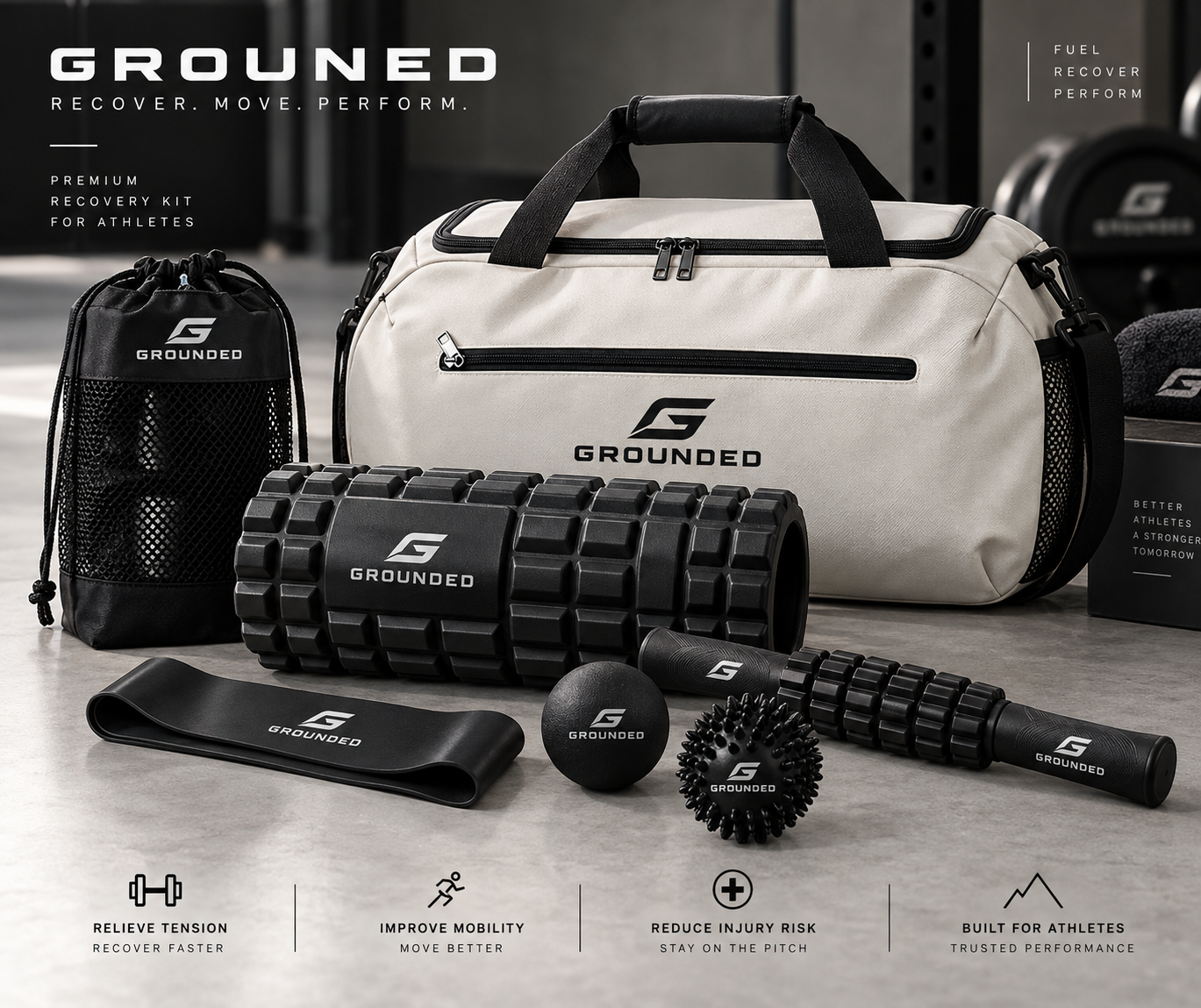
Best Seller
Recovery Kit
A complete system for mobility, activation and recovery, packed in a premium Grounded kit bag.
View Recovery KitImage coming soon
Performance
Grip Socks
Anti-slip grip socks designed to reduce foot movement inside the boot for football, rugby, GAA and gym.
View Grip SocksImage coming soon
Hydration
Electrolytes
An electrolyte blend to support rehydration after long or sweaty sessions.
View ElectrolytesFrequently asked questions
What should footballers eat after a match?
A meal with plenty of carbohydrate to refuel and a good portion of protein to support muscle repair, plus fluids.
How many rest days do footballers need?
It depends on training load and fixtures. Most amateur players benefit from at least one full rest day and one lighter day each week.
Does FIFA 11+ really reduce injuries?
Yes. Controlled trials and meta-analyses show structured programmes like FIFA 11+ reduce injury rates when used consistently.
Can recovery tools replace sleep and nutrition?
No. Recovery tools support good habits; they do not replace sleep, nutrition or structured training.
When should I see a physiotherapist?
If pain is sharp, getting worse, affects how you walk or run, or has not settled after a few days, get it assessed by a chartered physiotherapist or doctor.
Continue learning
Related articles
How to Recover Faster After a GAA Match
A practical 48-hour plan for Gaelic footballers and hurlers, from the final whistle to the next training session.
Rugby Recovery Guide: Recovering From Contact and Collision
Managing the soreness of collision sport, with a practical routine for the days after a match.
Post-Match Recovery Checklist for Athletes
A simple checklist to follow after every match, so recovery becomes automatic.
Recovery notes