
Does Foam Rolling Actually Work?
What current evidence says about mobility, soreness and performance—without the hype.
What you'll learn
- What foam rolling can realistically improve
- When to use it around training
- How much time is enough
The problem
Foam rolling is often presented as a cure-all. The evidence is more measured: it can support short-term flexibility and ease perceived soreness, but it cannot repair an injury or replace recovery fundamentals.
What the research says
Evidence in context
Research supported
Preventive effect of foam rolling on muscle soreness after exercise: A systematic review and meta-analysis
Foam rolling after training is a reasonable, low-risk tool to modestly reduce next-day and 2-3 day post-exercise soreness. It is not a cure for soreness and effect sizes are small-to-moderate.
Research supported
A Meta-Analysis of the Effects of Foam Rolling on Performance and Recovery
Foam rolling can be used as part of a warm-up (does not reduce power/speed, may modestly help) and as a recovery tool post-session; benefits are real but small in magnitude.
Grounded summarises peer-reviewed sports science in simple language. Recovery tools support good training habits—they do not replace sleep, nutrition or structured training.
Grounded Recommendation
Keep the main thing the main thing.
Use foam rolling as a short, repeatable part of a broader routine. Prioritise sleep, food and sensible training load first.
Step-by-step routine
- 01Choose one or two areas that feel restricted
- 02Roll slowly for 30–60 seconds per area
- 03Re-test the movement you want to improve
- 04Follow with an active mobility drill
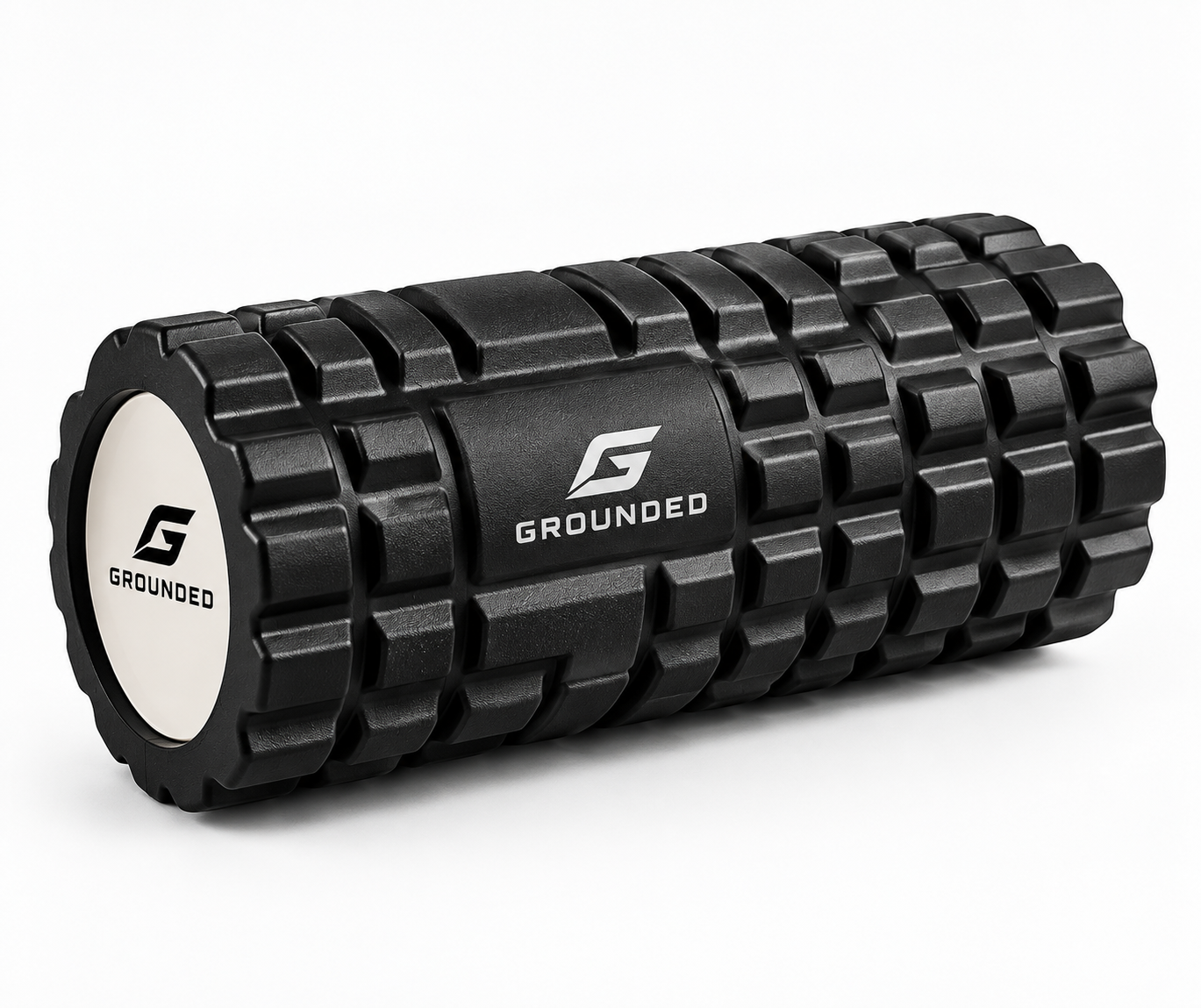
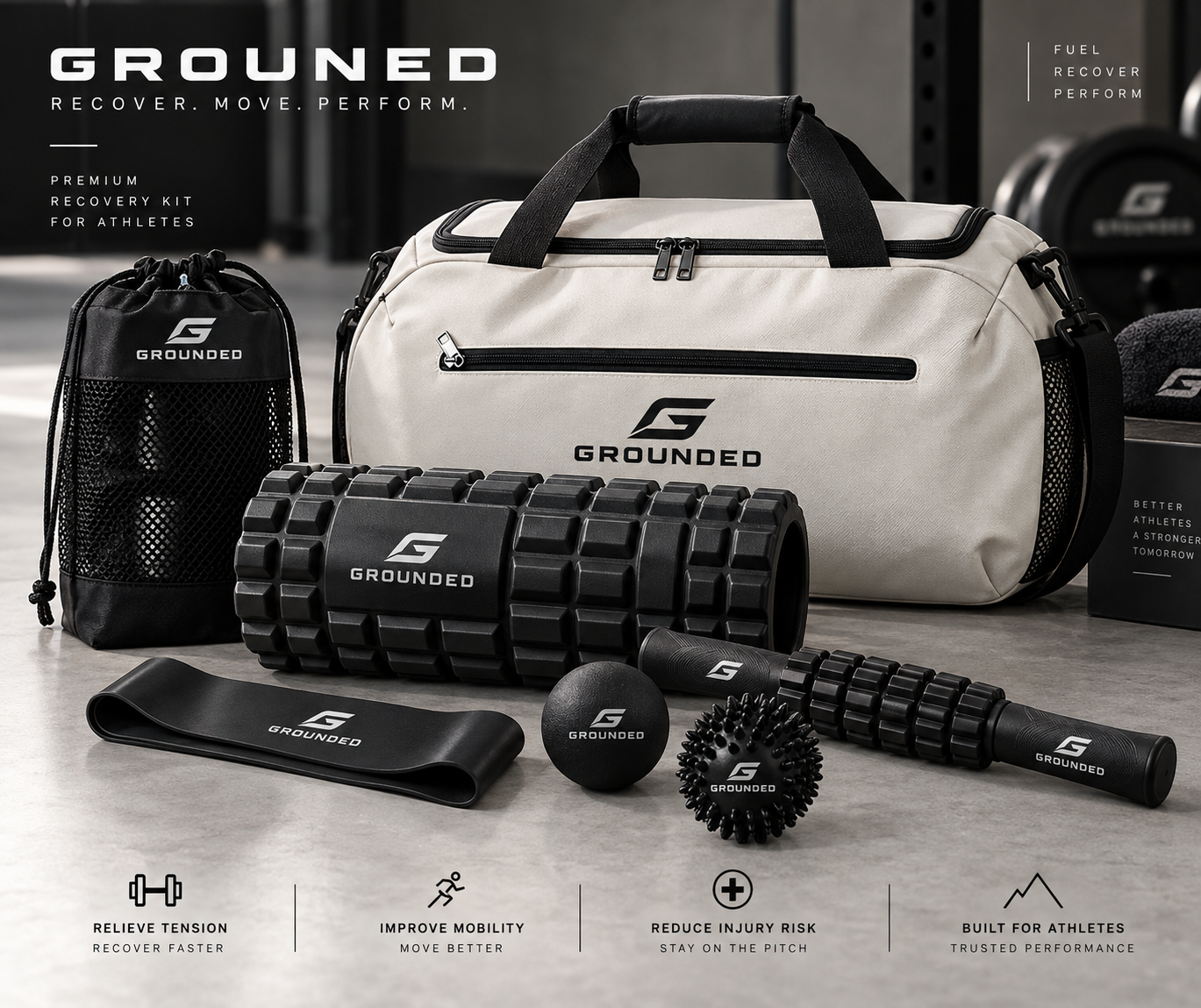
Equipment that can help
Recommended because it fits the routine—not as a replacement for the fundamentals.
Frequently asked questions
Does foam rolling reduce soreness?
Research suggests a modest reduction in perceived soreness, particularly 24–72 hours after exercise.
Should you foam roll before training?
A short bout can improve range of motion without reducing performance. Follow it with active movement.
How long should a recovery routine take?
Ten focused minutes can be useful when the routine matches the session and is repeated consistently.
Should recovery work feel painful?
No. Use tolerable pressure and controlled movement. Stop if pain is sharp, worsening or unusual.
Can recovery tools replace sleep and nutrition?
No. Tools support good habits; they do not replace sleep, nutrition or structured training.
Recovery notes