

Foam Rolling Hub · Body area
Foam Rolling for Quads
A supported setup for the front of the thigh, with pressure control, common mistakes and injury cautions.
How Grounded earns trust
Evidence explained. Limits made clear.
Editorial approach. We link original research, separate findings from practical interpretation and state when evidence is limited.
Athlete safety. Our content is general education, not diagnosis or medical advice. Pain and injury need qualified assessment.
Quick answer
The short version
- Face down on forearms, roll hip to above the knee
- Angle slightly to reach the outer quad
- Stop short of the kneecap
The quads do a lot of work in kicking, jumping and decelerating. They are also one of the easiest areas to roll well.
How to foam roll quads properly
Start gently. You do not need to load one leg fully or press through pain to practise the technique.
- Lie face down, supported on your forearms, with the roller across the front of your thighs. Keep your neck relaxed and your trunk supported.
- Use your forearms and toes to control your weight. Start with both thighs on the roller to spread the pressure.
- Move in short, slow passes over the muscle between the front of the hip and above the kneecap. Do not roll directly on either joint.
- Angle your body slightly if comfortable to reach the outer front of the thigh; do not grind along the IT band.
- Try 30–60 seconds at tolerable pressure, then step off and move gently. Reduce pressure or stop if you cannot breathe normally.
Common quadriceps rolling mistakes
- Rushing back and forth instead of controlling each pass.
- Letting the roller run over the kneecap or front of the hip bone.
- Moving to single-leg pressure before the supported position feels comfortable.
- Treating sharp pain as a spot that needs more pressure. Stop rather than working into it.
Quad strain or ordinary post-exercise soreness?
Do not roll a suspected quad strain or a bruised, swollen or acutely painful thigh. Sudden pain during kicking, sprinting or jumping needs assessment rather than a harder rolling session. General technique guidance is not an injury treatment plan.
Hip flexors
Just below the front of the hip bone, use small movements. Pair with a half-kneeling hip flexor stretch.
When quad rolling helps most
After high volumes of kicking or downhill running, and before training when the front of the hip feels stiff.
Research referenced
Journal of Bodywork and Movement Therapies · 2024
Preventive effect of foam rolling on muscle soreness after exercise: A systematic review and meta-analysis
Foam rolling after training is a reasonable, low-risk tool to modestly reduce next-day and 2-3 day post-exercise soreness. It is not a cure for soreness and effect sizes are small-to-moderate.
Frontiers in Physiology · 2019
A Meta-Analysis of the Effects of Foam Rolling on Performance and Recovery
Foam rolling can be used as part of a warm-up (does not reduce power/speed, may modestly help) and as a recovery tool post-session; benefits are real but small in magnitude.
External references
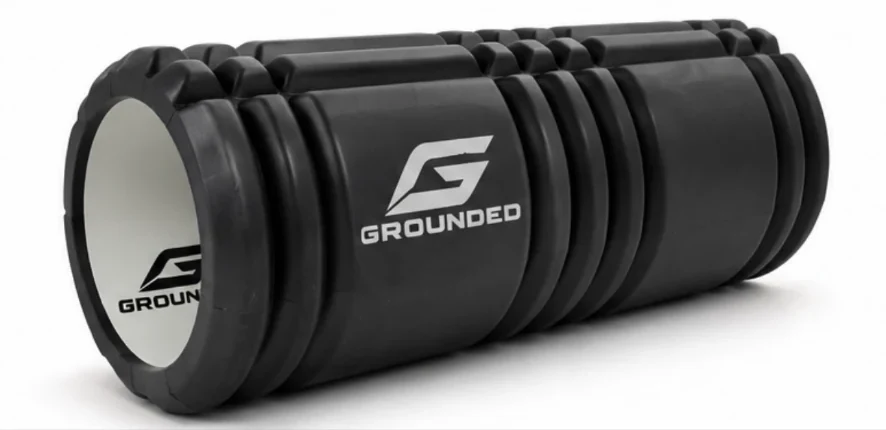
Grounded Foam Roller
High-density, textured and kit-bag sized for regular training.
View the Foam Roller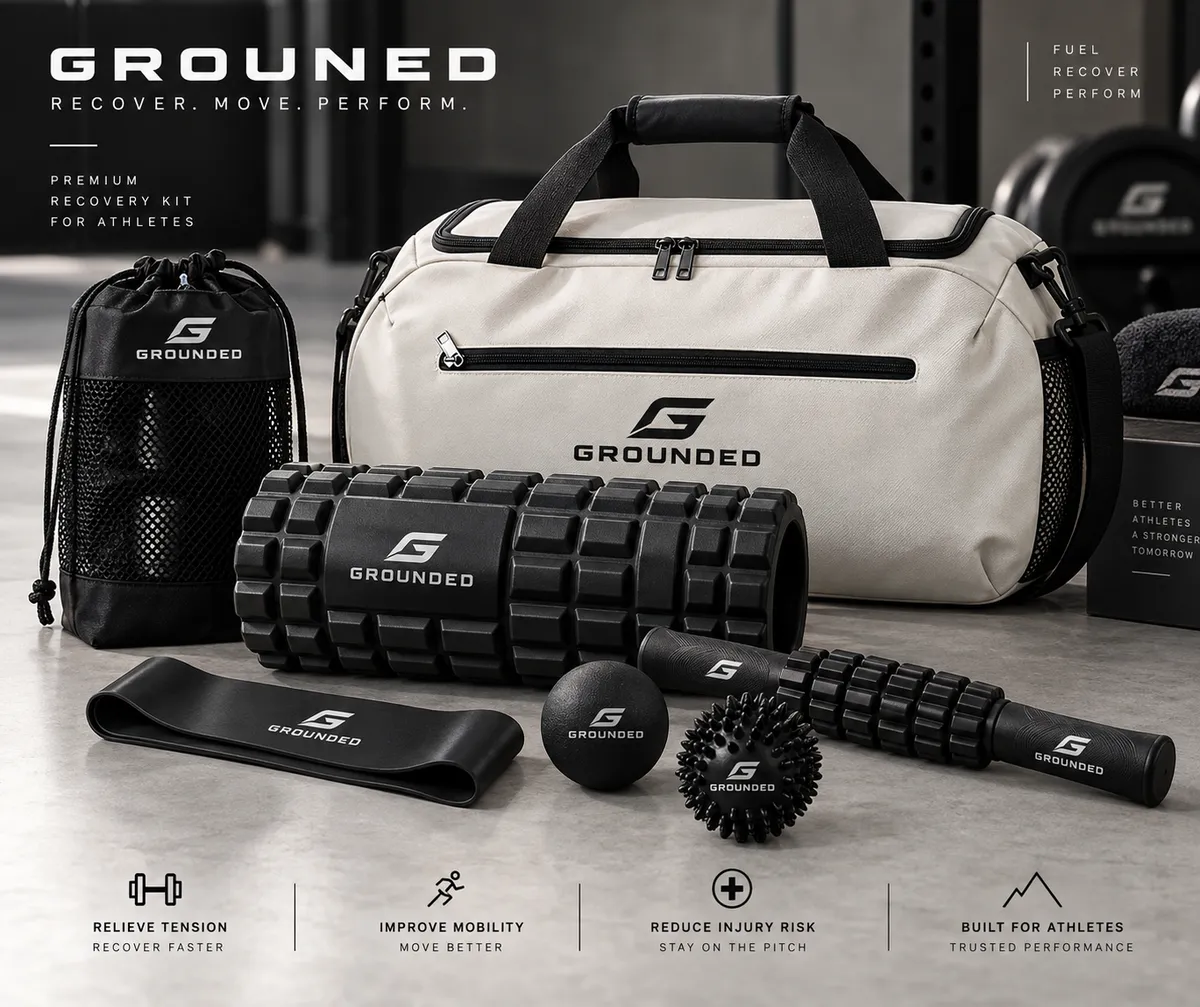
Grounded Recovery Kit
Foam roller, massage ball, mini bands and long band in one carry bag.
View the Recovery KitQuestions
Can I foam roll over my knee?
No. Stop above the kneecap.
Why do my quads feel so tender to roll?
After heavy sessions tenderness is common; reduce pressure.
General education only, not medical advice. For pain, injury or a medical condition, see a physiotherapist or doctor.
Related reading across Grounded
Explore the Grounded knowledge base