
Dynamic Warm-Up for GAA
A progressive matchday warm-up built around movement, speed and readiness.
What you'll learn
- How to progress intensity
- Where activation fits
- Why consistency matters
The problem
A warm-up must bridge the gap between rest and match speed. Static routines that never increase intensity can leave players underprepared.
What the research says
Evidence in context
41% lower
Efficacy of the FIFA 11+ Warm-Up Programme in Male Youth Football: A Cluster Randomised Controlled Trial
Replacing a generic warm-up with the structured FIFA 11+ program before training/matches is one of the best-evidenced, low-cost ways to cut injury rates in youth and adult footballers; consistent compliance matters for full benefit.
Research supported
Effect of specific exercise-based football injury prevention programmes on the overall injury rate in football: a systematic review and meta-analysis of the FIFA 11 and 11+ programmes
Across multiple independent RCTs and settings, structured neuromuscular warm-up programmes consistently lower injury incidence in football, reinforcing the FIFA 11+ single-trial finding above as a generalizable effect, not a one-off result.
Grounded summarises peer-reviewed sports science in simple language. Recovery tools support good training habits—they do not replace sleep, nutrition or structured training.
Grounded Recommendation
Keep the main thing the main thing.
Use a structured sequence: raise temperature, move through useful ranges, activate key patterns, then expose players to progressive speed and direction changes.
Step-by-step routine
- 01Jog and move continuously for three minutes
- 02Add dynamic hip and ankle mobility
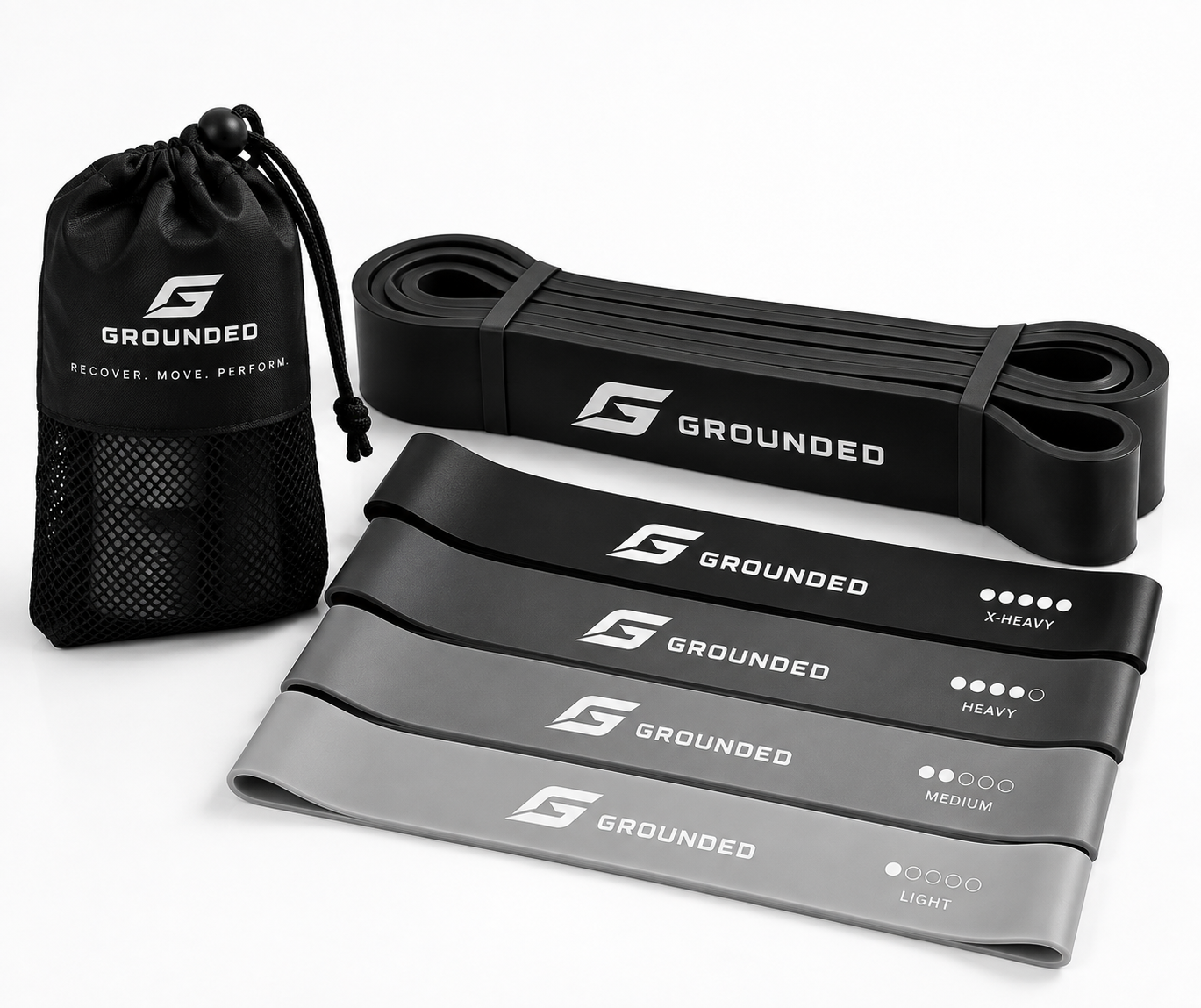
- 03Complete banded activation and balance work
- 04Build through three progressive accelerations
Equipment that can help
Recommended because it fits the routine—not as a replacement for the fundamentals.
Frequently asked questions
How long should a recovery routine take?
Ten focused minutes can be useful when the routine matches the session and is repeated consistently.
Should recovery work feel painful?
No. Use tolerable pressure and controlled movement. Stop if pain is sharp, worsening or unusual.
Can recovery tools replace sleep and nutrition?
No. Tools support good habits; they do not replace sleep, nutrition or structured training.
Continue learning
Related articles
Recovery notes