
Groin Mobility for Athletes
Controlled mobility for an area every change-of-direction athlete relies on.
What you'll learn
- How to distinguish mobility from pain
- Three controlled movement options
- How bands can add useful load
The problem
The groin must both move and produce force. Aggressive stretching can feel productive while doing little to prepare an athlete for cutting, kicking or contact.
What the research says
Evidence in context
Grounded summarises peer-reviewed sports science in simple language. Recovery tools support good training habits—they do not replace sleep, nutrition or structured training.
Grounded Recommendation
Keep the main thing the main thing.
Use controlled range, adductor strength and gradual sport-specific loading. Persistent pain should be assessed rather than stretched harder.
Step-by-step routine
- 01Start with adductor rock-backs
- 02Add a controlled lateral lunge
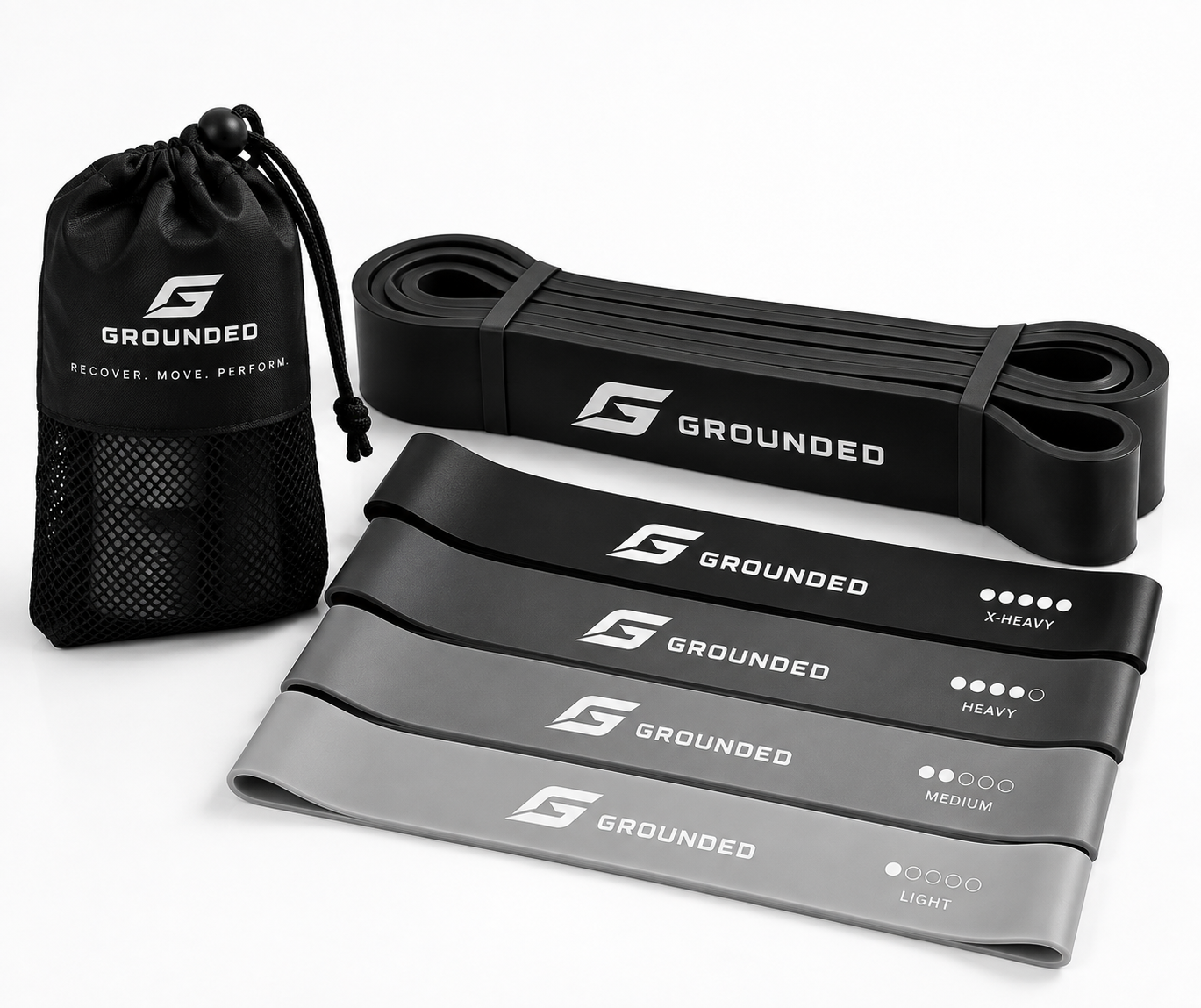
- 03Use a mini band for hip stability work
- 04Finish with easy change-of-direction patterns
Equipment that can help
Recommended because it fits the routine—not as a replacement for the fundamentals.
Frequently asked questions
How long should a recovery routine take?
Ten focused minutes can be useful when the routine matches the session and is repeated consistently.
Should recovery work feel painful?
No. Use tolerable pressure and controlled movement. Stop if pain is sharp, worsening or unusual.
Can recovery tools replace sleep and nutrition?
No. Tools support good habits; they do not replace sleep, nutrition or structured training.
Continue learning
Related articles
Recovery notes