
How Grip Socks Improve Performance
What grip socks actually do inside the boot, what they cannot do, and how to choose a pair.
What you'll learn
- How grip socks reduce foot movement
- The honest evidence picture
- How to wear them for football, rugby and GAA
- How to choose and care for them
The problem
Grip socks have moved from professional dressing rooms to Sunday league and club GAA. Many claims are made about them. It is worth understanding what they actually do, so you can decide if they are right for you.
The problem grip socks solve
Every time you accelerate, cut, stop or kick, your foot wants to keep moving inside the boot. A traditional sock is smooth on both sides, so there is a small slide between the foot and the insole. Over a match, that happens thousands of times.
That slide can create friction, hot spots and blisters. It can also make the boot feel less connected to the foot, which many players describe as a loss of confidence when changing direction.
How grip socks work
Grip socks add rubberised pads to the sole, and sometimes to the inside of the sock. These pads increase friction between the sock and the insole, so the foot moves less within the boot. The upper part is usually a close-fitting, breathable knit that holds the foot securely.
What the evidence says
Honestly, there is limited published research specifically on grip socks and performance or injury. Some small studies on sock and insole friction suggest that reducing foot movement within the shoe can affect how forces are transferred, but we are not aware of strong evidence that grip socks directly make you faster or prevent injuries.
What is clear is that many players find them more comfortable and report feeling more stable. That is a genuine benefit, and it is why we describe grip socks as a comfort and confidence product rather than a performance miracle.
Grip socks for football
Footballers usually prefer a thin sock that keeps a close feel for the ball. Most players cut their team socks at the ankle and wear grip socks underneath, keeping club colours on the shin while getting the grip inside the boot.
Grip socks for GAA
GAA players cover large distances, change direction constantly and kick from hand and ground. Comfort over a full match and long training sessions matters. Check any county or competition rules on sock colour before match day.
Grip socks for rugby
Rugby players, especially forwards, often like a slightly more cushioned sock for scrummaging and driving in contact. Backs may prefer a thinner sock for speed and footwork.
Grip socks in the gym and for Hyrox
In flat training shoes, grip socks can help with sled pushes, lunges and lifting, where a stable foot helps you apply force. Many Hyrox athletes use them for training and racing.
How to choose grip socks
Look for grip pads on the heel and forefoot. Choose a snug fit that does not pinch the toes. Prefer breathable fabric that manages moisture. Most importantly, look for durability: pads that stay attached wash after wash.
How to care for grip socks
Wash inside out at 30°C, avoid fabric softener and air-dry rather than tumble drying. This protects the pads and helps them last a full season.
Grip socks for goalkeepers
Goalkeepers push off explosively in multiple directions and land repeatedly. Many keepers value a secure foot inside the boot for diving and quick footwork. The same fit principles apply: snug, grippy and comfortable.
Grip socks and boot fit
Grip socks are not a fix for boots that are the wrong size. If your boots are too big, the foot will still move. Get boots fitted properly first, then use grip socks to fine-tune the feel.
Grip socks and blisters
Blisters form from friction and moisture. By reducing slide and using moisture-managing fabric, grip socks help many players with blisters. New boots, wet conditions and long sessions still increase risk, so break in new boots gradually.
How long do grip socks last?
With proper care, a quality pair should last a season of regular training. Signs they need replacing include pads peeling, fabric thinning at the heel or toe, and loss of elasticity at the ankle.
Common questions from coaches
Coaches often ask whether squads should wear matching grip socks. Many clubs now provide them as part of kit, especially for underage and senior teams, to keep a uniform look under cut team socks. Grounded is developing team customisation options for clubs.
The bottom line
Grip socks are a small, affordable change that many players find makes them more comfortable and confident. They are not a performance miracle and will not replace fitness, strength or skill. Choose a durable, well-fitting pair and treat them as part of good preparation.
What the research says
Evidence in context
Published research on this specific topic is limited. We have explained what is known honestly above, and will add studies to the Research Library as the evidence develops.
Grounded summarises peer-reviewed sports science in simple language. Recovery tools support good training habits—they do not replace sleep, nutrition or structured training.
Grounded Recommendation
Keep the main thing the main thing.
Grip socks are a simple, sensible upgrade for players who want a more secure, comfortable feel inside the boot. Choose them for comfort and confidence, not as a replacement for strength, conditioning and a proper warm-up.
Step-by-step routine
- 01Cut team socks at the ankle if needed
- 02Pull grip socks on first, snug and smooth
- 03Pull cut team socks over the shin
- 04Lace boots firmly
- 05Check competition sock rules
- 06Wash inside out at 30°C and air-dry
Equipment that can help
Recommended because it fits the routine—not as a replacement for the fundamentals.
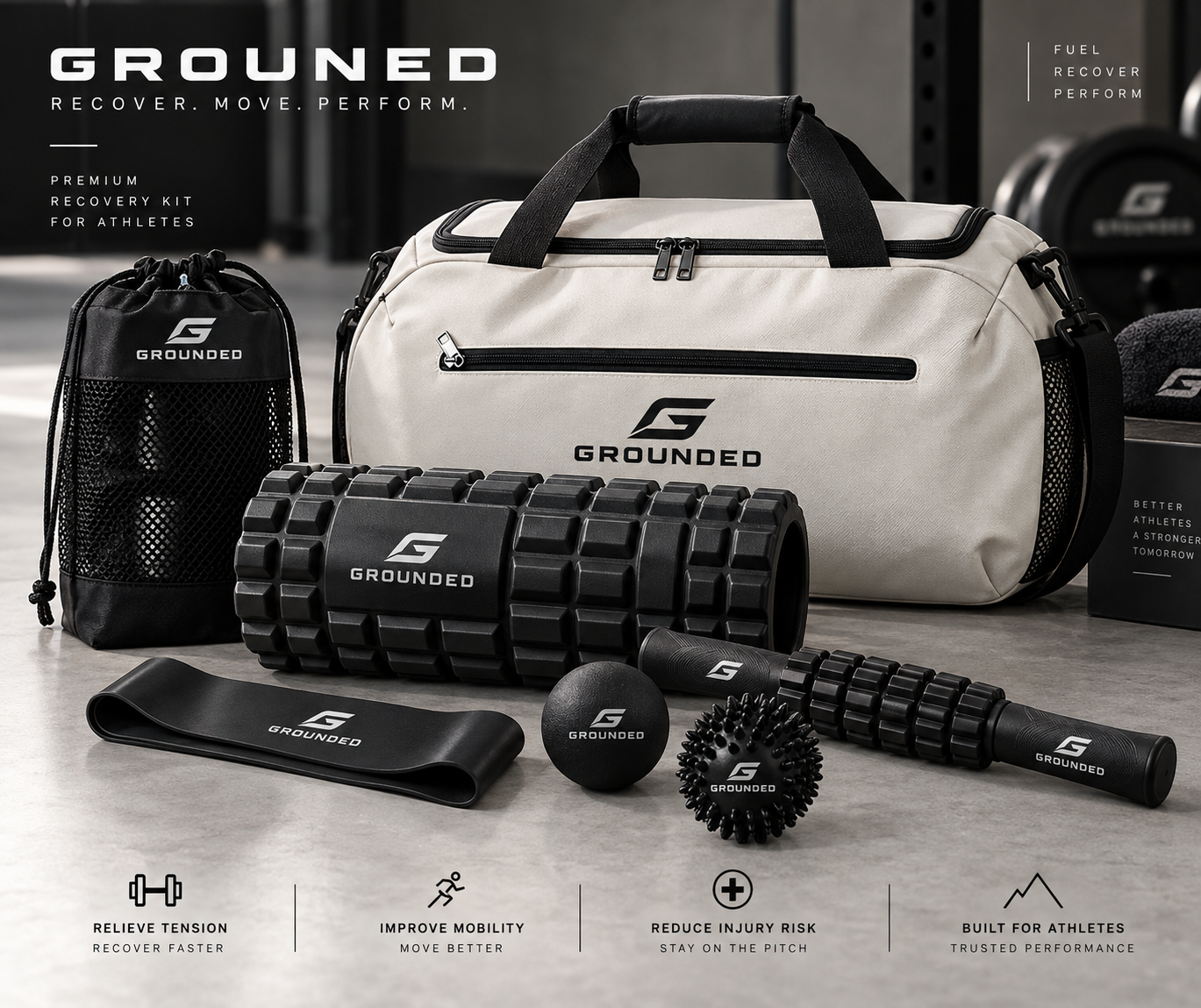
Best Seller
Recovery Kit
A complete system for mobility, activation and recovery, packed in a premium Grounded kit bag.
View Recovery KitImage coming soon
Performance
Grip Socks
Anti-slip grip socks designed to reduce foot movement inside the boot for football, rugby, GAA and gym.
View Grip SocksFrequently asked questions
Do grip socks make you faster?
There is no strong evidence that grip socks directly make you faster. Many players find they feel more stable and confident.
Do grip socks prevent blisters?
Reducing foot movement can reduce friction, which many players find helps with blisters. Fit and boot choice also matter.
Are grip socks allowed in GAA?
They are widely worn under cut team socks. Check your county or competition rules on visible sock colour.
What are the best grip socks for football?
Look for a thin, snug, breathable sock with pads on the heel and forefoot and durable construction.
Can recovery products replace good training habits?
No. Recovery and performance products support good habits; they do not replace sleep, nutrition or structured training.
Continue learning
Related articles
Compression Socks vs Grip Socks: What’s the Difference?
Two very different products that are often confused. When to use each.
Hamstring Recovery Guide
Load, mobility and recovery principles for resilient hamstrings.
Groin Mobility for Athletes
Controlled mobility for an area every change-of-direction athlete relies on.
Recovery notes