
Best Recovery Equipment for Athletes in 2026
An honest, evidence-led guide to the recovery equipment that is worth owning.
What you'll learn
- How to judge recovery equipment
- The core setup for most athletes
- Sport-specific additions
- How to spend wisely
The problem
There has never been more recovery equipment on the market, from £10 marketplace rollers to four-figure compression systems. Knowing what is worth buying, and what the evidence actually supports, is harder than ever.
How we judge recovery equipment
We ask three questions. Is there reasonable evidence or a clear, practical reason it helps? Will athletes actually use it consistently? Is it built to last a full season? Equipment that fails any of these rarely delivers value.
Foam rollers
The best-evidenced piece of everyday recovery equipment. Meta-analyses suggest small benefits for flexibility and short-term performance before exercise, and modest reductions in perceived soreness afterwards. Look for a firm, durable, textured roller that fits your bag.
Massage balls
The essential partner to a roller, for feet, glutes, chest and shoulders. Inexpensive, portable and easy to use daily.
Resistance bands
Essential for warm-ups and activation. Exercise-based warm-up programmes that include strength and activation work are among the best-supported injury prevention strategies in sport.
Recovery kits
A kit combining roller, ball and bands in one bag is often the best value and the easiest way to build consistent habits, because everything is always together.
Hydration
A good bottle and an electrolyte product for long or sweaty sessions. Simple, but often overlooked.
Percussion massagers
Popular and many athletes enjoy them. Research is still developing, and effects appear broadly similar to other forms of self-massage. Nice to have rather than essential.
Compression boots and garments
Reviews of compression garments suggest small benefits for perceived soreness. Pneumatic compression boots are expensive and evidence is limited. Worth considering for athletes with very busy schedules, not a first purchase.
Cold water immersion
Cold water can reduce perceived soreness for some athletes, but may blunt some strength adaptations if used routinely straight after strength training. Useful during congested fixture periods, not necessary every day.
Building your setup
Start with the essentials: roller, ball, bands and hydration. Add grip socks if you play field sports. Only then consider more expensive equipment. And always build on the foundation of sleep, nutrition and structured training.
Why premium matters
The cheapest equipment is often the most expensive in the long run, because it breaks or stops being used. Well-designed equipment with clear guidance makes the habit stick.
Recovery equipment for GAA and football
Foam roller, massage ball, mini bands and grip socks. Add electrolytes for summer training and long matches. This setup covers warm-up activation, post-match rolling and daily comfort.
Recovery equipment for rugby
Foam roller for quads, glutes and upper back, massage ball for hips and shoulders, long band for shoulder mobility, and compression for travel if you find it helps.
Recovery equipment for runners
Massage ball for feet, foam roller for calves, quads and glutes, and mini bands for hip strength. Runners often benefit most from consistent calf and foot care.
Recovery equipment for Hyrox and gym
Foam roller for upper back, lats and legs, long band for shoulder mobility, mini bands for hip activation, massage ball for glutes and chest, and grip socks for sled work.
How to spend on recovery wisely
Start with the essentials and use them consistently for a month. Notice what helps. Only then add more. Many athletes find that a small, well-made kit covers nearly everything they need.
Why we built Grounded
Grounded exists because we were frustrated by cheap recovery products that did not last and expensive products that were not accessible. We focus on a small range of durable essentials, supported by honest, evidence-based guidance for Irish athletes.
What the research says
Evidence in context
Research supported
Preventive effect of foam rolling on muscle soreness after exercise: A systematic review and meta-analysis
Foam rolling after training is a reasonable, low-risk tool to modestly reduce next-day and 2-3 day post-exercise soreness. It is not a cure for soreness and effect sizes are small-to-moderate.
Research supported
A Meta-Analysis of the Effects of Foam Rolling on Performance and Recovery
Foam rolling can be used as part of a warm-up (does not reduce power/speed, may modestly help) and as a recovery tool post-session; benefits are real but small in magnitude.
Research supported
Effect of specific exercise-based football injury prevention programmes on the overall injury rate in football: a systematic review and meta-analysis of the FIFA 11 and 11+ programmes
Across multiple independent RCTs and settings, structured neuromuscular warm-up programmes consistently lower injury incidence in football, reinforcing the FIFA 11+ single-trial finding above as a generalizable effect, not a one-off result.
Grounded summarises peer-reviewed sports science in simple language. Recovery tools support good training habits—they do not replace sleep, nutrition or structured training.
Grounded Recommendation
Keep the main thing the main thing.
For most athletes, the best recovery equipment is a firm foam roller, a massage ball and resistance bands, kept together and used consistently. Add hydration and sport-specific items next. Treat expensive gadgets as optional extras, not foundations.
Step-by-step routine
- 01Start with a foam roller and massage ball
- 02Add mini and long resistance bands
- 03Keep hydration and electrolytes in your bag
- 04Add grip socks for field sports
- 05Consider compression for travel
- 06Build on sleep, food and training structure
Equipment that can help
Recommended because it fits the routine—not as a replacement for the fundamentals.
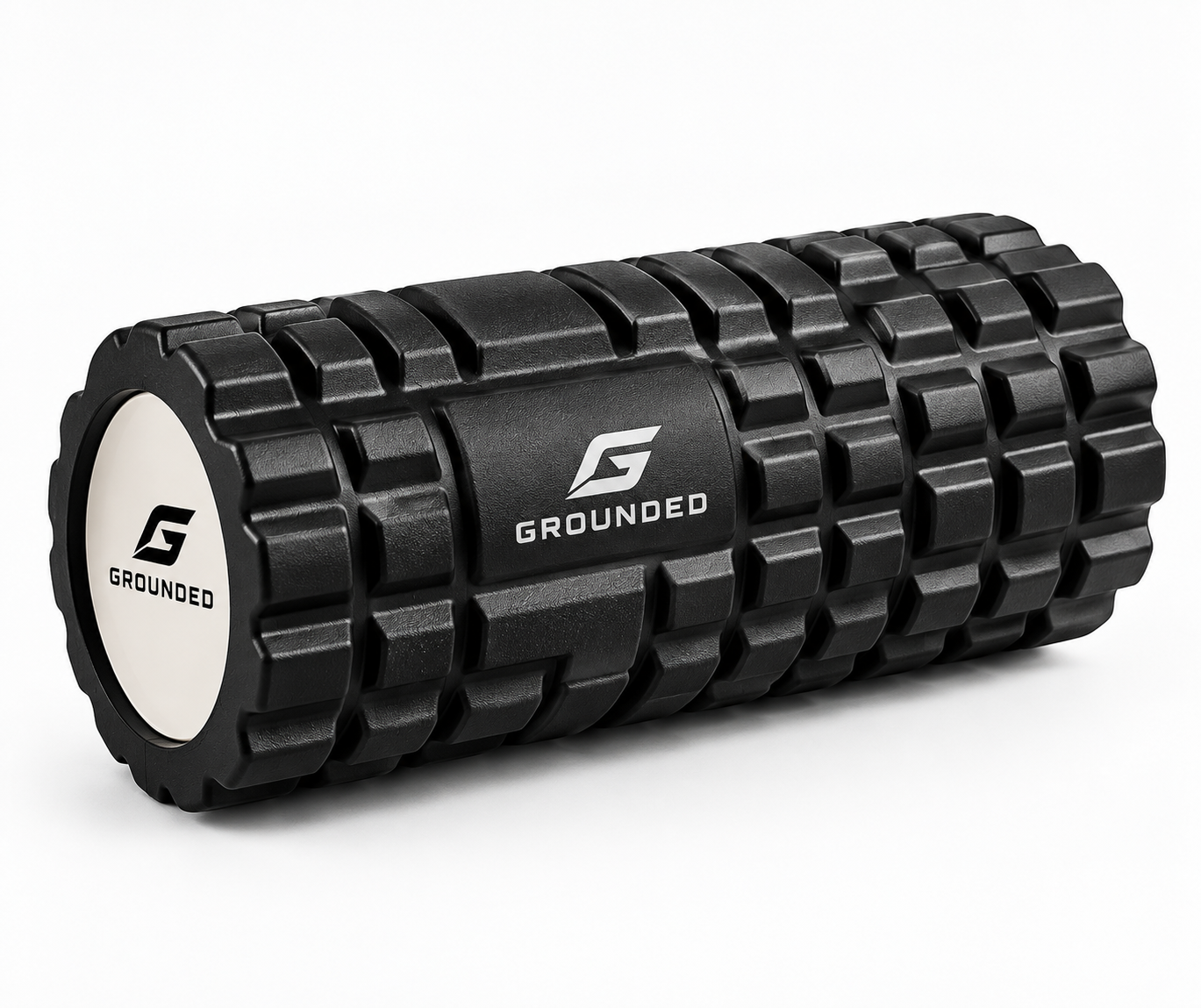
Recovery
Foam Roller
A firm, textured roller for purposeful warm-ups, mobility work and post-training routines.
View Foam Roller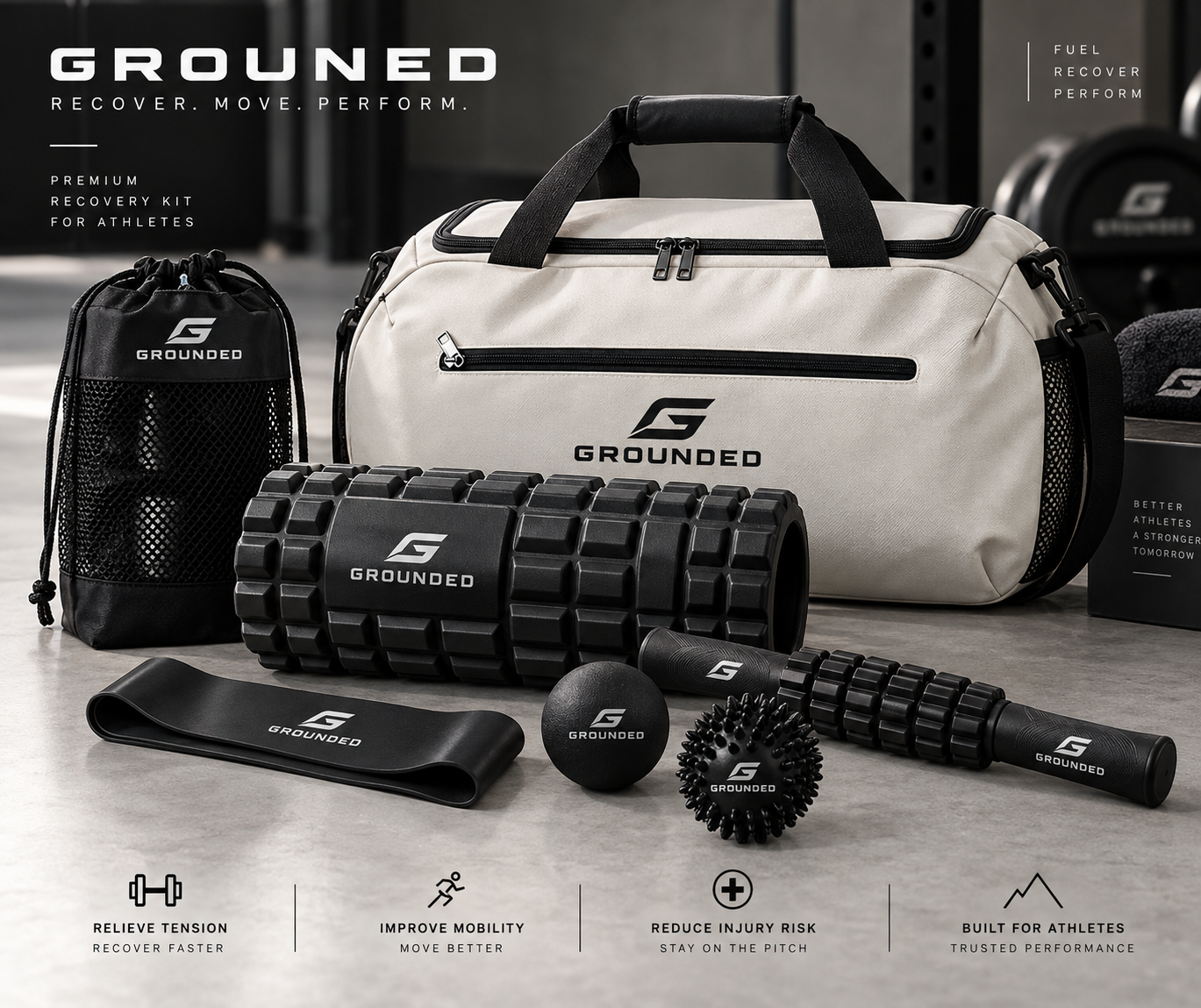
Recovery
Massage Ball
Compact, targeted pressure for feet, glutes, shoulders and hard-to-reach areas.
View Massage Ball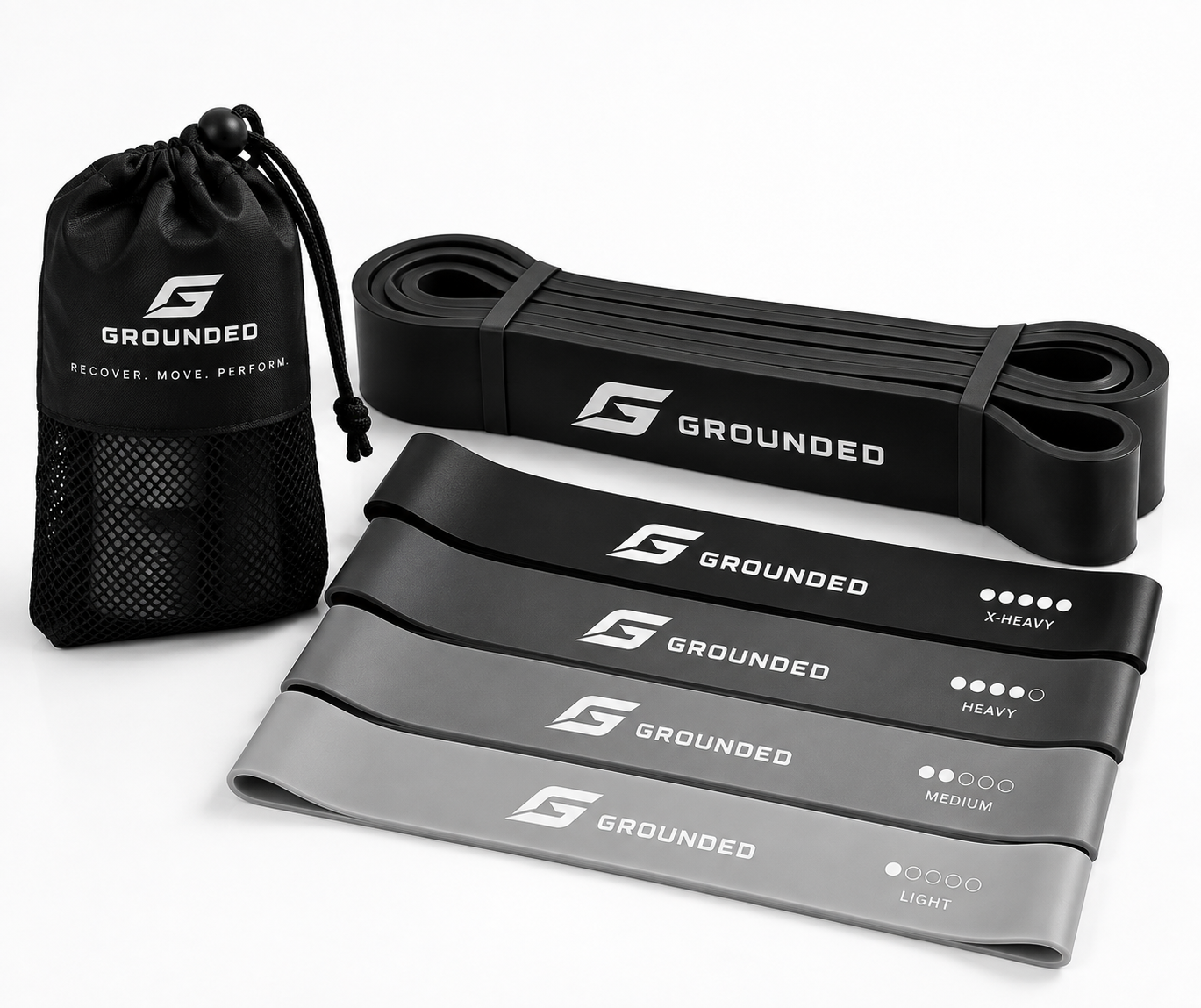
Mobility
Mini Bands
Four resistance levels for activation, mobility and controlled strength work.
View Mini BandsBest Seller
Recovery Kit
A complete system for mobility, activation and recovery, packed in a premium Grounded kit bag.
View Recovery KitImage coming soon
Performance
Grip Socks
Anti-slip grip socks designed to reduce foot movement inside the boot for football, rugby, GAA and gym.
View Grip SocksFrequently asked questions
What is the best recovery equipment for beginners?
A foam roller and a massage ball, followed by resistance bands.
Is expensive recovery equipment worth it?
Durable, well-designed essentials are worth it. Expensive gadgets are optional and have less consistent evidence.
Can recovery products replace good training habits?
No. Recovery and performance products support good habits; they do not replace sleep, nutrition or structured training.
Continue learning
Related articles
How to Recover Faster After a GAA Match
A practical 48-hour plan for Gaelic footballers and hurlers, from the final whistle to the next training session.
Football Recovery Routine: A Complete Guide for Players
How footballers can recover between fixtures, from the cool-down to the next session.
Rugby Recovery Guide: Recovering From Contact and Collision
Managing the soreness of collision sport, with a practical routine for the days after a match.
Recovery notes