

Electrolytes & Hydration Hub · Buying
Electrolytes in Ireland: A Practical Guide for Athletes
When Irish athletes actually need electrolytes, what to check on a label and how to use them.
How Grounded earns trust
Evidence explained. Limits made clear.
Editorial approach. We link original research, separate findings from practical interpretation and state when evidence is limited.
Athlete safety. Our content is general education, not diagnosis or medical advice. Pain and injury need qualified assessment.
Quick answer
The short version
- Sodium is the electrolyte lost in the largest amounts in sweat
- Most sessions under an hour need only water
- Long, hot or very sweaty sessions are where electrolytes help most
Electrolytes are minerals — mainly sodium, plus potassium, chloride, magnesium and calcium — that help regulate fluid balance and nerve and muscle function. You lose them in sweat, sodium most of all.
Ireland’s mild climate means many sessions don’t need more than water. But long sessions, heavy sweaters, warm spells, indoor training and double sessions can change that. This page helps you decide.
Do Irish athletes need electrolytes?
Cool weather reduces sweat losses, but it doesn’t remove them. A 90-minute match in layers, a summer championship game, a long run or a Hyrox session in a warm gym can all produce significant sweat and sodium losses.
What to look for on the label
- Sodium content per serving — the most important number
- Sugar content suited to the session (some carbohydrate helps in long efforts)
- Batch-tested products if you are subject to anti-doping rules
- Clear serving instructions
Buying in Ireland
Grounded Electrolytes are launching soon. The final formula and sodium content will be published at launch — join the waiting list on the product page to hear first. Orders will ship with tracked DPD delivery across Ireland.
What electrolytes do in the body
Sodium, potassium, chloride, magnesium and calcium carry electrical charge in body fluids. They help keep fluid where it needs to be and allow nerves and muscles to work. Sweat is mostly water and sodium, with smaller amounts of the others, which is why sodium is the number to watch on a sports product.
Sodium
The main electrolyte lost in sweat and the one most linked to holding on to fluid you drink after exercise.
Potassium and magnesium
Lost in smaller amounts. A normal diet with fruit, vegetables, dairy and whole grains usually covers them.
When water is enough — and when electrolytes help
Sweat rates vary hugely between people, so these are starting points rather than rules.
Are you a heavy or salty sweater?
A few simple checks give a rough picture without lab testing.
- White salt marks on dark kit or a cap after training.
- Sweat that stings the eyes or tastes very salty.
- Weighing yourself before and after a session: losing more than about 2% of body weight suggests you are not drinking enough during it.
- Feeling flat, headachy or crampy after long sessions despite drinking water.
Tablets, powders or drinks?
The format matters less than the sodium per serving and whether you will actually use it.
A simple match-day hydration plan
This is a sensible starting framework based on general sports nutrition guidance. Test it in training, never for the first time on match day.
- Day before: normal meals, regular fluid, pale-yellow urine as a rough guide.
- 2–4 hours before: drink around 5–7 ml per kg of body weight; add electrolytes if it is warm or you sweat heavily.
- During: small, regular drinks at breaks; electrolytes for long or hot games.
- After: rehydrate over the following hours with fluid and some sodium, from a drink or salty food, alongside a proper meal.
Common electrolyte mistakes
More is not better with fluids or electrolytes.
- Drinking large amounts of plain water during very long events without any sodium.
- Using sugary sports drinks for short, easy sessions where water is fine.
- Ignoring sodium per serving and choosing on flavour alone.
- Using unfamiliar products in competition without testing them.
- Not checking for batch testing when subject to anti-doping rules.
Cramp and electrolytes
Cramp has more than one cause. Fatigue is a major factor, and dehydration with sodium loss may contribute in some athletes, particularly in long or hot sessions. Electrolytes are worth trying if you cramp in those conditions, but they are not a guaranteed fix. Recurrent cramping deserves a conversation with a GP or sports dietitian.
Who should check with a professional first
Anyone with high blood pressure, kidney or heart conditions, or who is on medication affecting fluid or sodium balance, should speak to a GP before using electrolyte products regularly. The American College of Sports Medicine position stand linked on this page is the basis for the general guidance above.
How to read an electrolyte label
Labels can be confusing. Focus on a few numbers and ignore the marketing language.
Sodium per serving
This is the key figure. Products range from a few hundred milligrams to over a gram per serving. Lighter sweaters and shorter sessions suit lower doses; heavy, salty sweaters in long sessions may need more.
Sugar and carbohydrate
Low-sugar options suit hydration on their own. For sessions over about 90 minutes, some carbohydrate during exercise can help maintain energy, so a product with carbohydrate — or a snack alongside — makes sense.
Batch testing
Athletes in tested competition should look for independent batch-testing schemes, which reduce the risk of contamination with banned substances.
Extras
Added vitamins, caffeine or herbal ingredients are rarely necessary. Check caffeine content if you train in the evening.
Electrolytes for Irish conditions
A cold, wet November evening and a warm June championship game are very different hydration challenges. In cool weather, many players under-drink because they do not feel thirsty, yet still sweat heavily under layers. In warm spells, sweat rates rise quickly. Indoor gyms, Hyrox sessions and hot yoga can be warmer than any Irish summer day. Adjust your plan to the conditions, not the calendar.
External references
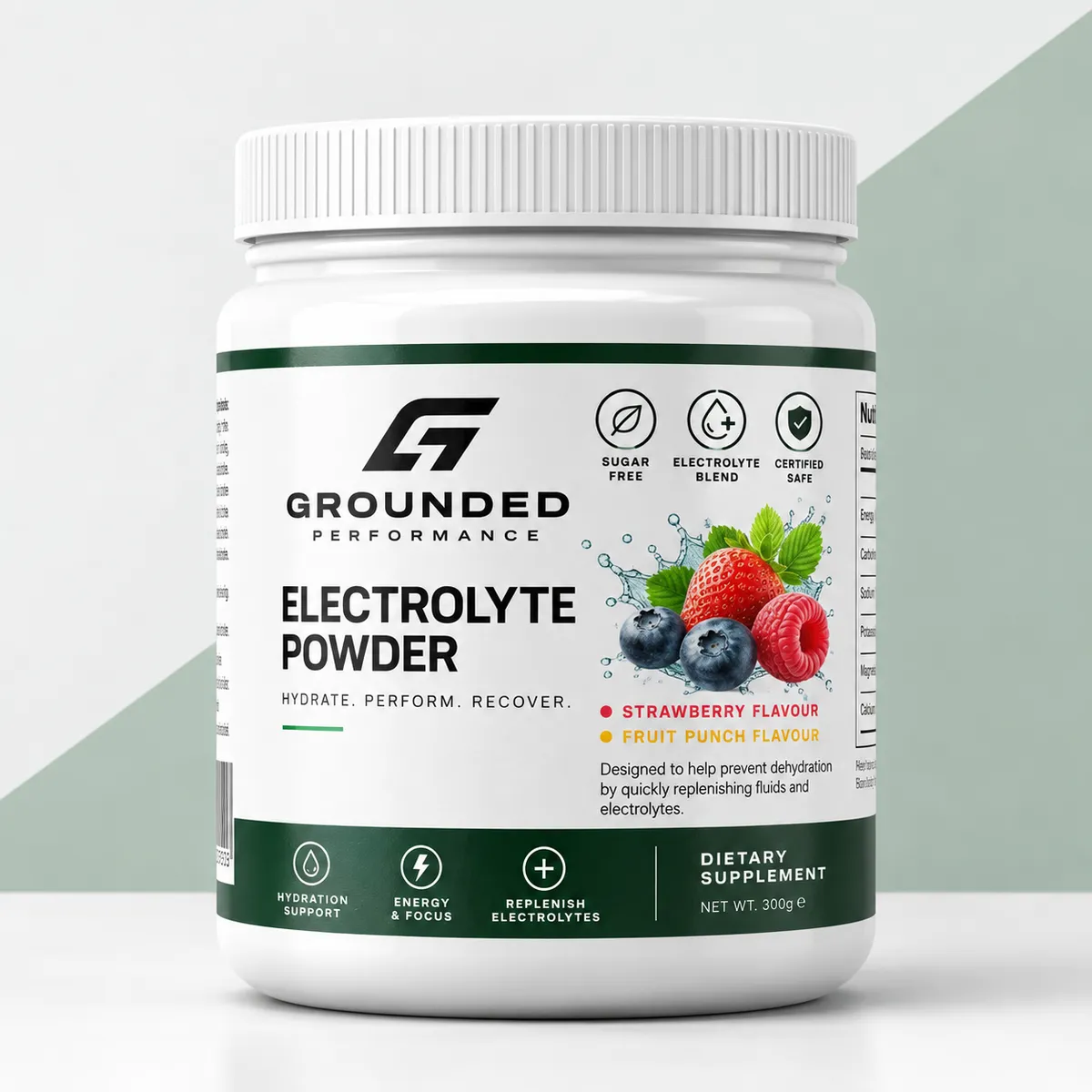
Grounded Electrolytes
Launching soon. Join the waiting list to hear first.
Join the waiting list
Grounded Recovery Kit
Foam roller, massage ball, mini bands and long band in one carry bag.
View the Recovery KitQuestions
Do I need electrolytes in Ireland’s climate?
Not for every session. They matter most for long, intense or warm sessions and heavy sweaters.
What is the most important electrolyte?
Sodium, because it is lost in the greatest amounts in sweat.
Where can I buy electrolytes in Ireland?
Pharmacies, sports retailers and online. Grounded Electrolytes are launching soon.
Can you take electrolytes every day?
Most people do not need them daily. Use them around long, hot or very sweaty sessions, and get the rest from food.
Are electrolytes good for recovery?
They can help you rehydrate after heavy sweating by helping your body hold on to fluid. They do not repair muscle; food and sleep do that.
Do electrolytes stop cramp?
Sometimes, if cramp is linked to heavy sweat and sodium loss. Fatigue also plays a large role, so they are not a guaranteed fix.
Are electrolytes safe for teenagers?
For most healthy teenagers, occasional use around long sessions is fine. Water and normal meals cover most of their needs.
General education only, not medical advice. People with heart, kidney or blood pressure conditions should seek medical advice before changing sodium or fluid intake.
Related reading across Grounded
Explore the Grounded knowledge base