

Electrolytes & Hydration Hub · Fundamentals
Signs of Dehydration in Athletes
Early signs, serious signs and what to do.
How Grounded earns trust
Evidence explained. Limits made clear.
Editorial approach. We link original research, separate findings from practical interpretation and state when evidence is limited.
Athlete safety. Our content is general education, not diagnosis or medical advice. Pain and injury need qualified assessment.
Quick answer
The short version
- Early: thirst, dark urine, dry mouth
- Later: headache, fatigue, dizziness
- Confusion or collapse needs emergency help
Dehydration develops gradually. Spotting early signs helps you act before performance drops.
Early signs
- Thirst
- Dark yellow urine or passing little urine
- Dry mouth and lips
- Feeling unusually tired
More serious signs
- Headache and dizziness
- Rapid heartbeat
- Nausea
- Confusion, fainting or collapse — call emergency services
What to do
Stop, move to shade, and sip fluids with electrolytes. In heat, confusion or collapse may be heat illness: cool the person and seek urgent medical help.
External references
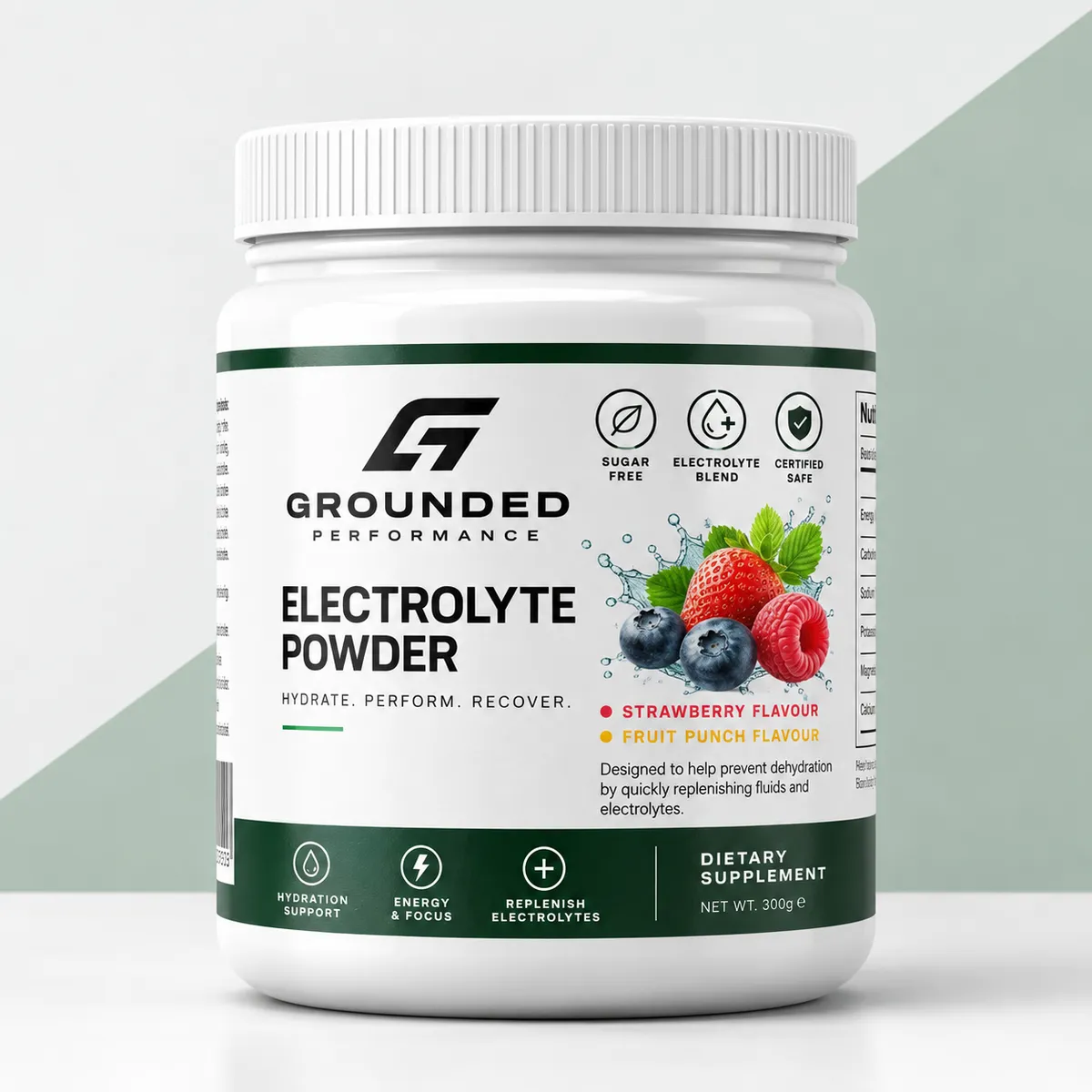
Grounded Electrolytes
Launching soon. Join the waiting list to hear first.
Join the waiting list
Grounded Recovery Kit
Foam roller, massage ball, mini bands and long band in one carry bag.
View the Recovery KitQuestions
What colour urine means dehydration?
Dark yellow or amber suggests you need more fluid.
Can dehydration cause cramps?
The link is weaker than commonly believed; fatigue is also a major factor.
General education only, not medical advice. People with heart, kidney or blood pressure conditions should seek medical advice before changing sodium or fluid intake.
Explore the Grounded knowledge base