

Electrolytes & Hydration Hub · Sport
Electrolytes for Running
Long-run and marathon strategies — including the risk of drinking too much.
How Grounded earns trust
Evidence explained. Limits made clear.
Editorial approach. We link original research, separate findings from practical interpretation and state when evidence is limited.
Athlete safety. Our content is general education, not diagnosis or medical advice. Pain and injury need qualified assessment.
Quick answer
The short version
- Under an hour: water is usually enough
- Long runs and races: electrolytes and carbohydrate
- Drink to thirst — don’t force large volumes
Runners face two opposite risks: under-drinking in long, hot runs, and over-drinking plain water in long events, which can dilute blood sodium (hyponatraemia).
By distance
- 5k–10k: water, if anything
- Half marathon: water, electrolytes on warm days
- Marathon and ultra: planned electrolytes and carbohydrate
Avoiding over-drinking
Gaining weight during a long event is a sign you are drinking more than you lose. Drinking to thirst and including sodium reduces risk.
External references
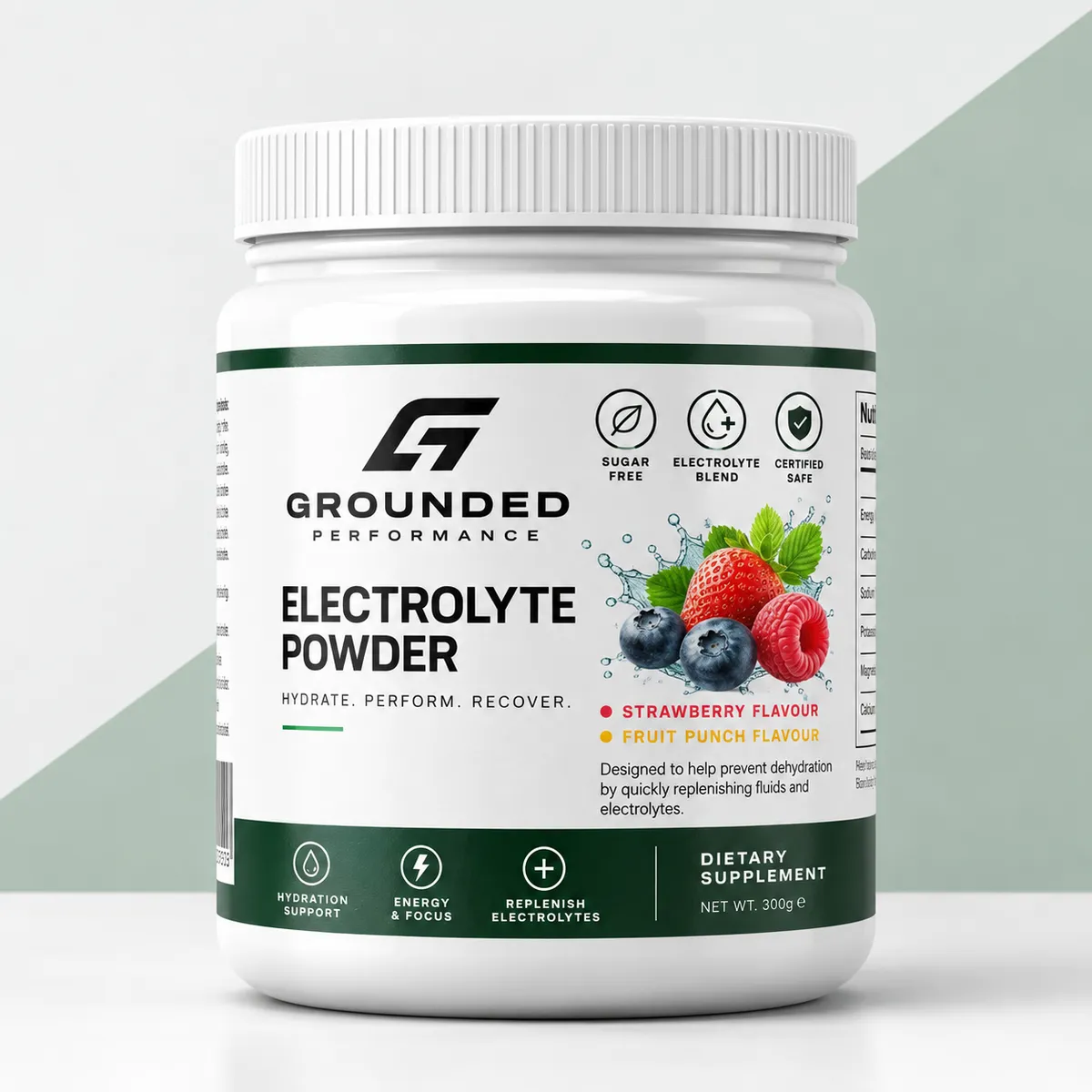
Grounded Electrolytes
Launching soon. Join the waiting list to hear first.
Join the waiting list
Grounded Recovery Kit
Foam roller, massage ball, mini bands and long band in one carry bag.
View the Recovery KitQuestions
Do I need electrolytes for a 10k?
Usually not.
What is hyponatraemia?
Low blood sodium, most often from drinking too much plain water in long events.
General education only, not medical advice. People with heart, kidney or blood pressure conditions should seek medical advice before changing sodium or fluid intake.
Related reading across Grounded
Explore the Grounded knowledge base