
Hyrox Recovery Guide: Training, Race Day and Beyond
Recovering from the unique demands of hybrid racing: running, sleds, lunges and wall balls.
What you'll learn
- Why Hyrox recovery is demanding
- How to structure a training week
- Race-day and post-race recovery
- The best tools for Hyrox athletes
The problem
Hyrox combines 8 km of running with eight functional stations, including sled push and pull, burpee broad jumps, lunges and wall balls. Training for it means stacking running volume on top of heavy lower-body and grip work. Without a recovery plan, fatigue builds quickly.
What makes Hyrox demanding
Hyrox is sometimes described as a running race with interruptions. Each kilometre of running is followed by a station that loads the legs, grip or shoulders in a different way. The result is what athletes call compromised running: trying to run well on legs that have just pushed a heavy sled.
Calves, quads and glutes carry most of the load. Shoulders and forearms work hard through the SkiErg, rowing and farmer carries. Recovery has to cover the whole body.
Structuring your training week
Balance hard and easy days. Most athletes do well with one or two hard compromised-running sessions, one or two strength sessions and some easy aerobic running each week. Put easy days after hard days. Plan at least one full rest day.
Increase running volume gradually. Many Hyrox athletes come from gym backgrounds and add running too quickly, which is a common route to calf and shin problems.
Daily recovery habits
Sleep, food and hydration are the foundation. Aim for consistent sleep times. Eat enough to fuel the combined running and strength load, with protein at every meal. Hydrate well, especially around longer sessions.
A ten-minute mobility routine on easy days helps you feel ready for the next hard session. Roll calves, quads and glutes, use a massage ball on the feet and glutes, and use bands for hip and shoulder mobility.
Race week
Reduce training volume in the final week while keeping some short, sharp efforts. Sleep well, eat familiar food and avoid trying new equipment. A light rolling and mobility routine can help you feel loose without adding fatigue.
After the race
Walk it off, rehydrate and eat a proper meal. Expect soreness in the quads, glutes and shoulders for two to three days. Keep the next few days easy with walking and light mobility. Research suggests foam rolling can modestly reduce perceived soreness in the days after hard exercise, which many athletes find helpful here.
Take a week of lighter training before building again. It is tempting to jump straight into the next block, but the body needs time to absorb the race.
Grip socks and footwear
Grip socks are popular for sled pushes, lunges and lifting in flat training shoes. Reducing foot movement inside the shoe helps many athletes feel more stable under heavy load. Check race rules on footwear and kit before the event.
Warning signs
Pain that sharpens on impact, especially in the shin or foot, can indicate a bone stress problem, which is common when running volume rises quickly. Get persistent or worsening pain assessed early.
Station-specific recovery
Sled push and pull: heavy on quads, glutes and calves. Roll these areas and keep the next day easy. Burpee broad jumps and wall balls: demanding on the hips, quads and shoulders. Farmer carries and sandbag lunges: tough on grip, forearms and glutes. SkiErg and rowing: upper back, lats and shoulders.
After a full simulation, plan a short routine covering calves, quads, glutes, upper back and lats, with band work for the shoulders and hips.
A sample training week
Monday: strength session. Tuesday: easy run and mobility. Wednesday: compromised running intervals. Thursday: rest or light mobility. Friday: strength and station practice. Saturday: longer easy run or a full or partial simulation. Sunday: rest.
Keep hard sessions separated by easier days, and review your plan if soreness or fatigue builds across several weeks.
Doubles and relay racing
Doubles and relay formats reduce the total load but increase intensity, since athletes often go harder on each segment. Recovery demands are still substantial, especially for the legs and shoulders.
Common mistakes
Adding running volume too quickly. Doing simulations too often. Neglecting sleep during busy work weeks. Not eating enough to fuel combined running and strength training. And skipping easy days because they do not feel productive. Easy days are when training turns into fitness.
Nutrition and hydration for Hyrox
Fuel sessions with carbohydrate, include protein at every meal, and rehydrate after sweaty workouts. Many Hyrox events are held indoors, where it can be warm, so practise race-day hydration in training.
What the research says
Evidence in context
Research supported
Preventive effect of foam rolling on muscle soreness after exercise: A systematic review and meta-analysis
Foam rolling after training is a reasonable, low-risk tool to modestly reduce next-day and 2-3 day post-exercise soreness. It is not a cure for soreness and effect sizes are small-to-moderate.
Research supported
A Meta-Analysis of the Effects of Foam Rolling on Performance and Recovery
Foam rolling can be used as part of a warm-up (does not reduce power/speed, may modestly help) and as a recovery tool post-session; benefits are real but small in magnitude.
+111 min
The Effects of Sleep Extension on the Athletic Performance of Collegiate Basketball Players
Prioritizing sleep duration (aiming for ~9-10 hours in bed) can meaningfully improve sport-specific speed, shooting accuracy and mood in athletes who are otherwise under-slept.
Grounded summarises peer-reviewed sports science in simple language. Recovery tools support good training habits—they do not replace sleep, nutrition or structured training.
Grounded Recommendation
Keep the main thing the main thing.
Hyrox rewards consistency more than heroics. Balance hard and easy days, build running gradually, and protect sleep and nutrition. Use rolling and band mobility on easy days to help you arrive at hard sessions ready to work.
Step-by-step routine
- 01Walk and rehydrate immediately after hard sessions
- 02Eat carbohydrate and protein within two hours
- 03Roll calves, quads and glutes on easy days
- 04Use a massage ball on feet and glutes
- 05Band mobility for hips and shoulders
- 06Keep one full rest day each week
Equipment that can help
Recommended because it fits the routine—not as a replacement for the fundamentals.
Recovery
Massage Ball
Compact, targeted pressure for feet, glutes, shoulders and hard-to-reach areas.
View Massage Ball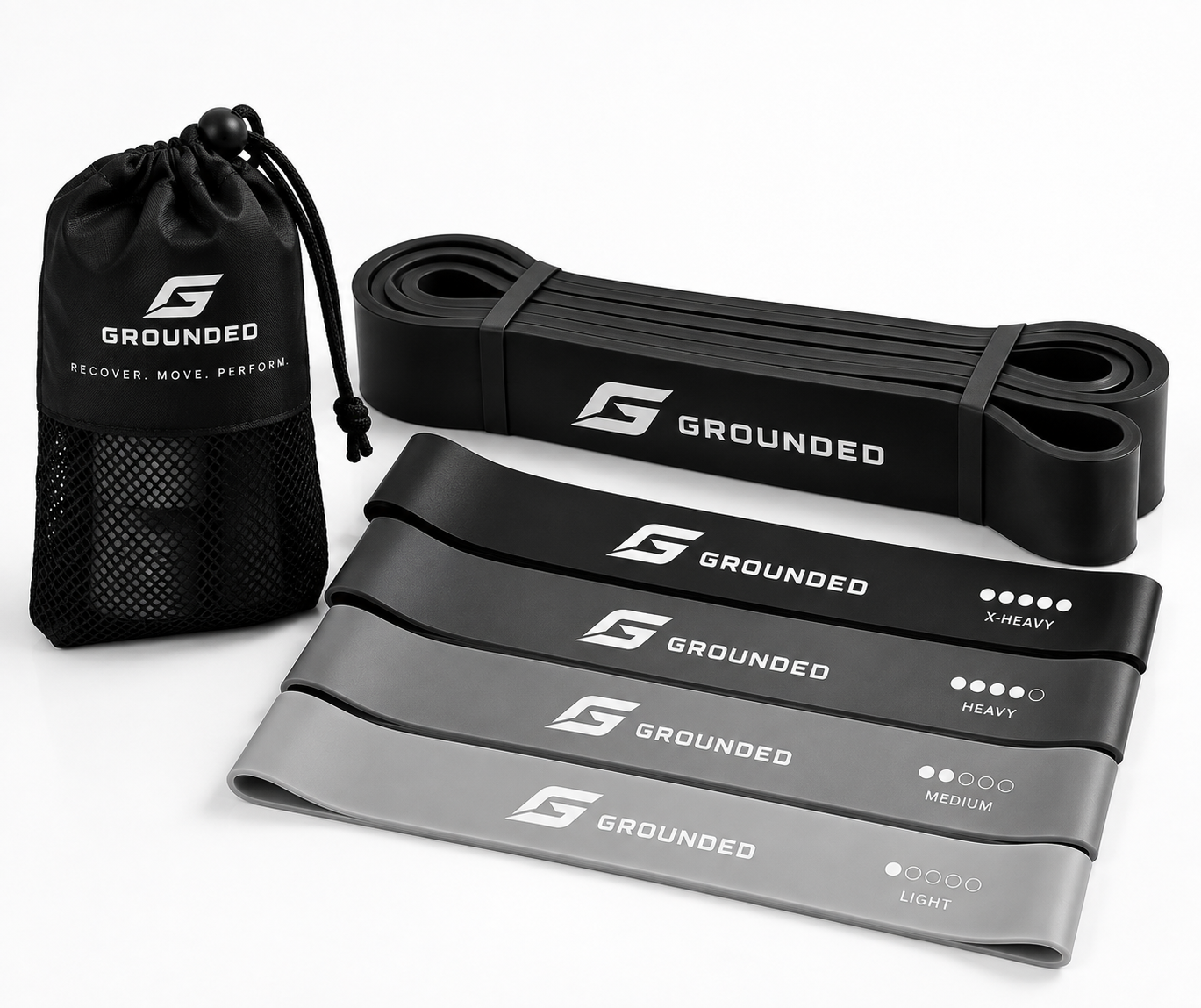
Mobility
Mini Bands
Four resistance levels for activation, mobility and controlled strength work.
View Mini BandsBest Seller
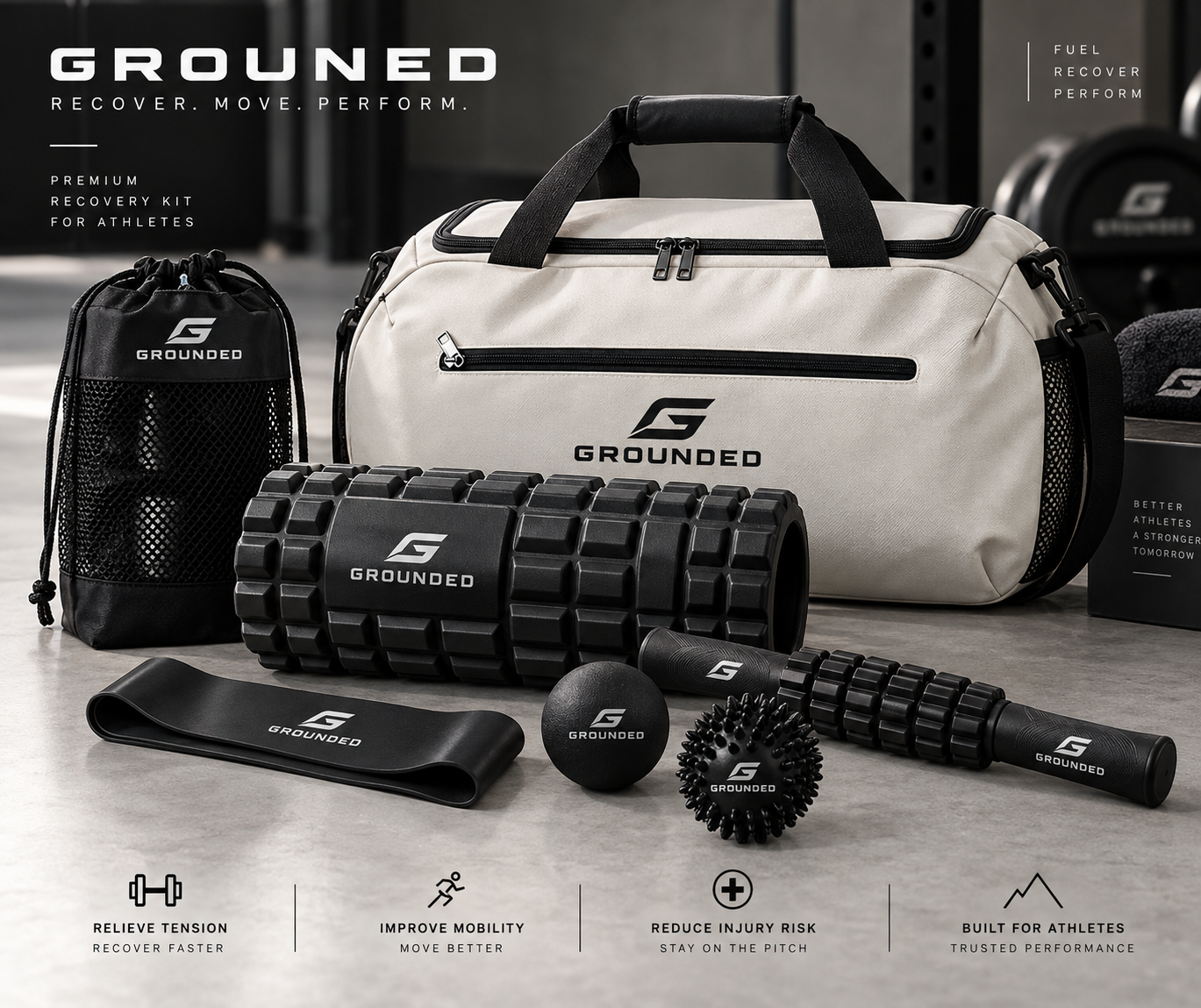
Recovery Kit
A complete system for mobility, activation and recovery, packed in a premium Grounded kit bag.
View Recovery KitImage coming soon
Performance
Grip Socks
Anti-slip grip socks designed to reduce foot movement inside the boot for football, rugby, GAA and gym.
View Grip SocksFrequently asked questions
How long does it take to recover from a Hyrox race?
Most athletes feel sore for two to three days and benefit from about a week of lighter training.
Should I foam roll before a Hyrox race?
A short, light session followed by an active warm-up is fine. Avoid heavy, painful rolling on race day.
Can recovery tools replace sleep and nutrition?
No. Recovery tools support good habits; they do not replace sleep, nutrition or structured training.
When should I see a physiotherapist?
If pain is sharp, getting worse, affects how you walk or run, or has not settled after a few days, get it assessed by a chartered physiotherapist or doctor.
Continue learning
Related articles
Recovery notes