
Compression Socks vs Grip Socks: What’s the Difference?
Two very different products that are often confused. When to use each.
What you'll learn
- What compression socks do
- What grip socks do
- What the research says
- When to wear each
The problem
Compression socks and grip socks both look like performance socks, and athletes often assume they do the same thing. They do not. One is mainly about recovery and circulation, the other about grip and stability inside the boot.
Compression socks explained
Compression socks apply graduated pressure, tighter at the ankle and looser towards the knee. They are designed to support circulation in the lower leg. In medicine, they are used to manage swelling and reduce the risk of clots during long periods of immobility.
In sport, compression garments are mostly used for recovery and travel. Systematic reviews of compression garments have generally found small benefits for perceived muscle soreness and some aspects of recovery after exercise, with less consistent effects on performance during exercise.
Grip socks explained
Grip socks have rubberised pads on the sole that reduce foot movement inside the boot or shoe. They do not apply significant compression. Their purpose is comfort, stability and confidence during play. There is limited research on their effect on performance.
When to wear compression socks
After matches or hard training, some athletes wear compression socks for a few hours to help their legs feel less heavy. They are also useful for long car journeys, bus trips to away games and flights, where sitting still for hours can leave legs feeling stiff.
When to wear grip socks
During training and matches, under cut team socks, and for gym sessions or Hyrox work in flat shoes.
Can you wear both?
Some athletes combine them: grip socks in the boot and compression sleeves on the calf. This can work, but it is not necessary for most people. Choose based on the job: grip for play, compression for recovery and travel.
Who benefits most from compression
Athletes who travel a lot, those with busy fixture lists, runners after long runs and anyone who feels their legs are heavy after sport. If you have a circulation problem or medical condition, speak to a doctor before using compression.
The bigger picture
Neither product replaces the fundamentals. Compression may help you feel a little better, and grip socks may help you feel more secure. Sleep, nutrition, hydration and structured training remain the main drivers of recovery and performance.
How compression is measured
Compression is measured in millimetres of mercury (mmHg). Sports compression socks usually sit in a light to moderate range. Medical compression can be much stronger and should be prescribed. For sport, comfort is the key: they should feel supportive, never painful or numbing.
Compression sleeves vs socks
Calf sleeves provide compression without covering the foot, so you can wear them with any sock, including grip socks. Full compression socks cover the foot and are typically worn after sport or while travelling.
Compression for travel to away games and tournaments
Long drives across Ireland to away fixtures, or flights to tournaments abroad, involve hours of sitting. Many athletes find compression socks help their legs feel less heavy on arrival. Stand up and move regularly too.
What to look for in grip socks
Grip pads on the heel and forefoot, a snug fit, breathable fabric and durable construction. See our full guide on how grip socks improve performance for more detail.
Common myths
Myth: compression socks dramatically improve performance during sport. The evidence is weak. Myth: grip socks prevent injuries. There is no strong evidence. Myth: you need both. Most athletes are fine choosing based on their specific needs.
Caring for performance socks
Wash both types inside out at low temperatures and air-dry. Heat damages elastic fibres in compression socks and grip pads on grip socks.
A simple decision guide
If your problem is your foot slipping inside the boot, choose grip socks. If your problem is heavy legs after matches or long journeys, consider compression. If you are unsure, start with the one that addresses the problem you notice most.
What the research says
Evidence in context
Published research on this specific topic is limited. We have explained what is known honestly above, and will add studies to the Research Library as the evidence develops.
Grounded summarises peer-reviewed sports science in simple language. Recovery tools support good training habits—they do not replace sleep, nutrition or structured training.
Grounded Recommendation
Keep the main thing the main thing.
Wear grip socks for stability and comfort during play. Consider compression socks after matches and for long journeys if they help your legs feel better. Neither replaces sleep, nutrition or structured training.
Step-by-step routine
- 01Wear grip socks during training and matches
- 02Change into compression socks after sessions if useful
- 03Wear compression for long journeys
- 04Remove compression before bed unless advised otherwise
- 05Keep hydrating and refuelling
- 06Speak to a doctor if you have circulation issues
Equipment that can help
Recommended because it fits the routine—not as a replacement for the fundamentals.
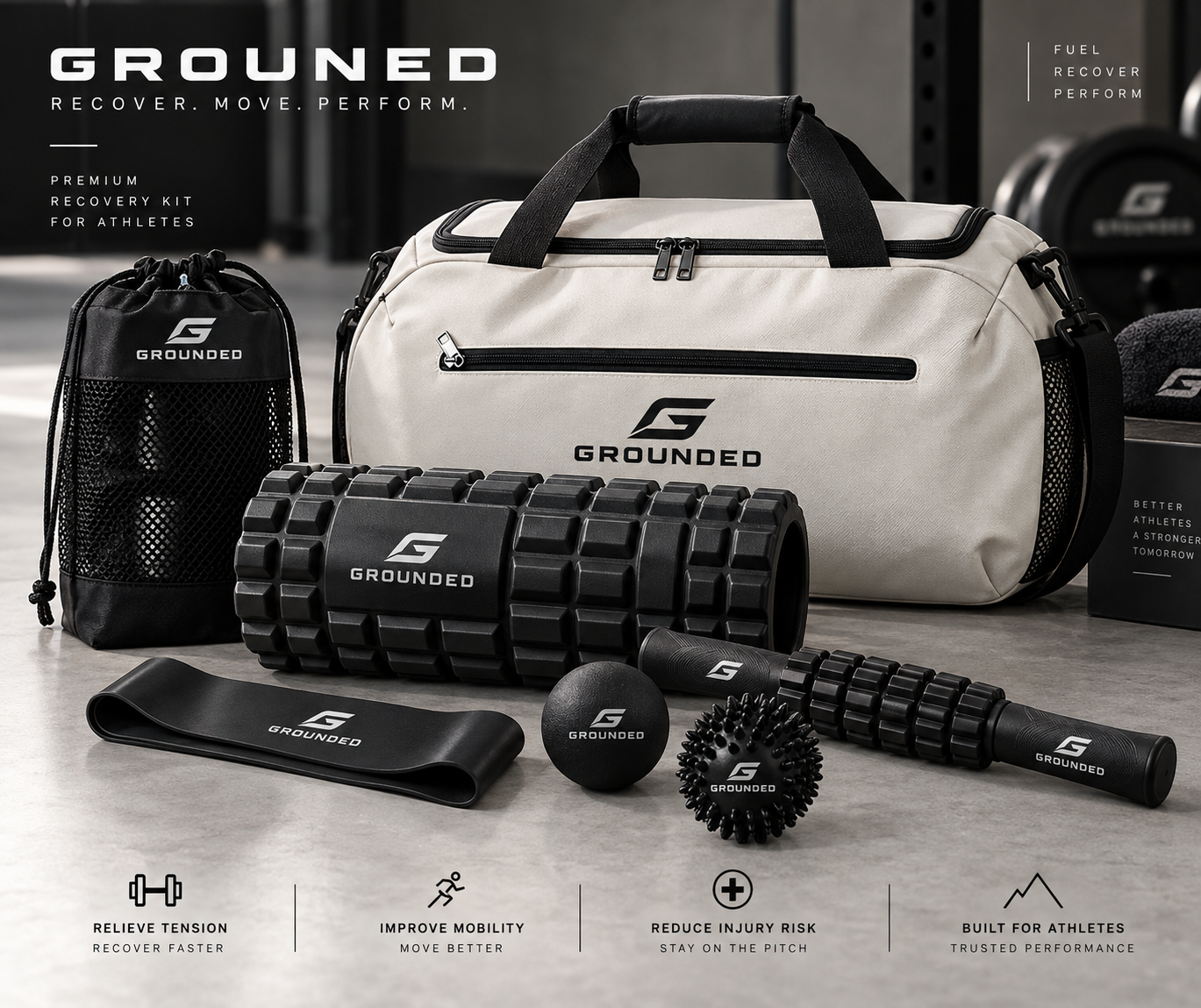
Best Seller
Recovery Kit
A complete system for mobility, activation and recovery, packed in a premium Grounded kit bag.
View Recovery KitImage coming soon
Performance
Grip Socks
Anti-slip grip socks designed to reduce foot movement inside the boot for football, rugby, GAA and gym.
View Grip SocksFrequently asked questions
Are grip socks the same as compression socks?
No. Grip socks reduce foot movement inside the boot. Compression socks apply graduated pressure to support circulation.
Do compression socks help recovery?
Research suggests small benefits for perceived soreness and some recovery measures.
Can recovery products replace good training habits?
No. Recovery and performance products support good habits; they do not replace sleep, nutrition or structured training.
Continue learning
Related articles
Post-Match Recovery Checklist for Athletes
A simple checklist to follow after every match, so recovery becomes automatic.
Best Foam Roller Exercises for Athletes
Nine essential foam roller exercises, with technique cues for runners, field-sport and gym athletes.
How Often Should Athletes Foam Roll?
Frequency, duration and timing, based on what the research actually says.
Recovery notes